Texas offers PIP coverage that pays for chiropractic care regardless of fault
You may already have coverage you've never used
Liability insurance from the at-fault driver can cover your treatment
Someone else's policy may owe you medical benefits
Insurance companies use documentation gaps to deny or reduce claims
What you do in the first 72 hours shapes your entire claim
You do not need a lawyer to start chiropractic treatment after an accident
Healthcare comes before legal strategy, always
Signing the wrong paperwork early can limit your treatment options
Insurance adjusters work for their company, not for you
Limitless Chiropractic verifies coverage and handles insurance coordination
You focus on healing, we handle the paperwork
The Question Nobody Asks Until It's Too Late
You've been in a car accident. Your neck hurts. Your back seized up two days later. You know you need treatment but one question stops you cold:
Who pays for this?
That question keeps more accident victims on the couch than any injury does. People skip chiropractic evaluation, not because they don't need it, but because they don't understand their coverage. They assume it's expensive. They assume they need a lawyer first. They assume that if the other driver's insurance hasn't called back yet, they're stuck waiting.
None of those assumptions are accurate.
Texas has specific insurance structures that cover chiropractic care after car accidents. Some of them pay regardless of who caused the crash. Others require documentation that most people don't think about until it's too late to collect it.
This guide covers what your insurance actually covers, how to use it, and what to avoid signing before you understand your options. This is healthcare guidance, not legal advice. But understanding your coverage removes the barrier between you and the care your spine needs right now.
If you were recently in an accident in Austin and your symptoms are building, we verify your coverage before your first visit.
This matters. In "no-fault" states, your own insurance pays your medical bills regardless of who caused the crash. Texas doesn't work that way.
In Texas, the driver who caused the accident is financially responsible for injuries and damages. Their liability insurance is the primary source of compensation for your medical treatment, lost wages, and pain and suffering.
That sounds straightforward until you realize liability claims take time. The at-fault driver's insurance company doesn't write you a check the day after the crash. They investigate. They delay. They negotiate. Meanwhile, your whiplash symptoms are building and your recovery window is closing.
This is where your own policy becomes critical.
Three Coverage Types That Pay for Chiropractic Care
Texas Auto Insurance, Coverage Types for Chiropractic Care
Coverage Type
Who Pays
Fault Required?
Typical Limits
What It Covers
PIP
Your own policy
No
$2,500 minimum
Medical bills, lost income, essential services
MedPay
Your own policy
No
$1,000–$10,000+
Medical bills only
Liability (BI)
At-fault driver's policy
Yes
$30K/$60K minimum
Medical bills, lost wages, pain and suffering
PIP Coverage: The Safety Net Most Texans Don't Know They Have
What PIP Actually Is
Personal Injury Protection is coverage on your own auto insurance policy. It pays your medical expenses after a car accident regardless of who caused it. You don't need to prove the other driver was at fault. You don't need to wait for an investigation. You file the claim with your own insurer and treatment begins.
In Texas, insurance companies are required to offer PIP when you purchase or renew your auto policy. The minimum offering is $2,500. You can purchase higher limits, $5,000, $10,000, or more depending on your insurer.
Here's the catch: you can also decline PIP in writing. Many Texans don't remember whether they opted out when they bought their policy. Some declined without understanding what they were giving up.
What PIP Covers
PIP in Texas covers three categories:
1.Medical expenses, Hospital bills, diagnostic imaging, chiropractic care, physical therapy, medication, and any reasonable medical treatment resulting from the accident
2.Lost income, Up to 80% of your lost earnings if the injury prevents you from working
3.Essential services, Costs for household help you need because of the injury (childcare, cleaning, etc.)
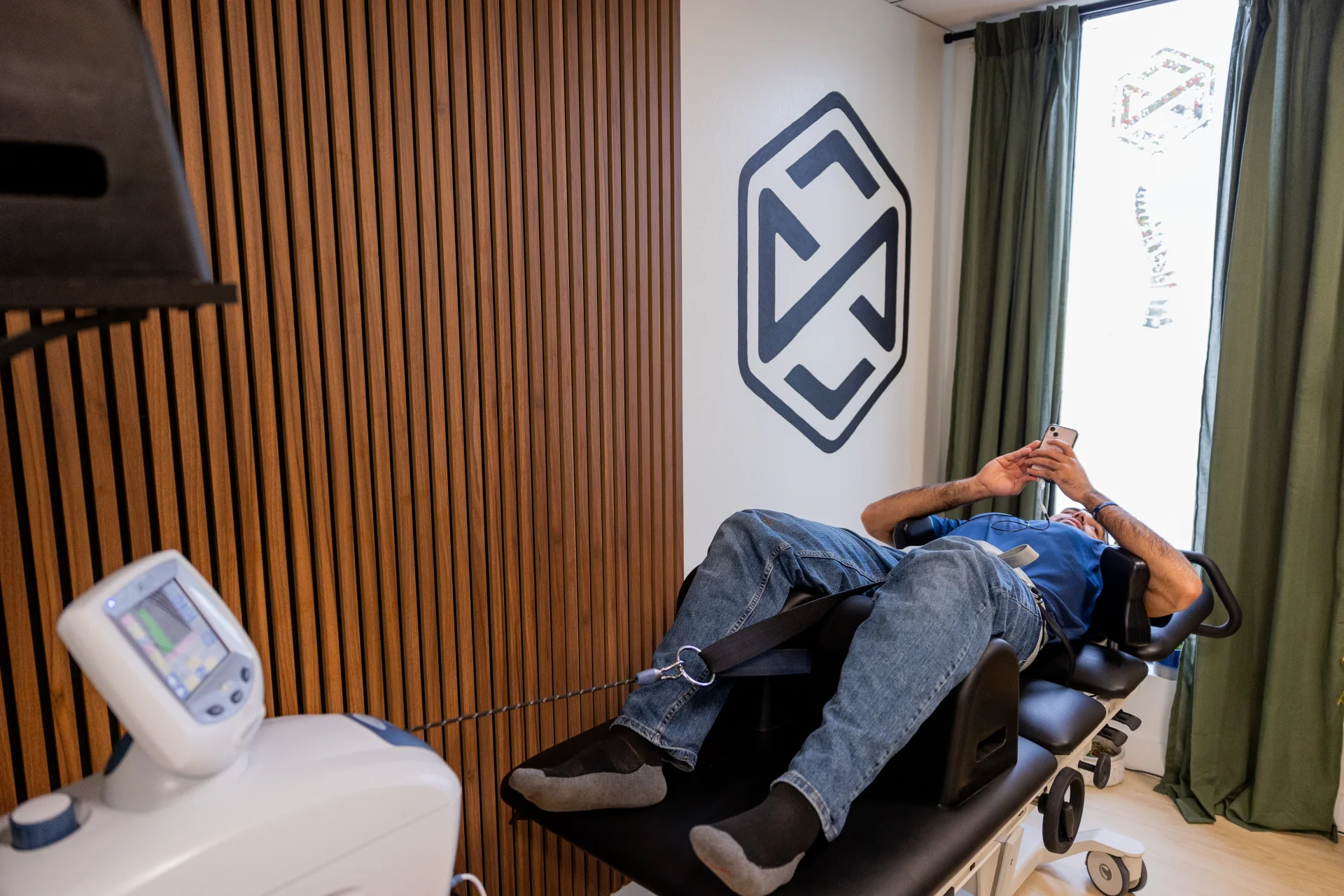
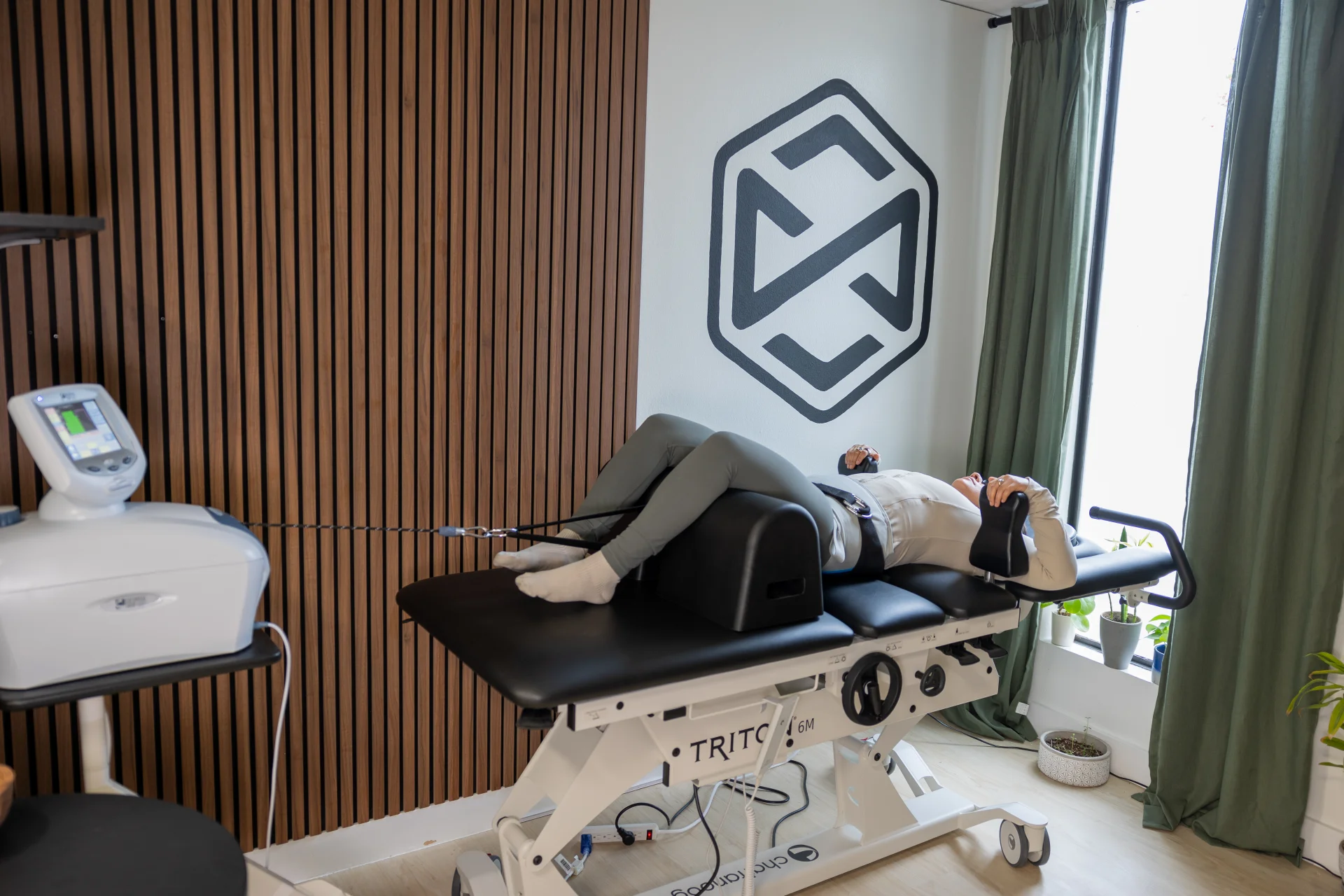
Chiropractic care falls squarely under medical expenses. Evaluation, adjustments, spinal decompression, imaging, all covered under PIP when related to the accident.
How to Use PIP for Chiropractic Care
The process is simpler than most people expect:
1.Check your policy, Call your insurance company or check your declarations page for PIP coverage and limits
2.File a PIP claim, Contact your insurer and report the accident. Specify that you're filing under PIP
3.Begin treatment, Your chiropractor submits treatment records and billing to your PIP carrier
4.No fault determination needed, PIP pays while the liability question is still being sorted out
The key advantage: PIP puts you in treatment immediately. You don't wait for the at-fault driver's insurance to accept responsibility. You don't need a lawyer to file a PIP claim. You start healing while the paperwork resolves in the background.
If you have PIP or MedPay, we coordinate billing directly so you can start treatment without paying out of pocket. Same-day appointments are available for acute injuries.
MedPay (Medical Payments coverage) is similar to PIP but narrower. It covers medical expenses only, no lost wages, no essential services. Some Texas policies carry MedPay instead of PIP, some carry both, and some carry neither.
Like PIP, MedPay:
Pays regardless of fault
Sits on your own policy
Covers chiropractic treatment
Unlike PIP, MedPay:
Does not cover lost wages or household services
Often has lower limits ($1,000-$5,000)
Cannot be used for non-medical expenses
If your policy has MedPay but not PIP, it still covers your chiropractic evaluation and treatment. The limits may cap sooner, but it eliminates the cost barrier to getting started.
Liability Insurance: The At-Fault Driver's Responsibility
How Liability Claims Work
When someone else causes the accident, their bodily injury liability coverage is responsible for your medical bills, lost wages, and pain and suffering. Texas requires all drivers to carry minimum liability coverage of $30,000 per person and $60,000 per accident for bodily injury.
The problem: liability claims are adversarial. The at-fault driver's insurance company has a financial incentive to minimize what they pay you. They will:
Investigate the accident to assign fault percentages
Request your medical records to look for pre-existing conditions
Delay settlement offers while your bills accumulate
Argue that your treatment was excessive or unrelated to the crash
This process can take months. Sometimes years. Your spine cannot wait that long.
Using PIP and Liability Together
These coverages are not either/or. A common and effective approach:
1.File PIP immediately to cover initial treatment costs
2.Begin chiropractic care within 72 hours while PIP covers the bills
3.Pursue the liability claim against the at-fault driver simultaneously
4.PIP pays now, liability pays later, with reimbursement mechanisms built into the system
Your chiropractic records from early treatment become the documentation that strengthens the liability claim. The medical evidence accumulated during PIP-covered care is exactly what the at-fault driver's insurance needs to see when evaluating your injury.
Early treatment isn't just good medicine. It's good strategy.
What Insurance Adjusters Don't Want You to Know
The Documentation Gap Trap
Insurance adjusters are trained professionals whose job is to close claims for as little as possible. One of their most effective tools: the documentation gap.
If you wait two weeks after the accident to seek treatment, the adjuster will argue:
"If the injury were serious, they would have sought care sooner"
"The gap suggests the symptoms came from something other than the accident"
"We can't establish causation with a two-week delay"
Within days of the accident, the at-fault driver's insurance company may call and ask for a "recorded statement." They frame it as routine. It is not routine. It is evidence collection.
Things said in recorded statements that frequently damage claims:
What Recorded Statements Can Cost You
What You Might Say
How the Adjuster Uses It
"I feel okay, just a little sore"
"Claimant reported minimal symptoms, injury is minor"
"I haven't seen a doctor yet"
"Claimant did not seek immediate medical care"
"I had some back pain before the accident"
"Pre-existing condition, not caused by this accident"
"I'm not sure what happened exactly"
"Claimant cannot establish how the accident occurred"
You are not required to give a recorded statement to the other driver's insurance. Your own insurer (for PIP) may require a statement, but that conversation serves a different purpose.
Early Settlement Offers
Insurance companies sometimes offer a quick settlement within the first week or two. The number sounds appealing when you're dealing with car repairs, time off work, and mounting stress.
These early offers are calculated before your injury has fully revealed itself. A settlement signed at day seven doesn't account for the symptoms that surface at day fourteen, the treatment you'll need at week six, or the chronic condition that develops at month three.
Once you sign, the claim is closed. Your right to additional compensation ends regardless of how the injury progresses.
"Your spine doesn't bill in cycles. It bills in consequences."
— Limitless Chiropractic
What Chiropractic Services Insurance Covers After an Accident
Both PIP and liability insurance typically cover the following chiropractic services when medically necessary and related to the accident:
Chiropractic Services Covered After a Car Accident
Service
What It Addresses
Typically Covered?
Initial evaluation
Diagnosis and injury assessment
Yes
Spinal adjustments
Restoring alignment disrupted by impact
Yes
Spinal decompression
Disc bulges, herniations, nerve compression
Yes
Digital X-rays
Fracture screening, alignment assessment
Yes
Advanced imaging referral
MRI for disc and soft tissue evaluation
Yes
Corrective exercises
Rehabilitation and functional restoration
Yes
Re-examinations
Progress tracking and documentation
Yes
The critical word in every line: documented. Insurance covers what's documented as medically necessary. Every visit, every finding, every change in symptoms, it all goes in the record. That record is what pays your claim.
Five Things to Do (and Not Do) After a Car Accident in Texas
Do These Immediately
1.Report the accident, File a police report. This establishes the event in an official record that insurance companies cannot dispute.
2.Document everything, Photos of the vehicles, the scene, visible injuries, and the other driver's insurance information. Timestamps matter.
3.Check your own policy for PIP or MedPay, Call your insurance company or pull up your declarations page. Know your coverage before you need it.
4.See a chiropractor within 72 hours, Even if symptoms are mild. Early evaluation creates the medical documentation that supports every downstream decision. This is the critical recovery window.
5.Keep a symptom journal, Date, time, what hurts, what you can't do. Your memory of pain at week one will be foggy by month three. Written records don't forget.
Do Not Do These
1.Don't give a recorded statement to the other driver's insurance without understanding the implications, You are not required to do so. Politely decline until you've consulted with a professional.
2.Don't sign a medical release that gives the adjuster access to your entire medical history, They're looking for pre-existing conditions to use against your claim. A limited release covering only treatment related to the accident is appropriate.
3.Don't accept an early settlement before understanding your injury, Symptoms evolve over weeks. A settlement at day seven doesn't account for the condition at month three.
4.Don't wait for the insurance process to start treatment, PIP exists specifically so you don't have to wait. Use it.
5.Don't assume the ER visit is sufficient documentation, Emergency rooms rule out emergencies. They do not perform the functional evaluation that documents the full scope of your injury.
What Happens When You Don't Have PIP
If you declined PIP when you purchased your policy, you still have options:
MedPay, If your policy includes Medical Payments coverage, it functions similarly to PIP for medical expenses.
Health insurance, Your regular health insurance may cover chiropractic treatment, though deductibles and copays apply and not all plans include chiropractic benefits.
At-fault driver's liability, You can pursue treatment costs through the other driver's insurance, but this typically requires waiting for fault determination.
Letter of protection, Some chiropractors accept a letter of protection (LOP), which means treatment begins now and payment comes from the eventual settlement. This arrangement is common in personal injury cases where the patient has limited coverage but a strong liability claim.
The absence of PIP doesn't mean you can't get treated. It means the path to payment requires more navigation. A chiropractor experienced with accident cases can help you understand which route applies to your situation.
How Limitless Chiropractic Handles Insurance After Car Accidents
Insurance complexity shouldn't stand between you and treatment. At Limitless Chiropractic, the insurance process works like this:
Before Your First Visit
We verify your PIP, MedPay, and health insurance coverage
We confirm your benefits and any authorization requirements
We explain your coverage in plain language, what's covered, what your limits are, and what to expect
During Treatment
Every visit is documented with clinical findings, objective measurements, and treatment rendered
Progress re-examinations track your recovery with measurable benchmarks
All records are maintained in a format that satisfies insurance requirements
For Your Claim
Your medical records tell a clear, chronological story of injury, treatment, and recovery
Documentation includes mechanism of injury, diagnostic findings, treatment plan, and functional progress
If you retain an attorney, your records are ready, detailed, consistent, and timestamped from day one
We don't practice law. We practice healthcare and document it thoroughly. The documentation we create serves your health first and your claim second, but it serves both. For the full picture of post-accident care, see our Austin personal injury chiropractor guide.
Frequently Asked Questions
Does insurance cover a chiropractor after a car accident in Texas?
Yes. PIP and MedPay on your own policy cover chiropractic care regardless of fault. The at-fault driver's liability insurance also covers chiropractic treatment when medically documented. Most Texas auto policies include at least one of these coverages.
Do I need a referral to see a chiropractor after a car accident?
No. Texas law allows direct access to chiropractic care without a referral. You can schedule an evaluation independently, and your PIP coverage applies from your first visit.
What if I don't have PIP on my policy?
Check for MedPay coverage, which serves a similar function for medical expenses. Your health insurance may also cover chiropractic care, depending on your plan. For cases with clear liability, a letter of protection may allow treatment to begin before the claim settles.
How long do I have to file an insurance claim after a car accident in Texas?
PIP claims should be filed as soon as possible, most policies require prompt notification. For liability claims, the Texas statute of limitations for personal injury is two years from the date of the accident. However, treatment should begin within 72 hours for both medical and documentation reasons, regardless of the filing timeline.
Will seeing a chiropractor affect my insurance claim?
Positively. Consistent chiropractic care creates the medical documentation that supports your claim. Adjusters look for objective findings, treatment records, and measurable recovery progress, exactly what a thorough chiropractic evaluation provides.
Should I wait for the insurance company before starting treatment?
No. This is the most common and most costly mistake. Your injury progresses while you wait. PIP coverage exists specifically so you can begin treatment without waiting for fault determination or liability settlement.
Your Coverage Is There. Use It.
The insurance system after a car accident is designed to be confusing. Adjusters benefit when you're confused enough to delay treatment, sign premature releases, or accept low settlements before understanding your injury.
You don't need to master Texas insurance law. You need to know three things:
1.Check your policy for PIP or MedPay, You may already have fault-free coverage for chiropractic care
2.Start treatment within 72 hours, Early care produces better health outcomes and stronger documentation
3.Don't sign anything or give statements until you understand what you're agreeing to
Everything else, the liability negotiations, the settlement process, the legal strategy, builds on the foundation of your medical record. That record starts the day you walk into a chiropractor's office.
Limitless Chiropractic in Austin verifies your insurance coverage before your first visit. We accept PIP, MedPay, and most auto insurance plans. We document every finding and every visit. We coordinate with attorneys when needed.
Call to schedule your post-accident evaluation. We'll confirm your coverage and get you started.
PIP, MedPay, and most auto insurance plans accepted
Limitless Chiropractic | 2800 S I-35 Frontage Rd, Ste 175 | Austin, TX 78704 | Serving Downtown Austin, South Austin, Round Rock, Cedar Park, and Pflugerville
Dr. Scott Mitchell
About the author
Dr. Scott Mitchell, a Boston-accented chiropractor with a passion for holistic health,dedicates his life to helping people unlock their LIMITLESS potential through personalized chiropractic care.