It draws herniated material back into place without surgery
Herniated discs, bulging discs, sciatica, and degenerative disc disease all respond to decompression
You may have a treatable condition and not know this option exists
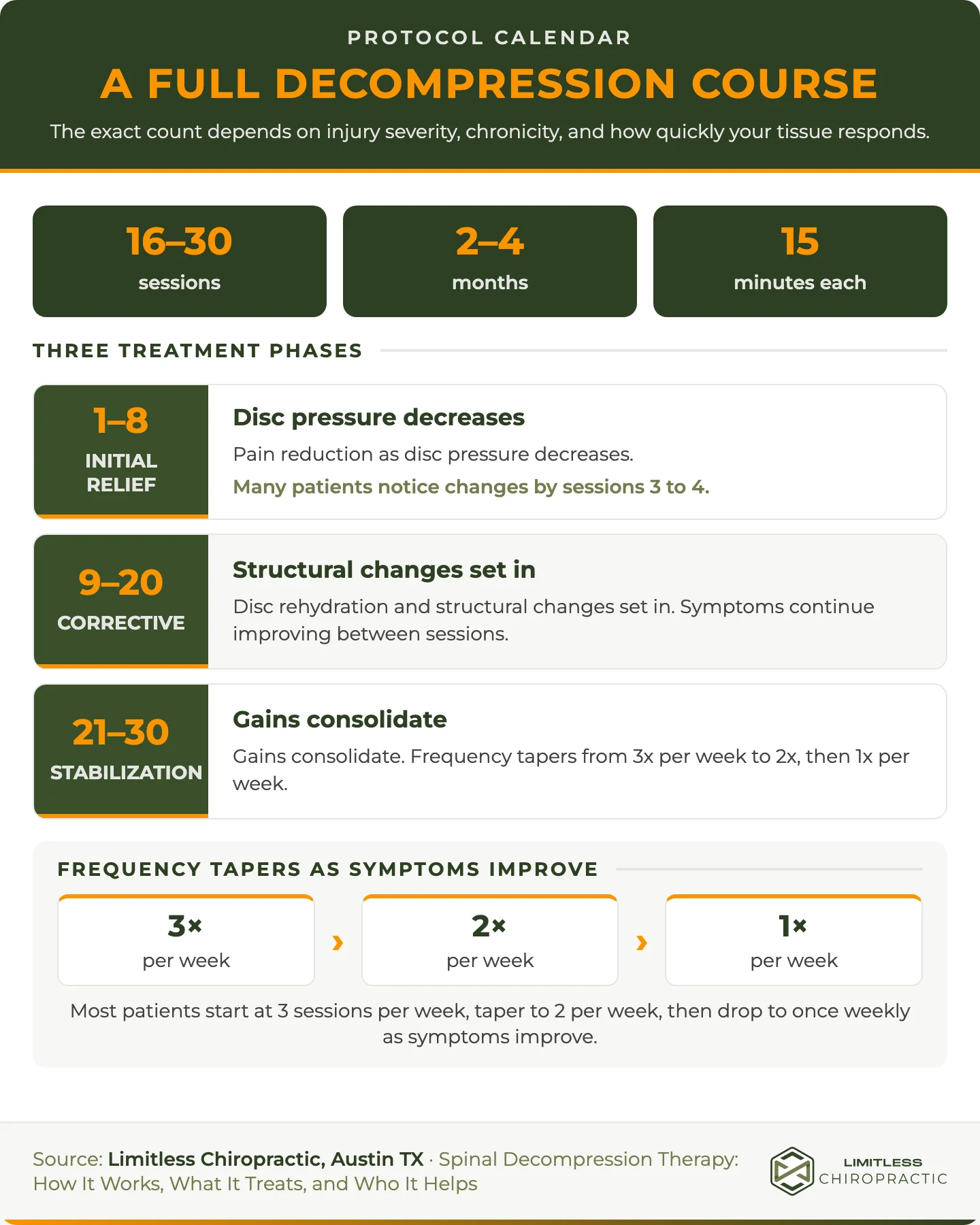
A typical protocol runs 16 to 30 sessions over 2 to 4 months, with each session lasting 15 minutes
You can plan around it. This isn't an open-ended commitment.
Decompression is horizontal. Your muscles stay relaxed, unlike inversion tables
Better positioning means the traction reaches the disc instead of fighting your body
Not everyone is a candidate, and certain conditions rule it out
Knowing before you start saves time, money, and frustration
Limitless Chiropractic uses the Triton Chattanooga table at the most competitive prices in Austin
You get research-backed equipment with cash-pay pricing built for accessibility
The Pain That Won't Go Away
Your back has been hurting for months. You've tried stretching, heat packs, over-the-counter medication, maybe a round of physical therapy. Some days are manageable. Other days you can't sit through a meeting without shifting every two minutes. An MRI showed a herniated disc, a bulging disc, or degenerative changes. Your doctor mentioned surgery as an option and anti-inflammatory injections as a bridge. Neither sounds appealing.
Spinal decompression therapy sits in the space between "take ibuprofen and hope" and "let someone cut into your spine." It's a non-surgical treatment that targets disc injuries directly, not by masking the pain, but by changing the mechanical environment inside the disc so healing can actually happen. It isn't a miracle treatment. It doesn't work for everyone or every condition. But for the right patient with the right diagnosis, decompression therapy resolves problems that other conservative treatments can't reach.
Dealing with disc-related back pain in Austin? We evaluate your spine before recommending anything.
Your spinal discs are gel-filled cushions between each vertebra. They absorb shock, allow movement, and keep vertebrae from grinding against each other. Each disc has a tough outer ring (annulus fibrosus) and a soft inner core (nucleus pulposus).
When a disc herniates, the inner core pushes through a weakness in the outer ring. When a disc bulges, the outer ring expands outward without rupturing. Both scenarios compress nearby nerve roots. That compression produces pain, numbness, tingling, or weakness in your back, down your legs, or both.
The body can reabsorb some herniated material over time. But "over time" means months to years, and only if the disc has the right conditions to heal. Most daily activities (sitting, standing, bending, carrying) increase pressure inside the disc. The herniation stays compressed. Nutrients can't flow in. The disc degenerates instead of recovering.
How Decompression Changes the Equation
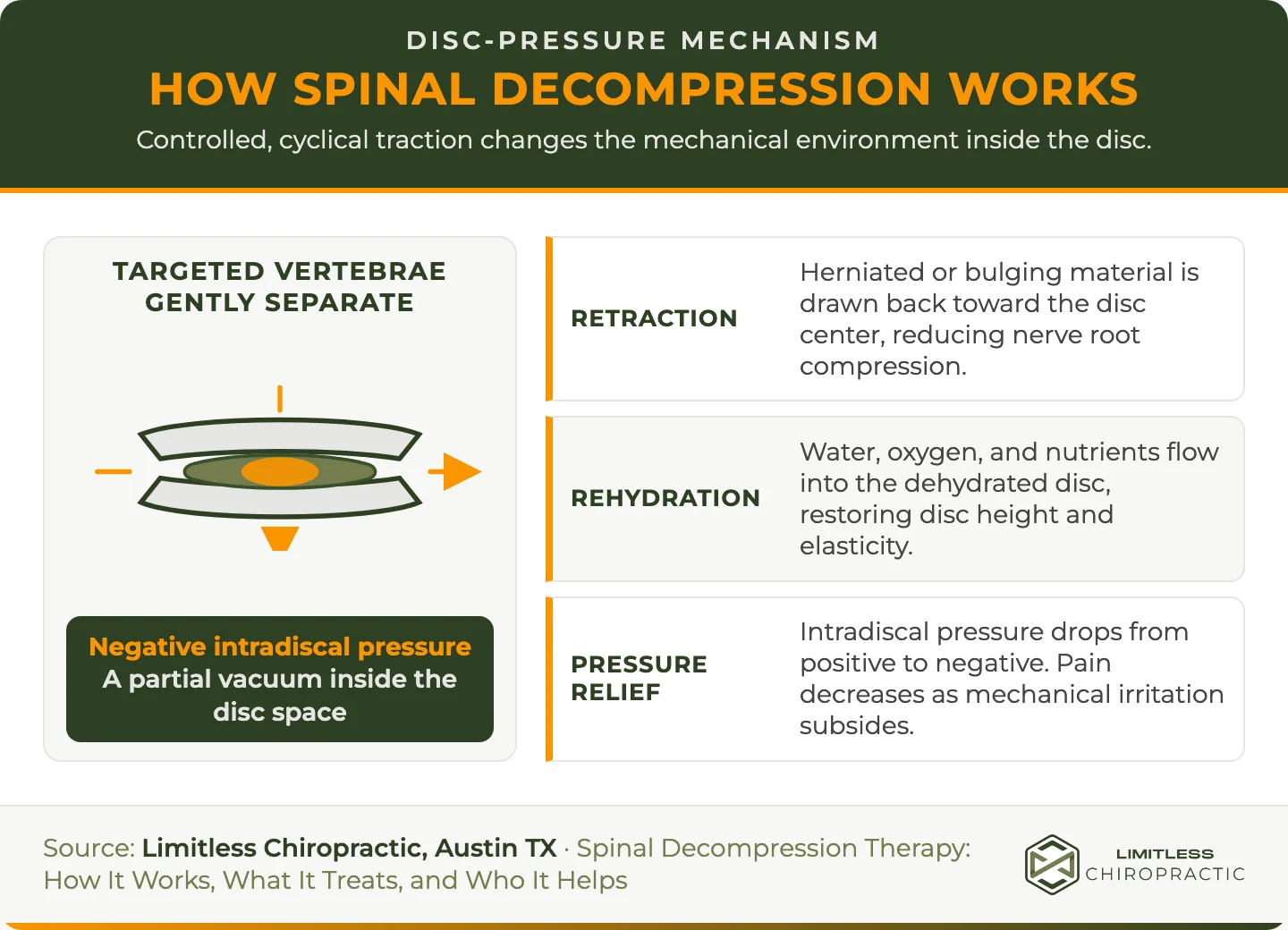
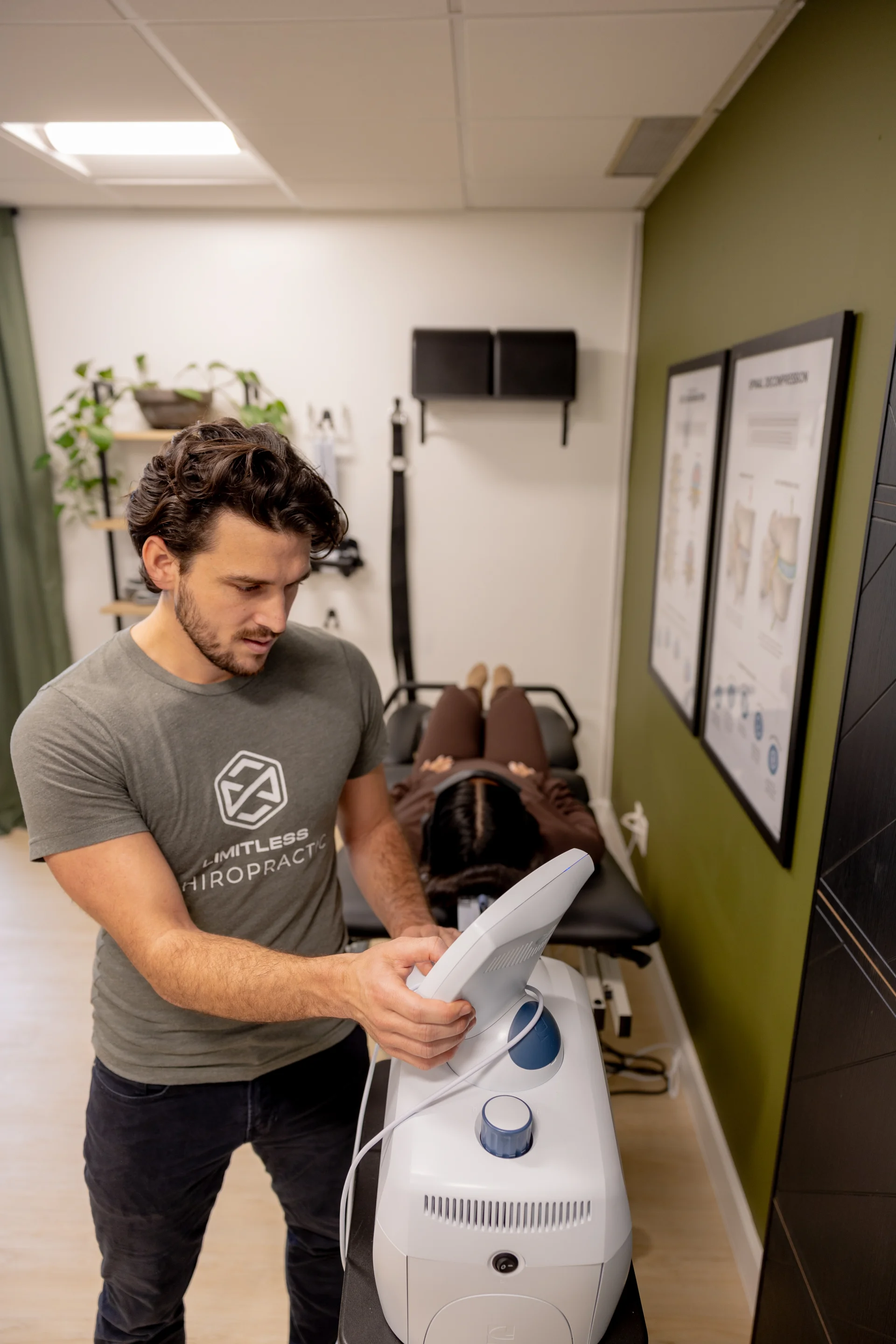
Spinal decompression therapy uses a computerized table to apply controlled, cyclical traction to your spine. The table gently separates the targeted vertebrae, creating negative intradiscal pressure, a partial vacuum inside the disc space.
That negative pressure does three things:
How Spinal Decompression Works
Mechanism
What Happens
Clinical Effect
Retraction
Herniated or bulging material drawn back toward disc center
Reduces nerve root compression
Rehydration
Water, oxygen, and nutrients flow into dehydrated disc
Restores disc height and elasticity
Pressure relief
Intradiscal pressure drops from positive to negative
Pain decreases as mechanical irritation subsides
This is not the same as hanging upside down on an inversion table or having someone pull on your legs. An inversion table puts you vertical, so your muscles engage the entire time to fight gravity. Decompression is horizontal. The muscles stay relaxed, allowing the table to deliver programmable, cyclical force to a specific disc level without the body resisting. That positioning difference is what separates general traction from targeted treatment, and it's why decompression produces better outcomes.
The computerized control matters. Your body's natural reflex to traction is to tighten. Muscles contract to protect the spine from being pulled apart. Decompression tables use logarithmic force curves that ramp up slowly enough to stay below the muscle guarding threshold. Your paraspinal muscles stay relaxed. The traction reaches the disc instead of getting absorbed by muscle tension.
How Dr. Scott Mitchell Explains the Difference
"Traditional traction applies a constant linear pull that the body often resists through muscle guarding, while spinal decompression uses controlled, variable distraction to reduce intradiscal pressure and facilitate fluid exchange without triggering that reflex. So it's not just stretching tissue, it's influencing disc physiology. Traction pulls; decompression modulates. One fights the body's protective reflexes, the other works with them to create measurable intradiscal changes."
— Dr. Scott Mitchell, Limitless Chiropractic
That distinction explains why patients who tried traction without success often respond to decompression. The two procedures look similar from the outside. The mechanical effect on the disc is not the same.
What Conditions Spinal Decompression Treats
Not all back pain is a decompression case. The therapy targets conditions where the disc is the primary pain generator.
Conditions Treated with Spinal Decompression
Condition
What's Happening
How Decompression Helps
Herniated disc
Inner core pushes through outer ring, compresses nerve
The common thread: the disc is either damaged, compressed, or dehydrated, and the resulting pressure is irritating a nerve or joint. Decompression addresses the disc directly. If your pain source is muscular, postural, or joint-based without disc involvement, decompression isn't the right tool.
This is why imaging matters before treatment starts. An MRI or detailed X-ray shows whether the disc is the problem. Without that confirmation, you're guessing. Guessing with your spine is expensive in every sense.
What a Decompression Session Looks Like
If you've never been on a decompression table, the process is simpler than it sounds.
Before Your First Session
Your chiropractor performs a comprehensive evaluation: health history, physical exam, neurological screening, and review of any imaging you've already had. If you don't have an MRI and your symptoms suggest disc involvement, one may be recommended before starting decompression.
The evaluation determines which disc level to target, how much force to use, and whether you're a candidate at all.
During the Session
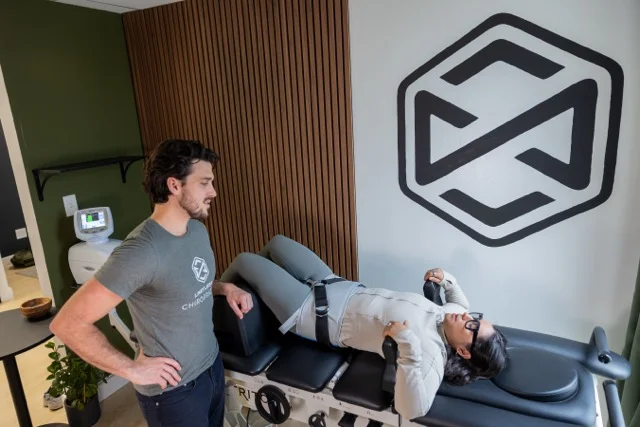
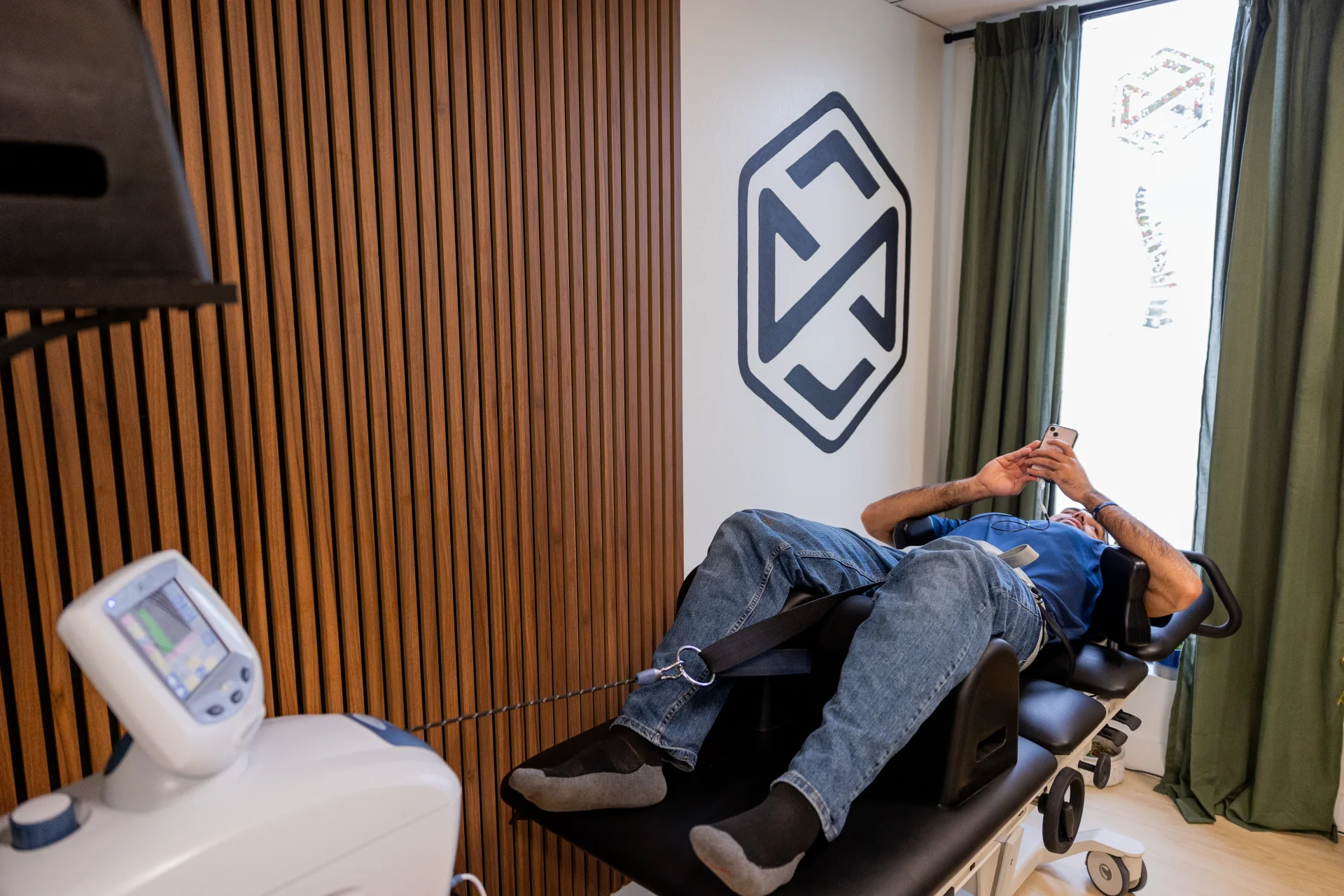
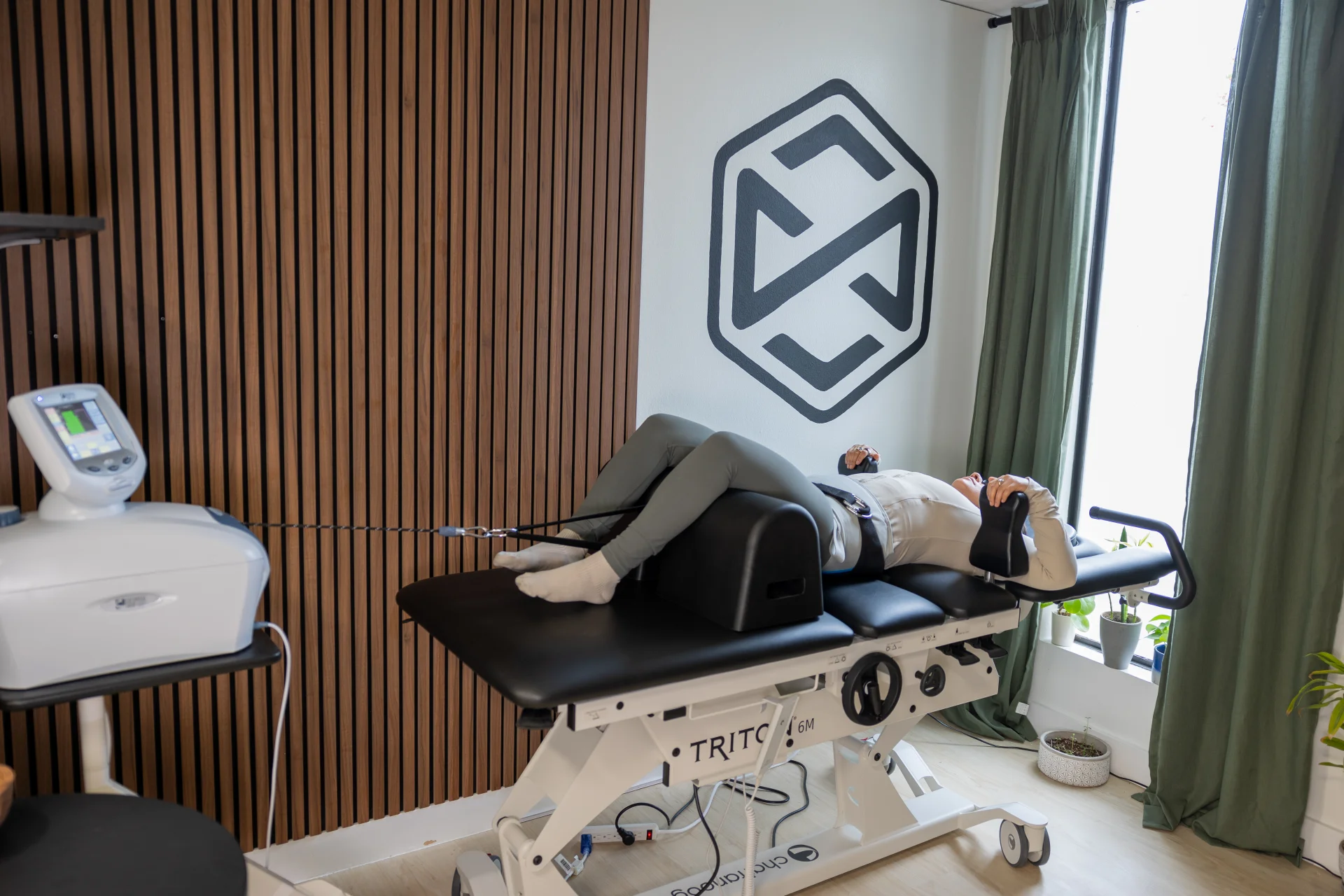
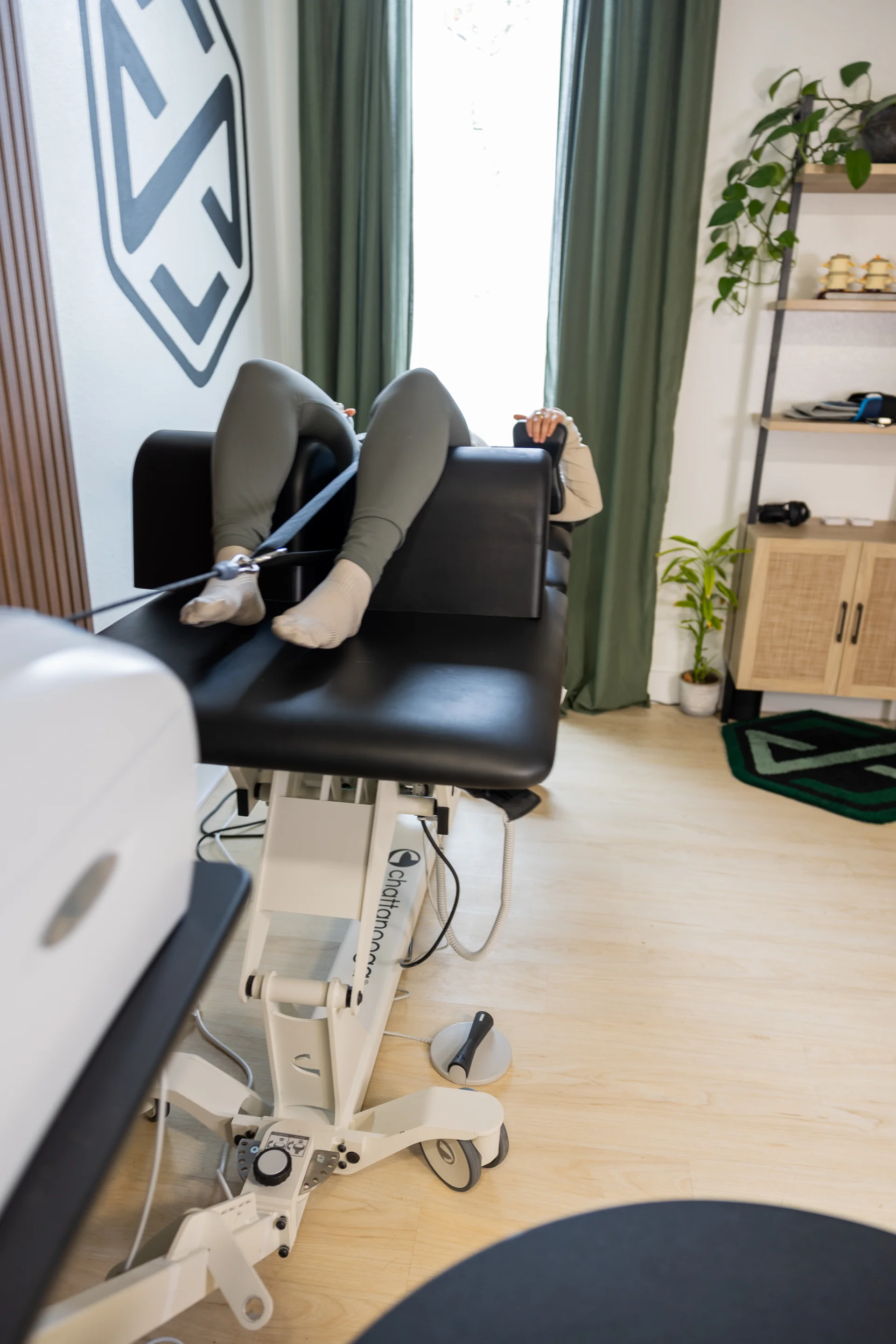
1.Positioning. You lie face-down or face-up on the decompression table, depending on which disc is being treated. A harness wraps around your pelvis and another stabilizes your trunk.
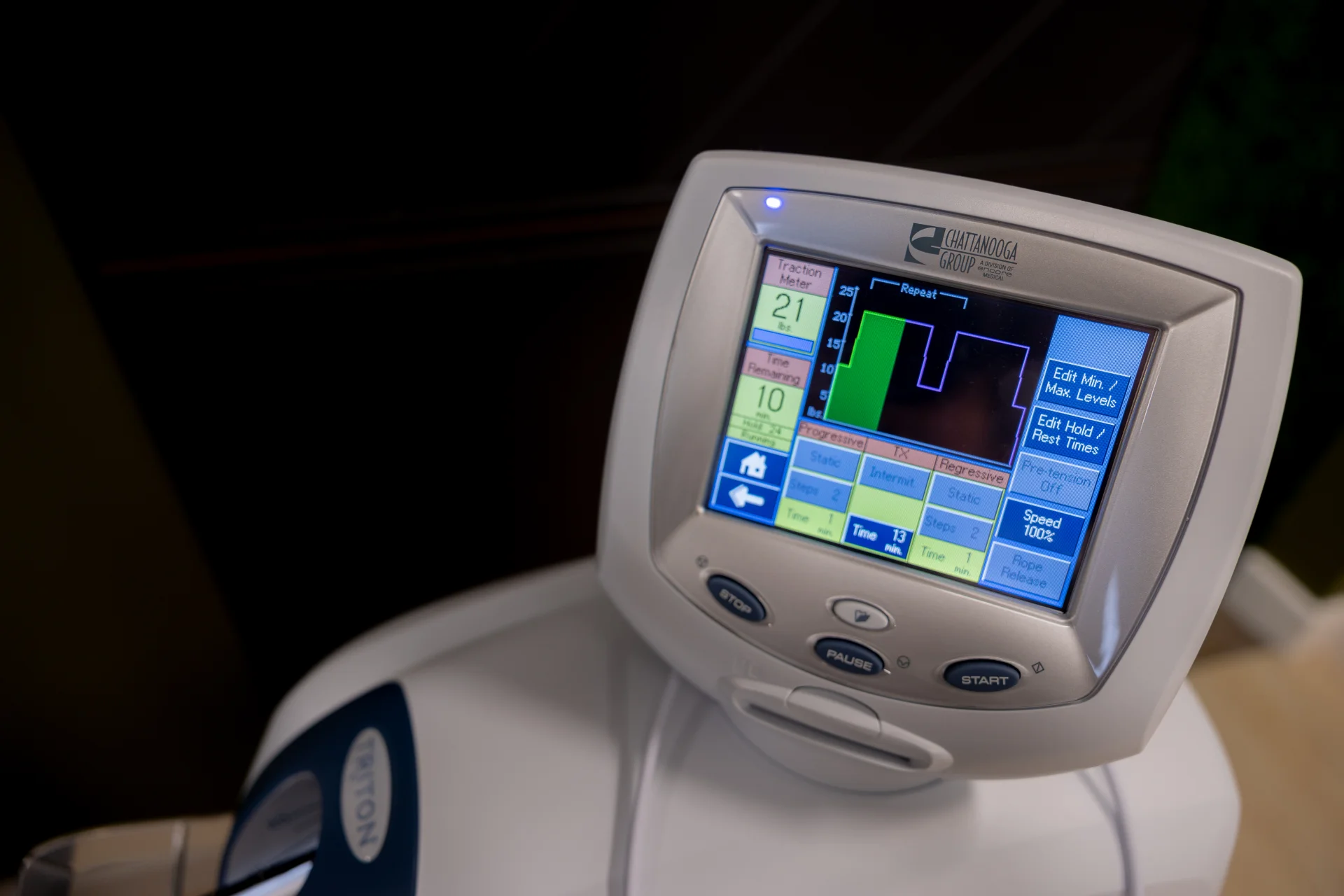
2.Programming. The chiropractor sets the target disc level, traction force (typically 25-60% of your body weight), and the cycle pattern on the table's computer.
3.Treatment. The table begins alternating between stretch and relaxation phases. Each stretch phase lasts about 60 seconds, followed by a 30-second relaxation. The entire session runs about 15 minutes.
4.Sensation. Most patients feel a deep stretch in their lower back. It should not be painful. If it is, the settings get adjusted immediately. Many patients find it relaxing enough to fall asleep during treatment.
After the Session
You may feel immediate relief. You may feel about the same. Occasionally patients feel mildly sore for a few hours as tissues adjust to the new positioning. This is normal and resolves quickly.
Significant changes typically appear after 6 to 10 sessions. The cumulative effect matters more than any single visit. Discs don't reshape overnight. They respond to repeated cycles of decompression over weeks and months.
Treatment Protocol at Limitless Chiropractic
The average decompression patient at Limitless Chiropractic comes in for 16 to 30 sessions over a 2 to 4 month period, with each session lasting 15 minutes. The exact count depends on injury severity, chronicity, and how quickly your tissue responds.
Spinal Decompression Treatment Timeline
Phase
Sessions
What's Happening
Initial relief
1–8
Pain reduction as disc pressure decreases. Many patients notice changes by sessions 3 to 4.
Corrective
9–20
Disc rehydration and structural changes set in. Symptoms continue improving between sessions.
Stabilization
21–30
Gains consolidate. Frequency tapers from 3x per week to 2x, then 1x per week.
Most patients start at 3 sessions per week for the first few weeks, taper to 2 per week, then drop to once weekly as symptoms improve. The typical total runs 2 to 4 months depending on how the disc responds.
Ready to find out if decompression is right for your condition? We evaluate first, recommend second.
Spinal infection. Active infection requires medical management first.
This is why evaluation comes before treatment. A thorough history, physical exam, and imaging review catch these contraindications before you get on the table.
Spinal Decompression vs. Other Treatment Options
If you're weighing options, here's how decompression compares to other approaches for disc-related back pain:
Treatment Comparison: Disc-Related Back Pain
Treatment
What It Does
Invasiveness
Recovery
Disc Targeting
Spinal decompression
Reduces intradiscal pressure, rehydrates disc
Non-invasive
None
Yes, computerized
Epidural injection
Reduces nerve root inflammation
Minimally invasive
1–3 days
Targeted inflammation only
Microdiscectomy
Surgically removes herniated material
Surgical
4–6 weeks
Yes; removes fragment
Spinal fusion
Joins two vertebrae permanently
Major surgery
3–6 months
Eliminates segment motion
Physical therapy
Strengthens muscles, improves mobility
Non-invasive
Ongoing
No; muscles, not disc
Medication
Reduces pain and inflammation
Non-invasive
Ongoing use
No; masks symptoms
Inversion table
General gravity traction
Non-invasive
None
No; entire spine
Decompression doesn't replace surgery when surgery is genuinely needed. A severely extruded disc compressing the spinal cord is a surgical case. But the majority of disc herniations, the ones causing pain, numbness, and functional limitation without neurological emergency, respond to conservative treatment. Decompression offers the most direct conservative approach to the disc itself.
What Realistic Results Look Like
Spinal decompression research shows favorable outcomes, but expectations need to be grounded.
What published studies report:
A clinical study in the European Journal of Medical Research found that 86% of patients with herniated or degenerative discs reported significant improvement with decompression therapy.
MRI follow-ups have documented measurable disc height restoration and herniation reduction after completing decompression protocols.
Pain scores (VAS) typically improve 50-80% by the end of a full treatment course.
What this means for you:
You will likely feel some improvement within the first two weeks. Complete resolution takes longer.
Some patients achieve near-complete pain relief. Others achieve significant improvement with residual symptoms that continue improving over months.
Maintenance sessions (once monthly or as needed) help sustain results for degenerative conditions.
The patients who do best are the ones who complete the full protocol, do their corrective exercises at home, and address the spinal alignment issues that contributed to the disc problem in the first place.
Decompression treats the disc. Chiropractic adjustments correct the alignment. Corrective exercises stabilize the result. Removing any one of those three legs weakens the outcome. This is why Limitless Chiropractic combines all three in the same treatment plan. Treating the disc in isolation doesn't address why it failed.
How Limitless Chiropractic Approaches Decompression
Spinal decompression is one tool in a broader treatment strategy. At Limitless Chiropractic, the protocol works like this:
Evaluation first, always. We perform a comprehensive spinal exam, neurological screening, and review your imaging before recommending decompression. If your pain isn't disc-related, we'll tell you and treat what's actually causing it.
Imaging-guided targeting. We use digital X-rays in-office and coordinate MRI when needed. The decompression table is programmed to the specific disc level confirmed by imaging. We don't guess.
Combined care. Decompression sessions are paired with chiropractic adjustments to correct the spinal misalignments that contributed to disc failure. Corrective exercises are assigned to build the muscular stability that prevents recurrence. The three components work together: disc treatment, spinal correction, and functional rehabilitation.
Progress tracking. Re-examinations at regular intervals measure objective changes: range of motion, orthopedic findings, neurological function, and pain levels. If the protocol needs adjustment, we catch it early. If you're responding well, we document it for your records, your insurance, and your peace of mind.
Equipment. We use the Triton Chattanooga decompression table: computerized, programmable, and built specifically for therapeutic spinal decompression. It's not a generic traction unit repurposed for decompression. The technology matters because the precision of force delivery determines whether the treatment reaches the disc.
Pricing. We offer the most competitive decompression pricing in Austin. The average patient comes in for 16 to 30 sessions over 2 to 4 months. We structure the package to make a full clinical course actually affordable for cash-pay patients. Insurance does not cover spinal decompression. We discuss exact costs with you before any treatment begins.
Frequently Asked Questions
Does spinal decompression really work?
For disc-related conditions (herniated discs, bulging discs, sciatica, degenerative disc disease): yes. Clinical studies and MRI follow-ups document both symptom improvement and structural changes in the disc. It does not work for all types of back pain, which is why proper diagnosis before treatment is critical.
How many sessions will I need?
The average decompression patient at Limitless Chiropractic comes in for 16 to 30 sessions over a 2 to 4 month period. Each session lasts 15 minutes. The exact count depends on severity, chronicity, and how quickly your body responds. Your chiropractor reassesses throughout and adjusts the plan based on your progress.
Is spinal decompression painful?
No. Most patients describe it as a deep stretch. Many find it relaxing. If you feel pain during a session, the settings are adjusted immediately. Mild soreness for a few hours after early sessions is normal and resolves quickly.
Can I do spinal decompression if I've had back surgery?
It depends on the surgery. Patients with spinal fusion hardware at the target level are not candidates for decompression at that segment. Patients with failed back surgery syndrome at levels without hardware may benefit. This is evaluated on a case-by-case basis.
Does insurance cover spinal decompression?
No. Insurance does not cover spinal decompression. This is a cash-pay treatment. We discuss costs upfront so you know exactly what to expect before starting a protocol.
What's the difference between decompression and an inversion table?
An inversion table puts you upside down, and your muscles engage to fight gravity the entire time. Spinal decompression is horizontal, so the muscles don't engage. The table delivers precise, cyclical traction to one disc level at a time with computerized force control. You get a much better decompression treatment and outcome because your body isn't resisting the pull.
How soon will I feel results?
Some patients notice improvement after 3-4 sessions. Others take 8-10 sessions before significant changes appear. The cumulative effect of repeated decompression cycles is what produces lasting structural change. This is not a one-visit fix.
Your Disc Isn't Healing on Its Own. It Needs Help.
You've been managing this pain for long enough to know it isn't going away by itself. Stretching helps temporarily. Medication dulls it. But every morning you wake up and the compression is still there, pressing on the same nerve, producing the same symptoms.
Spinal decompression therapy gives your disc the mechanical environment it needs to actually heal: negative pressure that draws herniated material back in, restores hydration, and reduces nerve compression. Combined with chiropractic alignment and corrective exercise, it addresses the problem at every level.
Limitless Chiropractic in Austin evaluates every patient before recommending decompression. We use imaging to confirm the diagnosis, computerized equipment to deliver precise treatment, and a combined care approach that treats the disc and the spine around it.
We'll review your imaging and tell you whether decompression is right for you
The pain has a source. The source has a treatment.
Limitless Chiropractic | 2800 S I-35 Frontage Rd, Ste 175 | Austin, TX 78704 | Serving Downtown Austin, South Austin, Round Rock, Cedar Park, and Pflugerville
Dr. Scott Mitchell
About the author
Dr. Scott Mitchell, a Boston-accented chiropractor with a passion for holistic health,dedicates his life to helping people unlock their LIMITLESS potential through personalized chiropractic care.