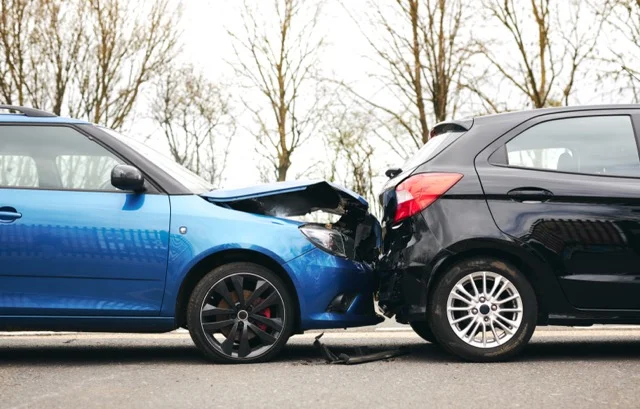
Car accident injuries often surface 24–72 hours after impact
Feeling fine at the scene doesn't mean you're uninjured
Adrenaline and delayed inflammation hide damage from you
Your body's emergency response masks the injury, not the severity
The first two weeks after a crash are the critical recovery window
Waiting shrinks your best chance at full recovery
Seeing a chiropractor first establishes health facts before legal decisions
Medical clarity makes every downstream decision smarter
A proper evaluation catches what the ER misses
Emergency rooms rule out emergencies — they don't diagnose soft tissue dysfunction
Early chiropractic care shortens recovery and prevents chronic pain
The difference between temporary setback and permanent condition is timing
Why Car Accident Injuries Are Often Missed Early
Most people's first instinct after a car accident is to assess the damage to the car. Bumper dented? Airbags deploy? Is the other driver okay?
Nobody asks whether their cervical spine shifted.
The problem with car accident injuries is that many of them don't announce themselves at the scene. You walk away thinking you got lucky. Maybe your neck feels tight, but that's just tension, right? The adrenaline pumping through your system tells you everything is fine. You exchange insurance information, maybe file a police report, and drive home.
Then the pain arrives.
This article is about timing — specifically, what happens inside your body during the hours, days, and weeks after a crash, and why understanding that timeline leads to better decisions. Not legal decisions. Health decisions. The kind that determine whether your accident becomes a story you tell at dinner parties or a condition you manage for years.
What a Car Accident Does to the Body (Even at Low Speeds)
Acceleration-Deceleration Forces Explained Simply
When another vehicle strikes yours, your car decelerates. Your body doesn't. It continues moving at pre-impact speed until your seatbelt catches you, your headrest stops your skull, or your muscles absorb the force — whichever comes first.
This mismatch between your body's momentum and your vehicle's sudden stop generates forces that travel through your spine. The cervical region — seven small vertebrae supporting a 10-12 pound head — absorbs the worst of it. But the lumbar spine, thoracic spine, and pelvis all participate in the energy transfer.
The National Highway Traffic Safety Administration has documented injury-producing forces at collision speeds as low as 5 mph. Your car may show no damage at all. The bumper did its job. Your ligaments and discs had no such protection.
Commonly Affected Systems
A car accident is not a single injury. It's a pattern of injuries across multiple systems:
Cervical spine — Whiplash mechanics stretch ligaments beyond their normal range and compress discs
Lumbar spine — Seatbelt restraint creates a fulcrum point that loads the lower back
Ligaments — These connective tissues between vertebrae stretch, micro-tear, or fully tear under impact forces
Intervertebral discs — The shock absorbers between vertebrae compress, bulge, or herniate
Nervous system — Spinal nerve roots become irritated as swelling increases pressure in tight spaces
Each of these structures has a different healing timeline. Muscles recover in weeks. Ligaments need months. Discs may never fully regenerate. This layered recovery schedule is why car accident symptoms evolve over time rather than appearing all at once.
Why Pain Is Often Delayed
Two biological mechanisms conspire to hide your injury:
Why Pain Is Delayed After Impact
Mechanism
What It Does
Duration
Adrenaline surge
Suppresses pain signaling between injury site and brain
24–48 hours post-impact
Delayed inflammation
Immune response builds gradually as tissue damage triggers swelling
Peaks at 48–72 hours
Adrenaline is your body's emergency broadcast system. It prioritizes survival over sensation. While it's active, you feel alert and capable — not injured. Meanwhile, your immune system dispatches inflammatory cells to damaged tissue. Swelling accumulates. Pressure on nerve roots mounts. By the time adrenaline recedes, inflammation has built a wall of pain that wasn't there yesterday.
This is why the ER clears you and sends you home. They ruled out fractures and internal bleeding — genuine emergencies. They did not assess ligament integrity, disc compression, or neurological irritation. Those injuries reveal themselves on a different timeline.
The Car Accident Recovery Timeline: What Patients Typically Experience
First 24-72 Hours
You feel shaken up but functional. Stiffness in the neck and shoulders. Maybe a dull headache at the base of your skull. Soreness that you attribute to tension, sleeping wrong, or the stress of dealing with insurance paperwork.
Most people dismiss these signals. They take ibuprofen and wait. This is the window where early evaluation produces the best outcomes — and where most people do nothing.
Days 3-14
This is when the injury reveals its actual scope. Symptoms that were mild on day two intensify or spread:
Symptoms That Develop Days 3–14
Symptom
What's Developing
Neck pain that worsens with movement
Inflammation has peaked; ligament damage is now symptomatic
Headaches that don't respond to medication
Cervicogenic origin — the headache is coming from your neck, not your head
Pain radiating into shoulders or arms
Nerve root compression from disc bulging or swelling
Dizziness or brain fog
Proprioceptive disruption — your cervical spine can't accurately report position to your brain
Difficulty sleeping
Pain wakes you during position changes; nervous system stays on alert
Compensation patterns start forming in this window. Your body avoids painful movements by shifting load to uninjured structures. Your posture changes. Muscles that weren't involved in the original injury begin guarding and tensing. What started as a cervical injury now involves your upper back, your shoulders, and your jaw.
Weeks 2-6
If the injury hasn't been evaluated and treated, you're now adapting to being injured rather than recovering from the injury.
Mobility decreases as scar tissue forms in and around damaged ligaments
Sleep quality deteriorates further
Fatigue becomes a daily companion
Activities that were effortless — driving, sitting at a desk, looking at a screen — now provoke symptoms
This period represents the closing of what clinicians call the acute treatment window. Injuries addressed in this phase respond to conservative care. Injuries that cross into month two and beyond often require longer, more complex treatment protocols. Some become permanent.
Months Later
Untreated car accident injuries don't disappear. They settle in. The acute symptoms dull into chronic patterns:
Persistent neck or back pain that fluctuates but never fully resolves
Degenerative changes in discs and joints that were stressed during impact
Headache patterns that become part of daily life
Reduced tolerance for physical activity
Sleep disruption that compounds into fatigue, mood changes, and decreased cognitive function
The Quebec Task Force on Whiplash-Associated Disorders found that up to 50% of whiplash patients still report symptoms one year post-injury. The variable that separates the recoverers from the chronic cases is almost always the same: when treatment started.
When You Should See a Chiropractor After a Car Accident
The 72-Hour Guideline
Ideally, within 72 hours of the accident — even if your symptoms are mild or haven't fully appeared. Early evaluation catches dysfunction before compensation patterns cement.
Definitely If Experiencing Any of These
Neck or back pain that developed after the crash
Headaches or migraines — especially at the skull base
Dizziness, vertigo, or balance disturbances
Numbness, tingling, or heaviness in arms or legs
Trouble sleeping that started after the accident
Jaw tension or TMJ discomfort
Difficulty concentrating or persistent brain fog
If a disc was involved in your accident — herniation, bulge, radiating pain into an arm or leg — see spinal decompression after a car accident for the post-injury decompression protocol used in our office.
What a Chiropractor Evaluates That the ER Doesn't
Emergency rooms screen for life-threatening injuries. Chiropractors evaluate functional injuries — the ones that affect your daily life for months or years if left unaddressed:
Spinal alignment and joint motion — Are your vertebrae moving properly or stuck?
Neurological involvement — Are nerves being compressed or irritated?
Soft tissue and ligament integrity — Are the structures holding your spine together damaged?
Whether imaging is appropriate — Not every case needs MRI, but some cases absolutely do
A thorough post-accident chiropractic evaluation takes 30-45 minutes. A rushed ER screening takes five.
Don't wait for symptoms to get worse. Early evaluation produces the best outcomes.
Chiropractor vs. Lawyer: Different Roles, Different Timing
This section isn't about competition. It's about sequence.
What Chiropractors Do After a Car Accident
Chiropractors are healthcare providers. After a car accident, their role is specific:
Diagnose the nature and extent of spinal and musculoskeletal injuries
Document findings with objective measurements and clinical tests
Provide treatment that addresses the mechanical dysfunction
Track recovery progress over time with measurable benchmarks
Everything a chiropractor does generates a medical record. That record tells the story of your injury in clinical terms — what was found, what was treated, and how you responded.
What Lawyers Do After a Car Accident
Personal injury attorneys handle liability, negotiate with insurance companies, and pursue compensation. Their effectiveness depends almost entirely on one thing: the quality of your medical documentation.
A lawyer can't argue the severity of your injury without a clinician's findings to support it. The more detailed, consistent, and timely your medical records, the stronger any legal case becomes.
Why Healthcare Comes First
Seeing a chiropractor first isn't about avoiding lawyers. It's about building a foundation of medical fact before making legal decisions:
Healthcare First vs. Legal First
Healthcare First
Legal First
Injury documented within the critical 72-hour window
Documentation gap weakens causation argument
Treatment begins when it's most effective
Recovery delayed while legal consultations happen
Medical records establish injury severity objectively
Injury claims lack clinical support
Health decisions based on clinical findings
Health decisions influenced by legal strategy
Medical clarity makes legal decisions smarter. Legal strategy without medical evidence is speculation. For Austin patients sorting out next steps after a crash, a personal injury chiropractor in Austin can build the medical foundation any legal claim depends on.
The tone here matters: this is about getting injured people the care they need, when they need it. Legal processes have their place. That place is after the body has been evaluated and the injury understood.
Common Mistakes People Make After Car Accidents
Common Mistakes After Car Accidents
Mistake
Why It Costs You
Waiting for pain to go away on its own
Delayed injuries worsen; acute window closes
Using only medication to manage symptoms
Pain relief without dysfunction correction lets injuries progress
Skipping evaluation because the crash was "minor"
Forces at 5 mph produce documented spinal injuries
Assuming the ER cleared you completely
ERs screen for emergencies, not soft tissue or joint dysfunction
Focusing on legal steps before understanding physical damage
Legal decisions without medical facts are uninformed decisions
The most expensive mistake is the last one. People spend weeks consulting attorneys while their untreated injury transitions from acute to chronic. By the time they start treatment, they've lost the window where recovery is fastest — and their medical documentation has a gap that insurance adjusters will exploit.
What a Chiropractic Car Accident Evaluation Typically Includes
Transparency builds trust. Here's what happens when you walk into a chiropractic office after a car accident:
What a Post-Accident Evaluation Includes
Evaluation Component
What It Reveals
Accident history and symptom timeline
Mechanism of injury, force direction, symptom progression
Orthopedic testing
Specific maneuvers that load cervical and lumbar structures to identify damage
Neurological screening
Reflexes, sensation, and muscle strength in extremities
Range-of-motion assessment
How far you can move compared to normal — measured, not guessed
Postural analysis
Compensation patterns that indicate where your body is guarding
Imaging when clinically indicated
In-office X-rays, flexion-extension views, or MRI referral based on findings
At Limitless Chiropractic, this evaluation happens in-house. In-house digital X-ray equipment means imaging happens the same day when warranted — no referral delays, no scheduling a separate appointment across town.
The evaluation produces a clinical picture of your injury. From there, a care plan addresses what was found — not a generic protocol, but a plan built around your specific findings.
How Early Chiropractic Care Shortens Recovery
The logic is mechanical, not philosophical. Car accident injuries disrupt how your spine moves. Early intervention restores that motion before the body compensates around the dysfunction:
Restoring joint motion within the first two weeks prevents adhesions and scar tissue from restricting movement permanently
Reducing compensation patterns keeps secondary injuries from developing in structures that weren't damaged in the crash
Supporting nervous system healing by removing pressure on irritated nerve roots
Improving sleep and daily function by addressing the pain that disrupts both
Preventing small injuries from becoming chronic conditions — the difference between a cervical sprain that heals in 6 weeks and a degenerative pattern that persists for years
The body doesn't need time to heal. It needs conditions that allow healing. Misaligned vertebrae, compressed discs, and irritated nerves don't self-correct. They self-compensate. Compensation feels like adaptation but functions like deterioration.
When Legal Guidance May Be Appropriate
Some car accident situations do warrant legal consultation:
Injuries are severe or require extended treatment
Symptoms persist despite consistent care
Insurance companies deny claims or offer inadequate settlements
The at-fault driver's coverage is insufficient
Medical expenses exceed what you can manage
When you arrive at a legal consultation with weeks of documented clinical findings, objective measurements, and tracked recovery progress, your attorney has what they need. When you arrive with nothing but a story about pain that started after a crash, they have to build a case from scratch.
Health facts first. Legal strategy second.
Frequently Asked Questions
How soon after a car accident should I see a chiropractor?
Within 72 hours is ideal. Even if your pain is mild or hasn't fully appeared, early evaluation catches injuries before they worsen and establishes timely documentation.
What if my pain doesn't start until days later?
This is normal and expected. Adrenaline masks pain for 24-48 hours. Inflammation peaks at 48-72 hours. Symptoms appearing days after a crash are consistent with delayed soft tissue and spinal injuries.
Do I need a referral to see a chiropractor after a car accident?
No. In Texas, you can see a chiropractor directly without a referral. Most auto insurance policies include coverage for chiropractic care after an accident.
Should I see a chiropractor or a lawyer first?
A chiropractor. Understanding your injury gives you medical facts. Those facts inform every decision afterward — including legal ones. A lawyer works with your medical documentation, so establishing that documentation early benefits both your health and any potential claim.
Can low-speed car accidents really cause injuries?
Yes. The NHTSA has documented spinal injuries at collision speeds as low as 5 mph. Your vehicle's bumper absorbs impact energy. Your cervical spine does not. Vehicle damage is a poor predictor of bodily injury.
What does car accident chiropractic treatment involve?
After evaluation, treatment may include specific spinal adjustments, spinal decompression therapy for disc involvement, soft tissue work, corrective exercises, and postural retraining. The plan depends entirely on what the evaluation finds.
Recovery Starts With Understanding the Injury
Car accidents don't just damage vehicles. They disrupt the mechanical systems that allow your body to function — your spine, your discs, your nervous system, your ligaments. These injuries don't always announce themselves immediately. They build over hours and days as adrenaline fades and inflammation rises.
The recovery timeline is predictable. The outcome is not. That outcome depends on what you do in the first 72 hours, the first two weeks, the first six weeks after impact. Early evaluation and care compress recovery timelines. Waiting extends them — sometimes indefinitely.
This is not about choosing between a chiropractor and a lawyer. It's about sequencing. Health facts first. Everything else second. For a deeper walkthrough of post-crash recovery — case studies and phase-by-phase care — see Reclaim Your Life After a Car Accident.
Limitless Chiropractic in Austin evaluates car accident injuries with in-office digital X-rays, comprehensive orthopedic and neurological testing, and individualized treatment plans. We document everything. We treat the cause, not just the symptoms.
Your spine doesn't care about your deductible. It cares about what happens next.
Limitless Chiropractic | 2800 S I-35 Frontage Rd, Ste 175 | Austin, TX 78704 | Serving Downtown Austin, South Austin, Round Rock, Cedar Park, and Pflugerville
Dr. Scott Mitchell
About the author
Dr. Scott Mitchell, a Boston-accented chiropractor with a passion for holistic health,dedicates his life to helping people unlock their LIMITLESS potential through personalized chiropractic care.