You're here because someone has put a decision in front of you. A surgeon recommended microdiscectomy or fusion. A pain management physician offered epidural injections. A friend mentioned spinal decompression. Three different specialists, three different treatments, and no clear way to compare them on the same terms.
This guide gives you that comparison. We walk through what each path actually does, what the published outcomes look like, what each one costs once the deductibles and lost income are accounted for, and the framework patients can use to decide which option is appropriate for their situation. The goal is not to talk you out of surgery. Surgery is the right answer for some patients. The goal is to make sure you can actually evaluate the options before you commit to one.
If your spine is the question and you want a Limitless Chiropractic practitioner to walk through the decision with you, call or book online below.
South Austin · cash-pay · transparent up-front pricing
Key Takeaways
What You'll Learn
Why It Matters
Lumbar fusion has revision rates of 12 to 30% within 5 years per published spine literature
Surgery is not a one-and-done decision; revision is a real probability
Epidural steroid injections offer short-term relief but do not change disc structure
If the disc is still compressed after the injection wears off, you're in the same place
Spinal decompression treats the disc directly with non-surgical mechanical traction
It addresses the underlying compression, not just the pain signal
Cash-pay decompression is often cheaper than the "insurance covers surgery" path once everything is counted
The headline cost is misleading; the real cost is what comes out of your pocket
Limitless Chiropractic offers the best and most affordable decompression pricing in Austin
You can run a full clinical course without a five-figure cost tier
Surgical second opinions catch a meaningful percentage of unnecessary procedures
The person doing the surgery should not be your only source of advice on whether to do it
The Three Treatment Paths at a Glance
Most disc-related back and neck pain ends up at one of three doors:
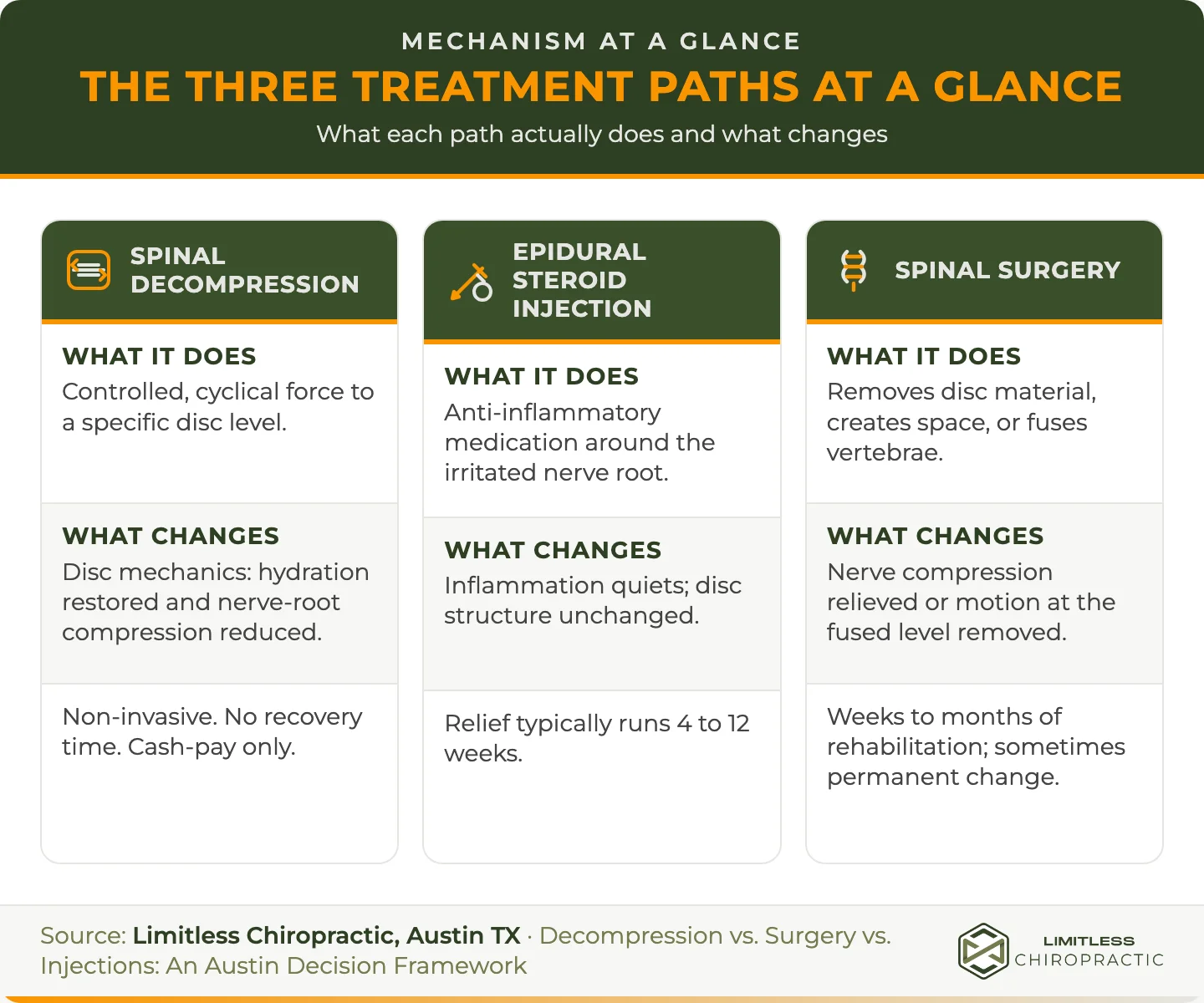
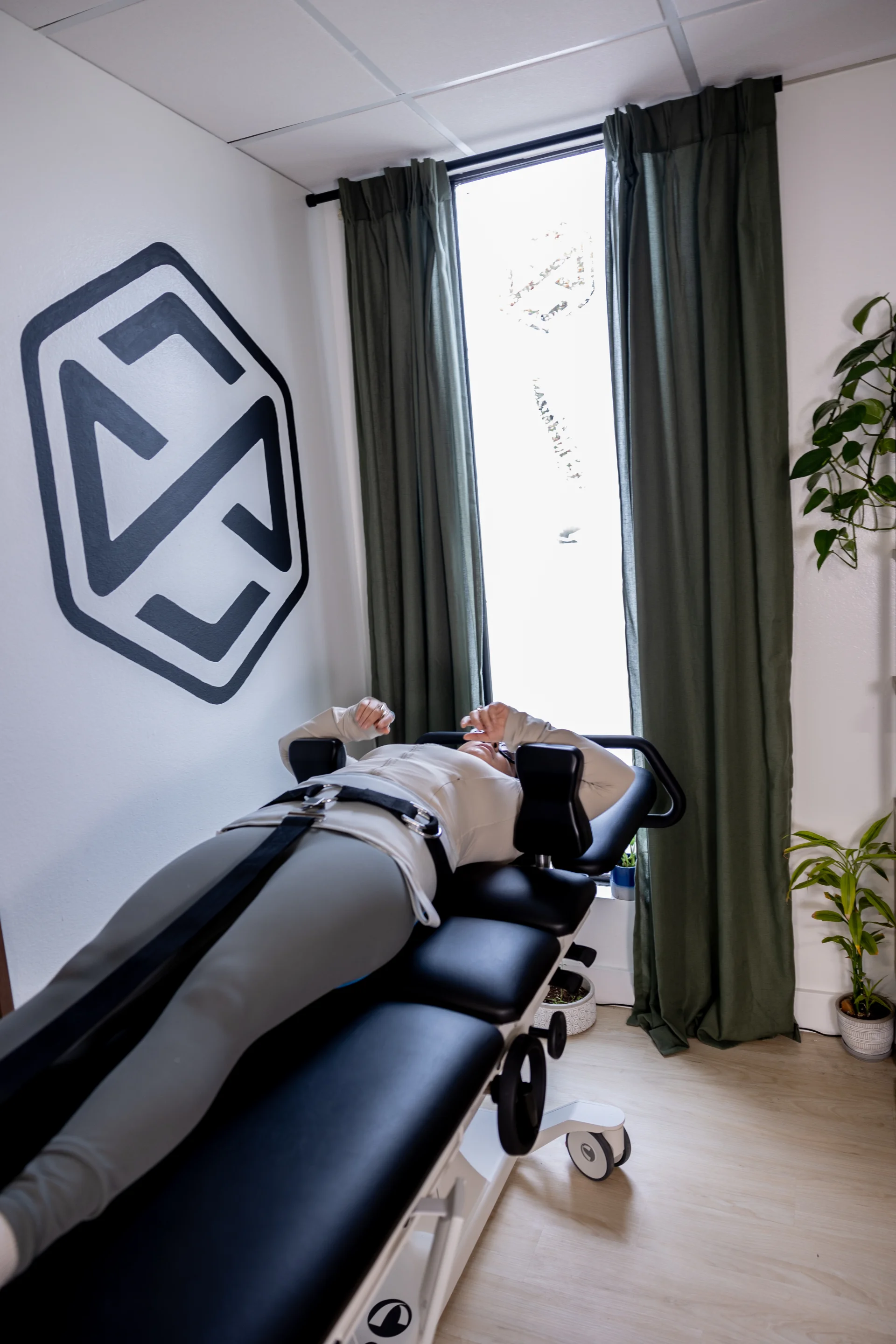
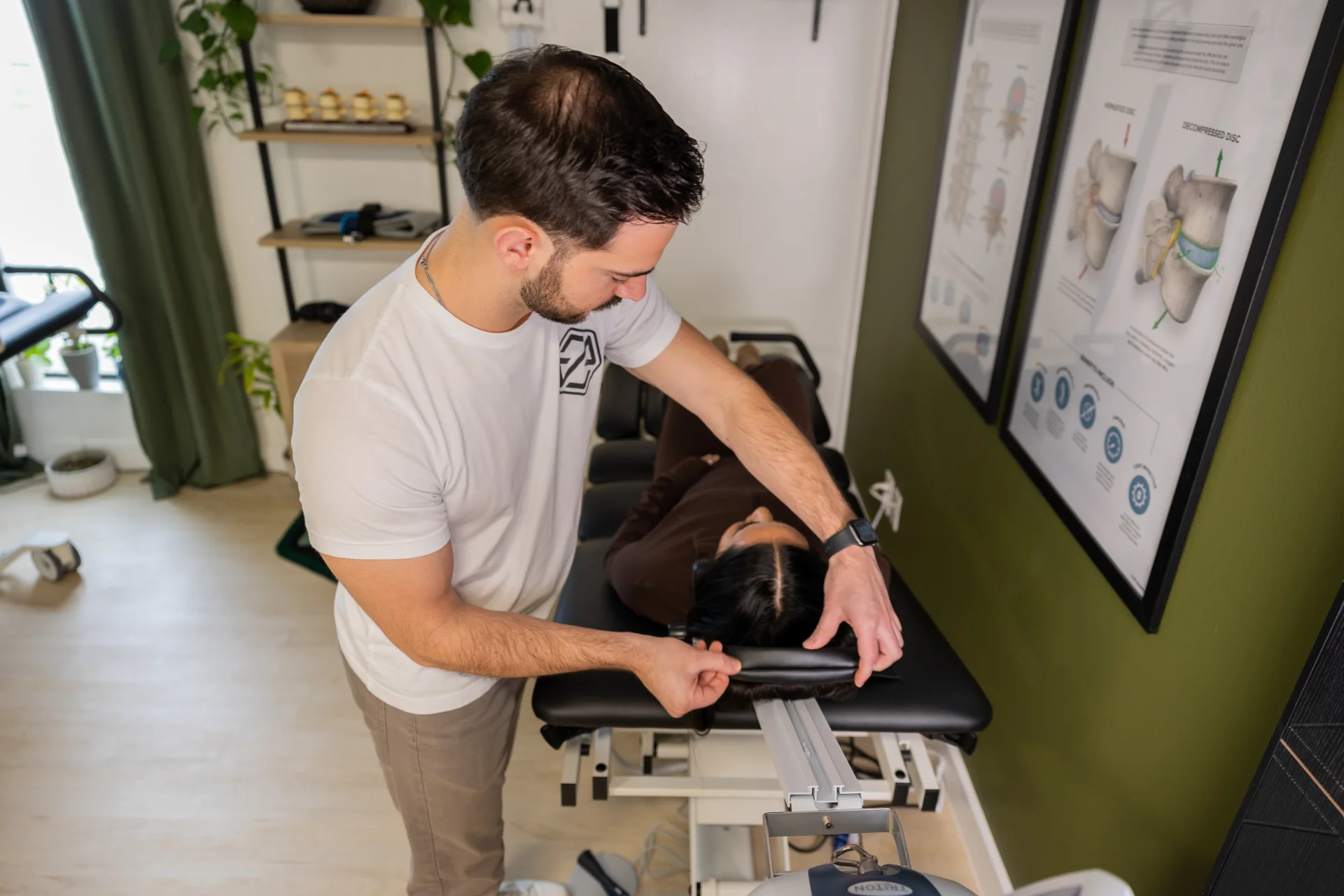
Spinal decompression uses a computerized traction table to apply controlled, cyclical force to a specific disc level. Negative intradiscal pressure draws herniated material back toward the disc center, restores hydration, and reduces compression on adjacent nerve roots. Non-invasive, no recovery time, cash-pay only.
Epidural steroid injection delivers anti-inflammatory medication directly into the epidural space around the irritated nerve root. The injection reduces inflammation and quiets pain signaling for weeks to months. The disc structure itself is unchanged. Insurance frequently covers it. Limited cumulative steroid exposure is the trade-off.
Spinal surgery physically removes herniated disc material (microdiscectomy), creates more space around compressed nerves (laminectomy), or fuses two vertebrae together to eliminate motion (fusion). Surgical, hours-long recovery from anesthesia, weeks to months of rehabilitation, and sometimes a permanent change in spinal mechanics.
The conventional sequence many patients hit is injection first, surgery if injection fails, with decompression rarely mentioned at any step. That sequence skips the option that addresses the disc itself before adding either steroids or surgical hardware to the equation. Patients often arrive at decompression after one or both of the other paths underperformed.
Mechanism at a Glance
Path
What It Does
What Changes
Spinal decompression
Computerized cyclical traction creates negative intradiscal pressure at a targeted level
Disc mechanics: herniated material drawn toward center, hydration restored, nerve-root compression reduced
Epidural steroid injection
Corticosteroid delivered into the epidural space around the irritated nerve root
Inflammation around the nerve quiets; disc structure unchanged
Microdiscectomy / laminectomy
Surgical removal of herniated fragment or creation of more space around the nerve
Mechanical compression on the nerve relieved; disc otherwise altered by surgical entry
Lumbar fusion
Two or more vertebrae permanently joined with hardware to eliminate motion
Motion at the fused level removed; adjacent levels absorb additional load
Surgical Reality: What the Outcomes Data Actually Shows
Spine surgeons present a clean version of microdiscectomy and fusion. The published literature is more nuanced.
Microdiscectomy outcomes. This is the most common spine surgery for lumbar disc herniation. The surgeon removes the herniated fragment compressing the nerve root. Short-term outcomes are favorable: roughly 75 to 85% of patients report significant improvement at 6 to 12 weeks. The longer-term picture is where the asterisks appear. Re-herniation at the same level occurs in 5 to 15% of cases. Revision surgery within 5 years runs 7 to 10%. Adjacent segment degeneration, where discs above or below the operated level start to fail, becomes a documented risk.
Lumbar fusion outcomes. Fusion is recommended when surgeons believe the segment needs to be permanently stabilized: severe degeneration, instability, recurrent herniation, or post-laminectomy syndrome. Fusion eliminates motion at the fused level. The body compensates by loading the levels above and below more heavily, which is why revision rates run 12 to 30% within 5 years depending on the patient population, fusion technique, and number of levels operated on. Recovery is 3 to 6 months. Permanent activity restrictions are common.
Failed back surgery syndrome (FBSS). Roughly 10 to 40% of spine surgery patients develop persistent or recurrent pain that surgery did not resolve. The condition is significant enough to have its own ICD-10 code. Patients in this group often end up back in conservative care, sometimes with decompression or chiropractic, after the surgical option exhausted itself. The failed back surgery syndrome guide walks through what conservative options remain after a surgical course did not resolve the pain.
Surgical Outcomes at a Glance
Surgical Procedure
Short-Term Improvement
Longer-Term Caveats
Microdiscectomy
~75 to 85% report significant improvement at 6 to 12 weeks
Re-herniation 5 to 15%; revision within 5 years 7 to 10%; adjacent-segment degeneration documented
Lumbar fusion
Pain and instability often improve at the fused level
Revision 12 to 30% within 5 years; recovery 3 to 6 months; adjacent levels absorb load
Failed back surgery syndrome
Not applicable — defines surgical underperformance
10 to 40% of spine-surgery patients develop persistent or recurrent pain post-op
None of this means surgery is the wrong call for everyone. Severe nerve compression with progressive neurological deficit, cauda equina syndrome, or refractory pain that has not responded to anything else is a surgical case. The point is that surgical recommendations should be evaluated against the actual probability distribution, not the optimistic version. For patients who have already exhausted conservative options, the disc herniations guide walks through the conservative-care sequence in more detail.
Epidural Injections: What They Do and Where They Stop
The epidural steroid injection is the bridge therapy most pain management practices reach for first. The mechanism is straightforward: a corticosteroid (often triamcinolone or methylprednisolone) is injected into the epidural space around the irritated nerve root. The steroid suppresses the inflammatory cascade that is amplifying pain signaling.
What injections do well. Acute relief of radicular pain is real. Many patients report meaningful improvement within days. The window of relief typically runs 4 to 12 weeks. For patients in the middle of an acute flare or trying to bridge to a non-surgical recovery, the injection can be useful.
What injections do not do. They do not change disc structure. The herniation is still herniated. The disc is still compressed. The nerve root is still being mechanically irritated by the same disc material. Once the steroid effect wears off, the underlying mechanics are unchanged. This is why patients commonly receive a series of injections and find each subsequent one less effective.
Cumulative steroid concerns. Most spine specialists limit epidural steroid injections to roughly 3 to 4 per year and 6 lifetime, though practices vary. Higher cumulative steroid exposure is associated with bone density loss, adrenal suppression, immune effects, and local tissue changes. The injection is a tool, not a treatment plan.
The clinical question with injections is whether you are using the relief window to actually fix the underlying problem (decompression, structural rehab, surgical correction) or whether you are just stretching out the time until the next injection. The first use is reasonable. The second is a slow path to a worse position. For the larger framing of where injections and other interventional options fit before surgery, see a smarter holistic approach to pain.
Decompression Reality: How the Mechanism and Protocol Differ
Spinal decompression is the option many patients have not been offered. It addresses the disc directly without anesthesia, without permanent structural change, and without the limited cumulative window that injections impose.
Mechanism. A computerized decompression table delivers controlled, cyclical traction to a targeted disc level. The force ramps slowly enough to stay below the muscle guarding threshold, so paraspinal muscles stay relaxed. Negative intradiscal pressure builds inside the disc space, drawing herniated material back toward center, allowing fluid and nutrients to flow into the dehydrated disc, and reducing mechanical compression on the nerve root. The treatment looks superficially like traction but it is not the same thing. Traction pulls; decompression modulates.
Protocol at Limitless Chiropractic. The average decompression patient at Limitless Chiropractic comes in for 16 to 30 sessions over a 2 to 4 month period, with each session lasting 15 minutes. The exact count depends on injury severity, chronicity, and how quickly the disc responds. Sessions start at 3 per week, taper to 2, then drop to once weekly as symptoms improve. The full course is mapped out and priced up front.
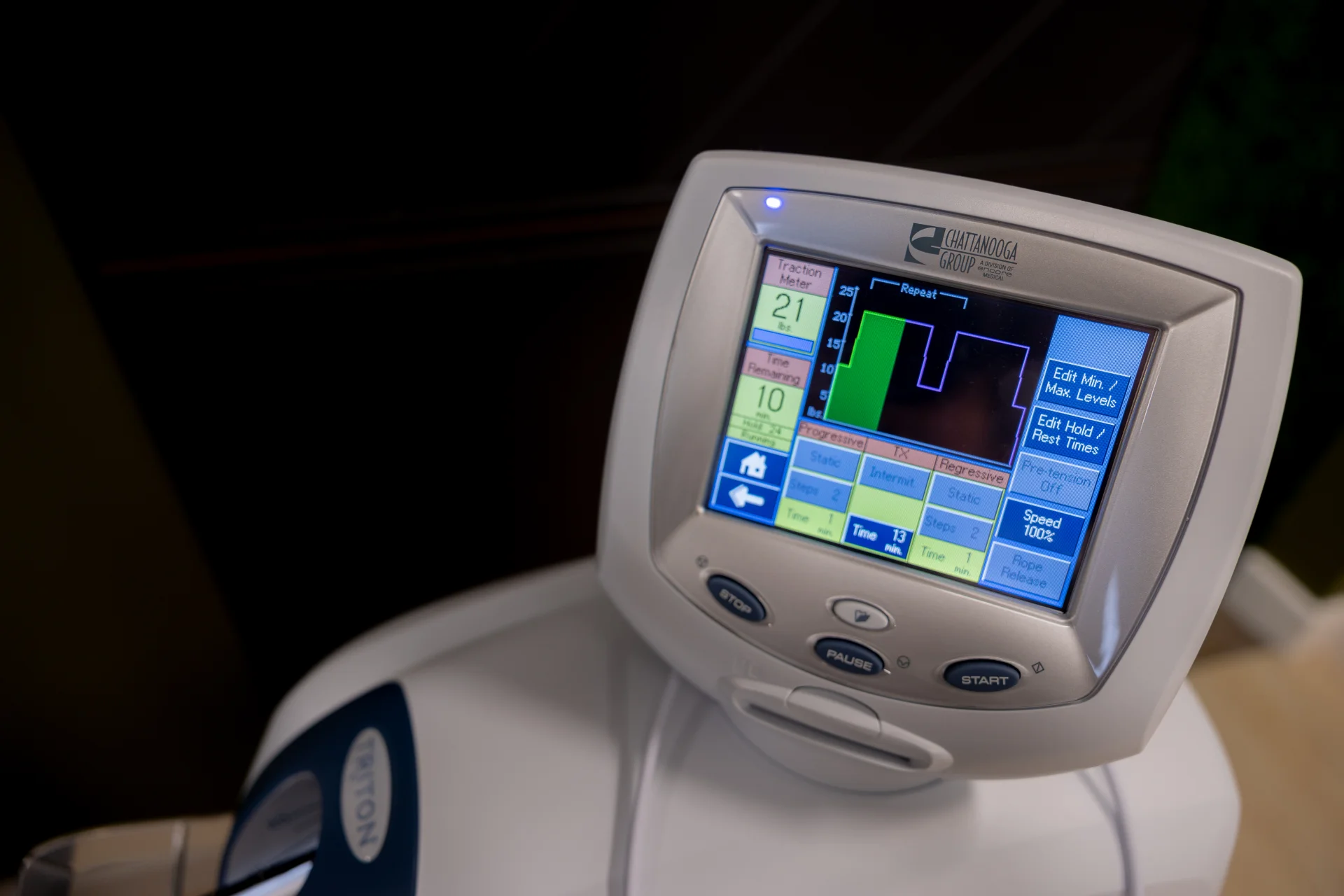
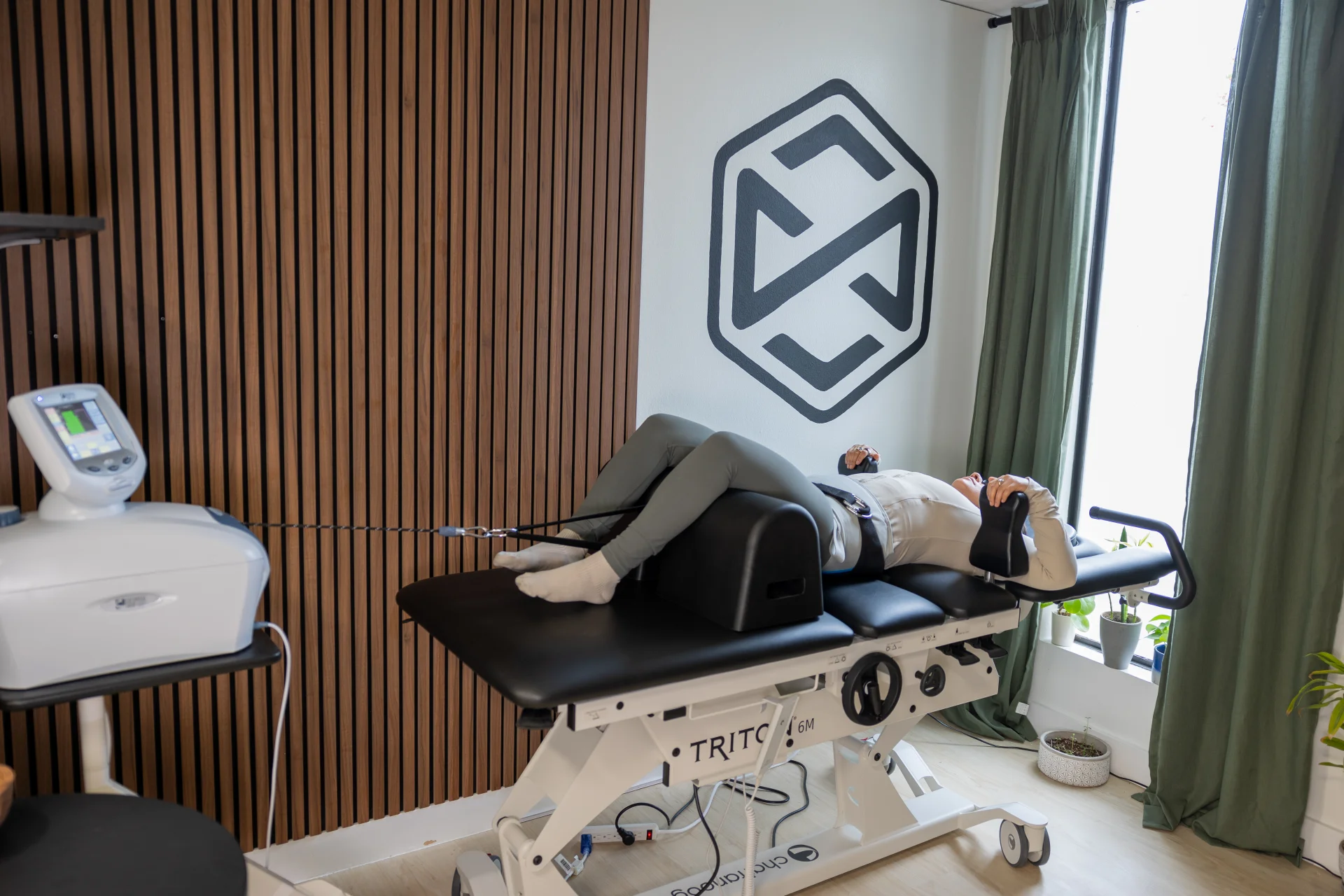
Equipment. Limitless Chiropractic uses the Triton Chattanooga decompression table, a computerized, programmable system built specifically for therapeutic spinal decompression. The precision of force delivery determines whether the treatment reaches the disc or gets absorbed by muscle tension, which is why generic traction units repurposed for decompression do not produce the same outcomes.
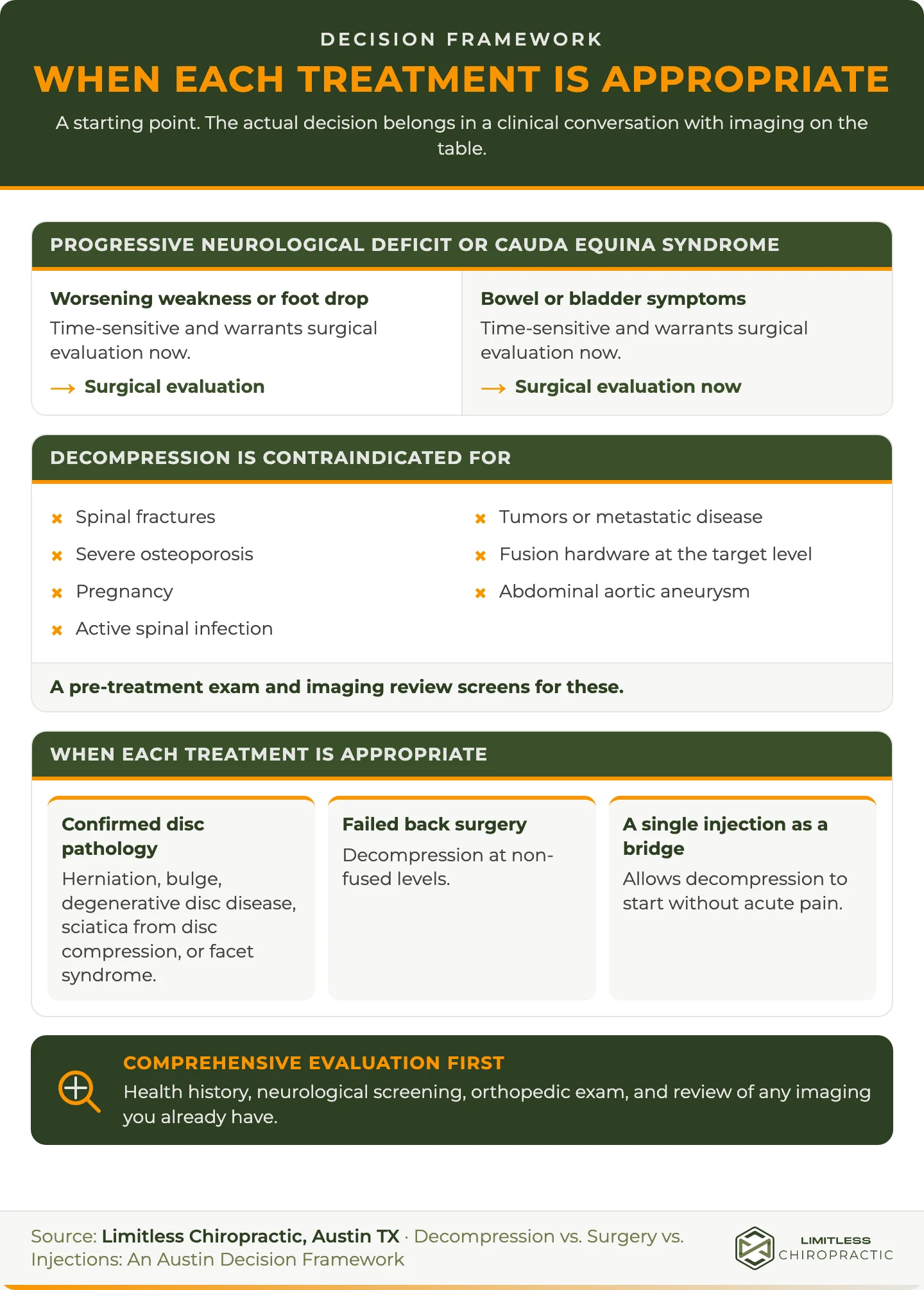
Candidacy. Decompression works well for confirmed disc pathology (herniation, bulge, degenerative disc disease, sciatica from disc compression, facet syndrome, failed back surgery at non-fused levels). It is contraindicated for spinal fractures, tumors or metastatic disease, severe osteoporosis, fusion hardware at the target level, pregnancy, abdominal aortic aneurysm, and active spinal infection. A pre-treatment exam and imaging review screens for these.
Decompression preserves every other option. If the conservative path does not produce the result you need, surgery and injections are still available. Reverse the order and the math changes.
Headline pricing on these three paths is misleading. Insurance "covers" surgery in a way that obscures the actual amount that comes out of your pocket. Cash-pay decompression looks expensive on paper until you account for what the alternatives cost once the deductibles, copays, and recovery time are tallied.
What Each Path Actually Costs in Austin
Cost Variable
Decompression (cash-pay)
Epidural Injection (insured)
Surgery (insured)
Headline cost
Full course package, transparent up front
$1,500 to $3,500 per injection (billed)
$30,000 to $80,000+ for fusion (billed)
Out-of-pocket after insurance
Not applicable, paid directly
Deductible + copay, often $300 to $1,200 per injection
Deductible + 10 to 30% coinsurance, often $5,000 to $15,000+
Recovery time / lost income
None, walk out and resume normal activity
1 to 3 days of soreness
4 to 6 weeks (microdiscectomy) or 3 to 6 months (fusion)
Repeat probability
Optional maintenance, low
Often repeated 2 to 4x per year, diminishing returns
Revision rate 7 to 30% within 5 years
Permanent structural change
None
None
Fusion eliminates motion at level; hardware remains
The cost-of-surgery line many patients never run: if you have a $5,000 deductible and 20% coinsurance, a $50,000 fusion costs you the deductible plus 20% of the post-deductible balance. That is roughly $14,000 out of pocket on a covered procedure. Add 6 weeks of unpaid leave at your earnings rate, plus physical therapy copays after, and the surgical path is rarely the bargain it looks like.
Limitless Chiropractic offers the best and most affordable decompression pricing in Austin. We package the full clinical course up front so you know what 16 to 30 sessions over 2 to 4 months will run before you commit to the protocol. Insurance does not cover spinal decompression anywhere we have seen, including in Texas. Cash-pay is the only path, but it is also the only path where you and the practitioner are aligned on what the actual treatment course is, without insurance audit pressure shaping the visits. For the full Austin cash-pay context, see the 2026 cash-pay cost guide.
Decision Framework: When Is Each Path Appropriate
The right answer depends on what is going on with your spine and where you are in the timeline. The framework below is a starting point. The actual decision belongs in a clinical conversation with imaging on the table.
When Each Treatment Is Appropriate
Clinical Picture
First-Line Choice
Why
Acute disc herniation, no progressive neurological deficit
Decompression
Addresses the disc itself, no surgical risk, preserves all future options
Severe acute radicular pain interfering with sleep and function
Injection as bridge, then decompression
Injection buys the relief window; decompression addresses the structure during it
The pattern most patients miss: decompression preserves every other option. If decompression does not produce the result you need, surgery and injections are still available. If you start with surgery and end up in the FBSS group, decompression at the operated level may no longer be possible.
That asymmetry is a real reason to consider the conservative path first when the clinical picture allows it. Post-accident patients in particular often find decompression a useful first step before any surgical conversation — see spinal decompression after a car accident and the broader personal injury chiropractor in Austin guide for the PI-specific framing.
Getting a Second Opinion on Surgery
The best time to get a second opinion is before the surgery, not after.
Spine surgical literature documents meaningful disagreement between surgeons on whether a given case actually warrants operation. Independent review programs in some health systems have flagged 10 to 30% of recommended spine procedures as unnecessary or premature on second-opinion evaluation. The mechanism is not bad faith; it is the natural bias of seeing every case from inside the surgical specialty.
A useful second opinion is from a spine specialist who does not stand to operate on you. Options include:
A second spine surgeon at a different practice or health system, ideally one whose case mix includes conservative management
A physiatrist (physical medicine and rehabilitation specialist) who can evaluate the imaging and the conservative options that may not have been fully explored
A chiropractor with experience in disc-related cases who can evaluate whether decompression is a candidate path
Bring your imaging (MRI, X-ray, CT). Bring the surgical recommendation in writing if you have it. Ask the second-opinion provider whether your case actually meets the threshold for surgical intervention, what conservative options remain that have not been tried, and what the realistic outcome distribution looks like for your specific situation.
The second opinion does not have to overrule the first. It just has to give you enough information to make the decision with full visibility.
How Limitless Chiropractic Approaches the Decision Conversation
We do not pretend to be the right answer for every spine case. Some patients walk in and we tell them, after exam and imaging review, that surgery is the appropriate path and we coordinate the referral. Other patients are good decompression candidates who never had the option presented to them.
The Limitless Chiropractic approach to the decision conversation:
Comprehensive evaluation first. Health history, neurological screening, orthopedic exam, and review of any imaging you already have. We may order MRI if the clinical picture warrants it.
Honest framing of candidacy. If decompression is contraindicated or unlikely to help based on what we see, we say so. If it is a strong candidate path, we walk through the protocol and the realistic outcome distribution.
Transparent pricing up front. Limitless Chiropractic offers the best and most affordable decompression pricing in Austin. The full course of 16 to 30 sessions over 2 to 4 months is priced as a package. You know what you are committing to before any treatment begins.
Coordination, not territoriality. If your case needs surgical evaluation, we say so and coordinate the referral. If injection is the right bridge therapy, we coordinate that too. We are not trying to be your only provider; we are trying to be the right provider for the part of your care that fits our scope.
The patients who do best with us are the ones who arrived after they had already been pushed toward surgery or another round of injections, took a beat to evaluate the alternatives, and decided to try the conservative path first. The ones who do worst are the ones who delayed serious neurological symptoms hoping decompression would resolve them. Recognizing the difference is most of the clinical work.
Frequently Asked Questions
Is spinal decompression as effective as surgery?
For the right patient with the right diagnosis, decompression resolves the underlying disc compression non-surgically. It is not a universal substitute for surgery. Severe nerve compression with progressive neurological deficit, cauda equina syndrome, or instability that requires structural stabilization are surgical cases. For uncomplicated disc herniation or bulge with radicular pain, decompression frequently produces comparable or better outcomes than surgery without the recovery window or revision risk.
Should I get an epidural injection before trying decompression?
Not necessarily. Injections quiet inflammation; decompression addresses the underlying disc mechanics. Some patients use a single injection as a bridge to allow decompression to start without acute pain, which is reasonable. Patients who run through 3 or 4 injections without addressing the underlying disc compression often arrive at decompression having already exhausted the cumulative steroid window without resolving the structural problem.
Why doesn't insurance cover spinal decompression?
Insurance carriers categorize decompression as a non-covered service in Texas and most other states we have seen. The classification has not kept pace with the published evidence base for the modality. Cash-pay is the universal path. Limitless Chiropractic prices the full course up front so the cost is transparent before treatment begins.
Does Limitless Chiropractic take referrals from surgeons?
Yes. Some Austin spine surgeons refer patients to us when they evaluate a case as appropriate for conservative management before surgical intervention. We also coordinate referrals to surgeons when our exam identifies a clear surgical case.
How long do I have to make this decision?
For most disc cases, the decision window is weeks to months, not days. The exception is progressive neurological deficit (worsening weakness, foot drop, bowel or bladder symptoms) which is time-sensitive and warrants surgical evaluation now. If you have unclear timing, get the imaging in front of a second-opinion provider quickly so the framework is informed.
What if I already had surgery and the pain came back?
Failed back surgery syndrome is a common path to decompression. Patients with hardware at a fused level cannot be decompressed at that level, but adjacent levels often respond to decompression and may be the actual source of the recurring pain. We evaluate post-surgical cases the same way we evaluate any other: exam, imaging, candidacy assessment, honest framing.
Get a Decision-Stage Evaluation
If a surgeon has put a recommendation in front of you and you want to evaluate the alternatives before committing, that is exactly the conversation we have most weeks at Limitless Chiropractic.
Call or book online below to schedule an evaluation. Bring your imaging. Bring the surgical recommendation if you have it in writing. We walk through the exam, the imaging, the candidacy assessment, and the realistic protocol cost up front. You leave with a clearer picture of which path actually fits your situation.
Limitless Chiropractic | 2800 S I-35 Frontage Rd, Ste 175 | Austin, TX 78704 | Serving Downtown Austin, South Austin, Round Rock, Cedar Park, and Pflugerville
Dr. Scott Mitchell
About the author
Dr. Scott Mitchell, a Boston-accented chiropractor with a passion for holistic health,dedicates his life to helping people unlock their LIMITLESS potential through personalized chiropractic care.