A herniated disc isn't just back pain. It's the mechanical event where the inner core of one of your spinal discs pushes through a tear in the outer ring and starts compressing whatever nerve runs past that level. The pain you're feeling, the numbness down your leg, the weakness when you climb stairs: those are downstream symptoms of a structural problem.
Most patients arrive at decompression after they've already tried the usual sequence. NSAIDs that take the edge off but don't change the disc. Physical therapy that strengthens the muscles around the injury but doesn't reach the disc itself. Maybe an epidural injection that quieted the inflammation for a few weeks before the symptoms returned. Surgery is the next conversation, and that's when most people start asking whether there's something between conservative care and the operating room.
There is. Spinal decompression therapy is the closest non-surgical treatment to addressing what the surgery would address. It changes the mechanical environment inside the disc so the herniation can retract and the disc can rehydrate. For the right candidate with the right diagnosis, it resolves disc problems that other conservative care can't reach.
If you have a confirmed herniation and you're weighing your options in Austin, we'll review your imaging and walk you through whether decompression is the right path before recommending anything.
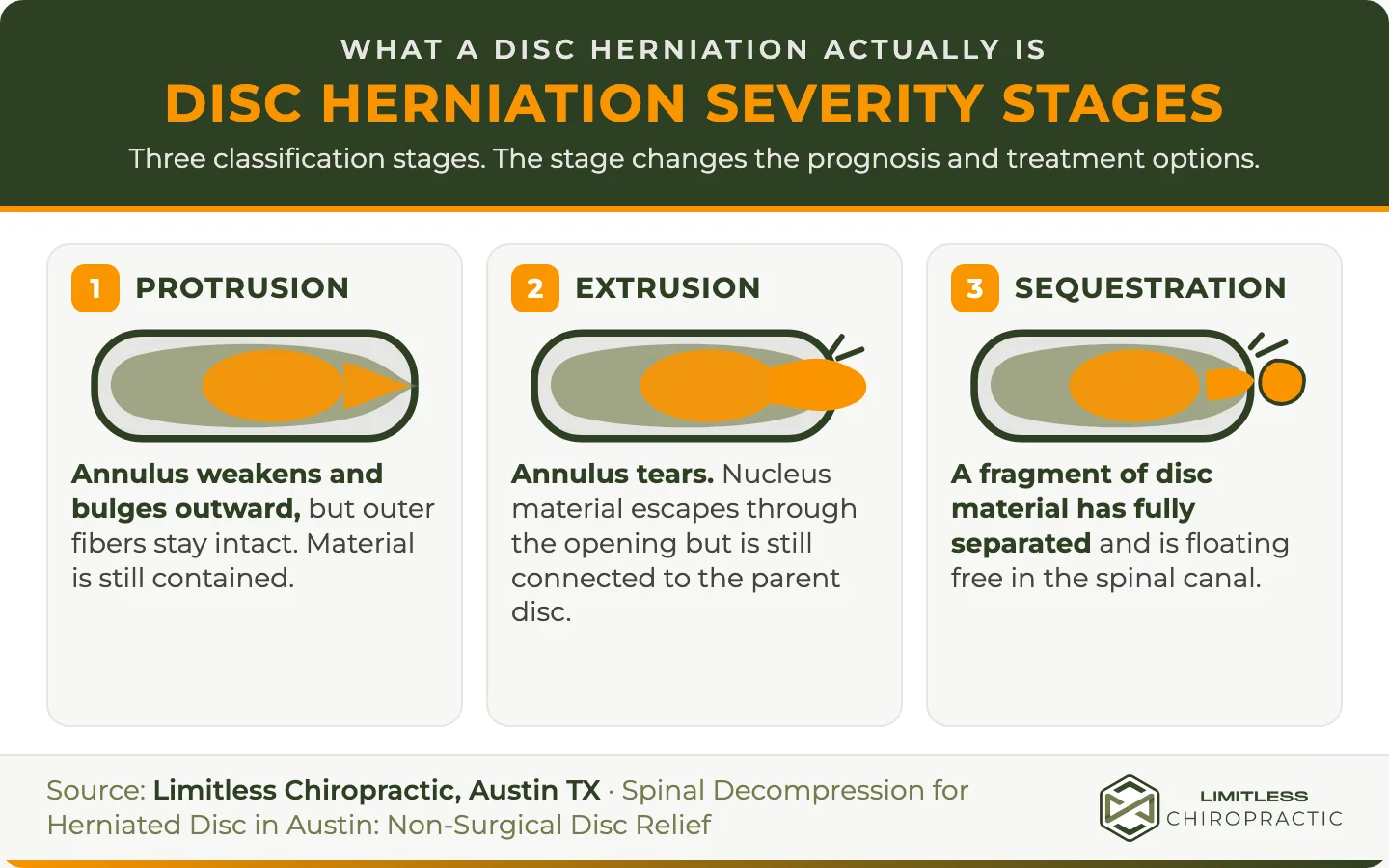
Disc herniation has three severity stages: protrusion, extrusion, sequestration
Each responds differently to decompression and to surgery
NSAIDs, PT, and rest fail many herniation patients because they don't reach the disc
Your treatment may have been right for the symptom but wrong for the source
Decompression creates negative pressure inside the disc, drawing herniated material back in
This is the mechanical change surgery would attempt to achieve, without cutting
The Limitless Chiropractic protocol runs 16 to 30 sessions over 2 to 4 months at 15 minutes per session
You can plan your life around it. Not an open commitment.
Microdiscectomy and fusion are real options, but they have specific indications
Surgery isn't always required, and isn't always avoided either
Insurance does not cover spinal decompression. Cash-pay only.
Knowing the cost up front lets you decide before you're 6 sessions in
Limitless Chiropractic uses the Triton Chattanooga table at the most competitive prices in Austin
Equipment quality and pricing structure both shape outcomes
What a Disc Herniation Actually Is
Your spinal discs sit between each pair of vertebrae and absorb most of the daily load on your back. Each disc has a tough fibrous outer ring (the annulus fibrosus) wrapped around a soft, gel-like inner core (the nucleus pulposus). The annulus contains the nucleus the way the wall of a tire contains air pressure.
A herniation happens when that containment fails. Years of compressive load, a single high-force event, or some combination of both creates a tear in the annulus, and the nucleus pushes through. The herniation has three classification stages, and the stage matters because it changes both the prognosis and the treatment options.
Disc Herniation Severity Stages
Stage
What's Happening at the Disc
Treatment Implications
Protrusion
Annulus weakens and bulges outward, but outer fibers stay intact. Material is still contained.
Most respond well to conservative care. Decompression is often the most effective conservative tool.
Extrusion
Annulus tears. Nucleus material escapes through the opening but is still connected to the parent disc.
Symptoms tend to be sharper. Still responds to decompression in most moderate cases.
Sequestration
A fragment of disc material has fully separated and is floating free in the spinal canal.
Sometimes responds to conservative care, but threshold for surgical referral is much lower.
Protrusion is the earliest stage. The annulus weakens and bulges outward, but the outer fibers stay intact. The disc's footprint is wider than it should be. Material is still contained. Most protrusions respond well to conservative care, and decompression is often the most effective conservative tool.
Extrusion is the next stage. The annulus has actually torn, and nucleus material has escaped through the opening but is still connected to the parent disc. Symptoms tend to be sharper because the displaced material is in direct contact with nerve roots. Extrusions still respond to decompression in most cases, particularly when the displacement is moderate and there's no neurological emergency.
Sequestration is the most severe stage. A fragment of disc material has fully separated from the parent disc and is floating free in the spinal canal. Sequestration sometimes responds to conservative care, but the threshold for surgical referral is much lower because a free fragment can produce neurological symptoms that progress quickly.
The herniation can occur at any level of the spine. The most common locations are the lower lumbar spine (L4-L5 and L5-S1) and the lower cervical spine (C5-C6 and C6-C7). Lumbar herniations cause back pain that radiates down a leg. Cervical herniations cause neck pain that radiates down an arm. The radiating pain follows the nerve root the herniation is pressing on, which is how a chiropractor or surgeon can localize the affected level before imaging confirms it. For a deeper look at how disc herniations develop and what the full recovery picture involves, see our companion piece on disc herniations from prevention to recovery.
Why Traditional Treatments Fail Many Herniation Patients
The standard sequence for a new herniation goes something like this: rest, anti-inflammatories, physical therapy, possibly an epidural injection, and surgery if nothing else works. Each step has a real role. Each step also has limits that matter for people stuck on the wrong end of them.
Rest reduces the inflammation around an irritated nerve root. It does not change the herniation. As soon as you go back to normal activity, the disc is still displaced and the same compression returns.
NSAIDs reduce the chemical inflammation that amplifies nerve pain. They are useful in the acute phase. They do not retract herniated material, restore disc height, or rehydrate a degenerated disc. Long-term NSAID use also has its own costs, including gastric, cardiovascular, and renal effects that compound with chronic use.
Physical therapy strengthens the musculature around the injured segment, improves mobility, and addresses postural drivers. Strong muscles take some load off the disc, which can reduce symptoms. Physical therapy does not pull a herniated fragment back into the disc. The mechanical environment inside the disc is not what PT is built to address.
Epidural steroid injections suppress the inflammatory response around the nerve root. They can break a pain cycle and create a window where rehab progresses better. They do not change the disc. Symptoms typically return within weeks to months unless something else has shifted in the interim.
The pattern is consistent: every traditional conservative tool addresses the inflammation, the muscles, or the symptom. None of them act on the disc itself. For patients whose herniation is the actual driver of the pain, that's a fundamental treatment-source mismatch. Decompression exists in a different category. It targets the disc directly.
How Decompression Targets the Disc
Spinal decompression therapy uses a computerized table to apply controlled, cyclical traction to a specific level of your spine. The table separates the targeted vertebrae just enough to drop the pressure inside the disc space below atmospheric, creating negative intradiscal pressure, or a partial vacuum.
That negative pressure does three things at the disc level:
Decompression at the Disc Level
Mechanism
What Happens at the Disc
Clinical Effect
Retraction
Negative pressure draws herniated or extruded material back toward the disc center
Reduces direct nerve root compression
Rehydration
Fluid, oxygen, and nutrients flow into the dehydrated disc space
Restores disc height and elasticity
Pressure relief
Intradiscal pressure shifts from compressive to negative
Mechanical irritation on the nerve root subsides
This is a different mechanical event than what an inversion table does. An inversion table puts you vertical and lets gravity stretch your spine. Your muscles engage the entire time to fight gravity, which means a substantial portion of the stretch is absorbed by muscle tension rather than reaching the disc. Decompression keeps you horizontal. The muscles stay relaxed, and computerized force curves apply traction slowly enough to stay below the body's protective muscle-guarding reflex. The traction reaches the disc instead of getting absorbed by the muscles around it.
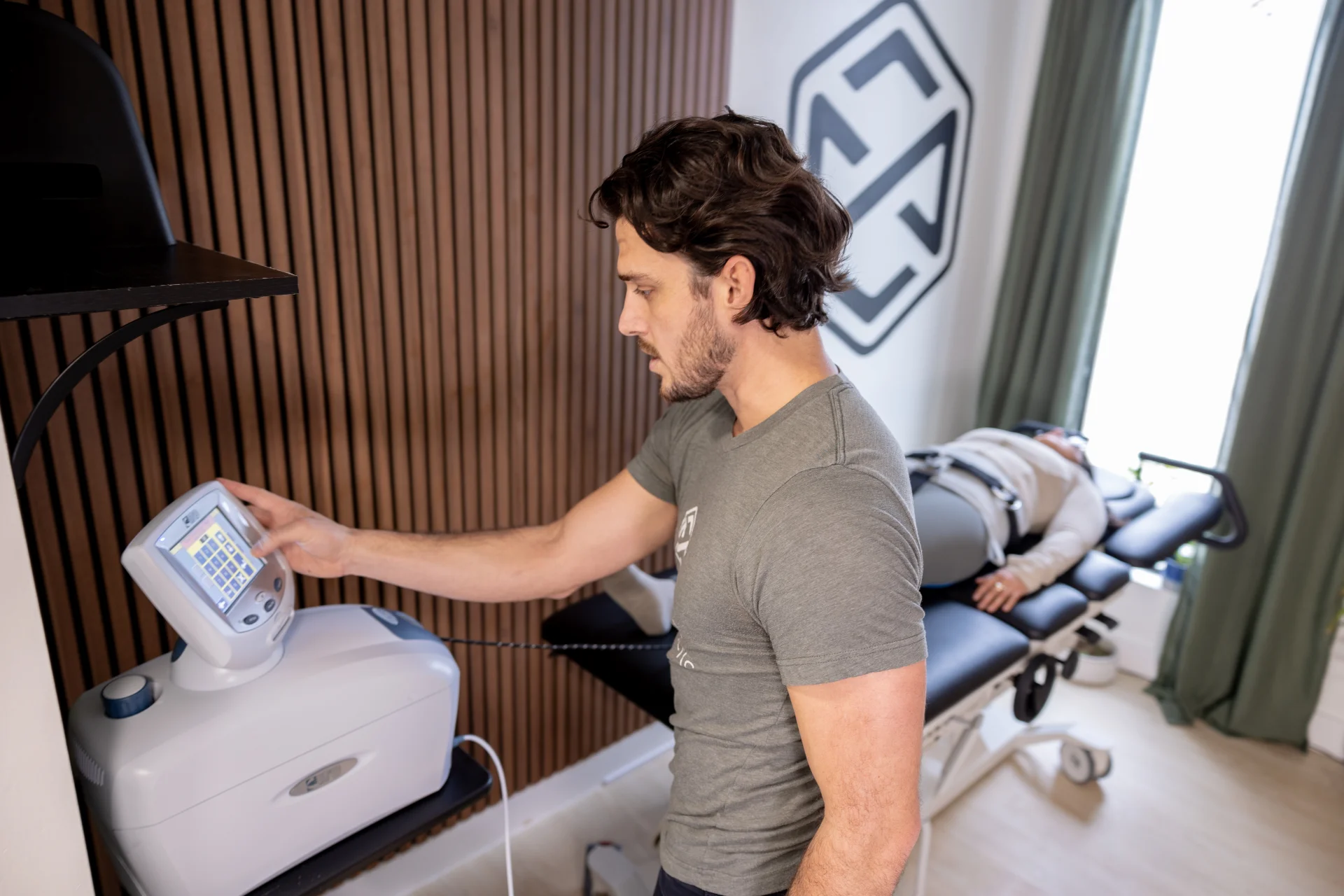
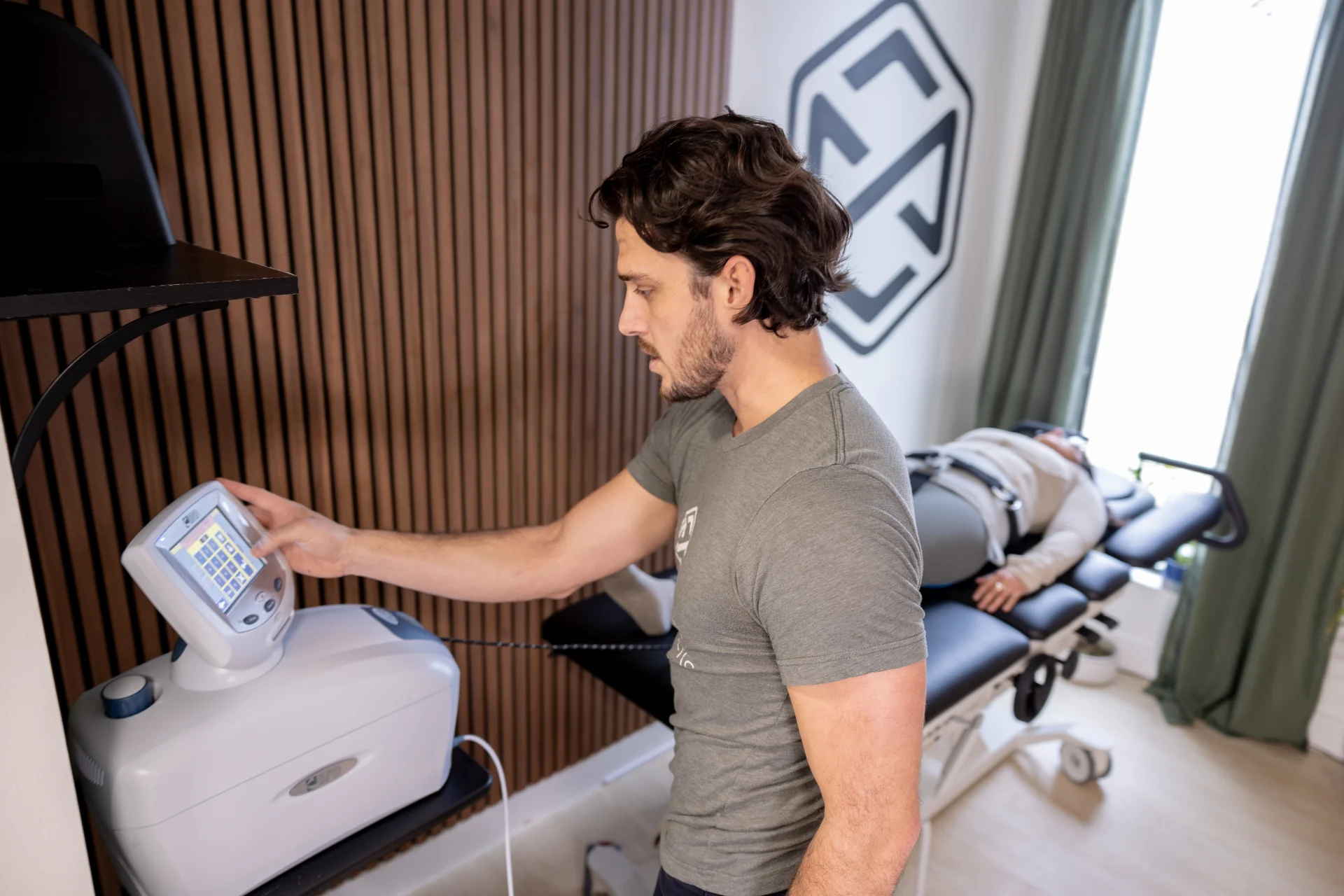
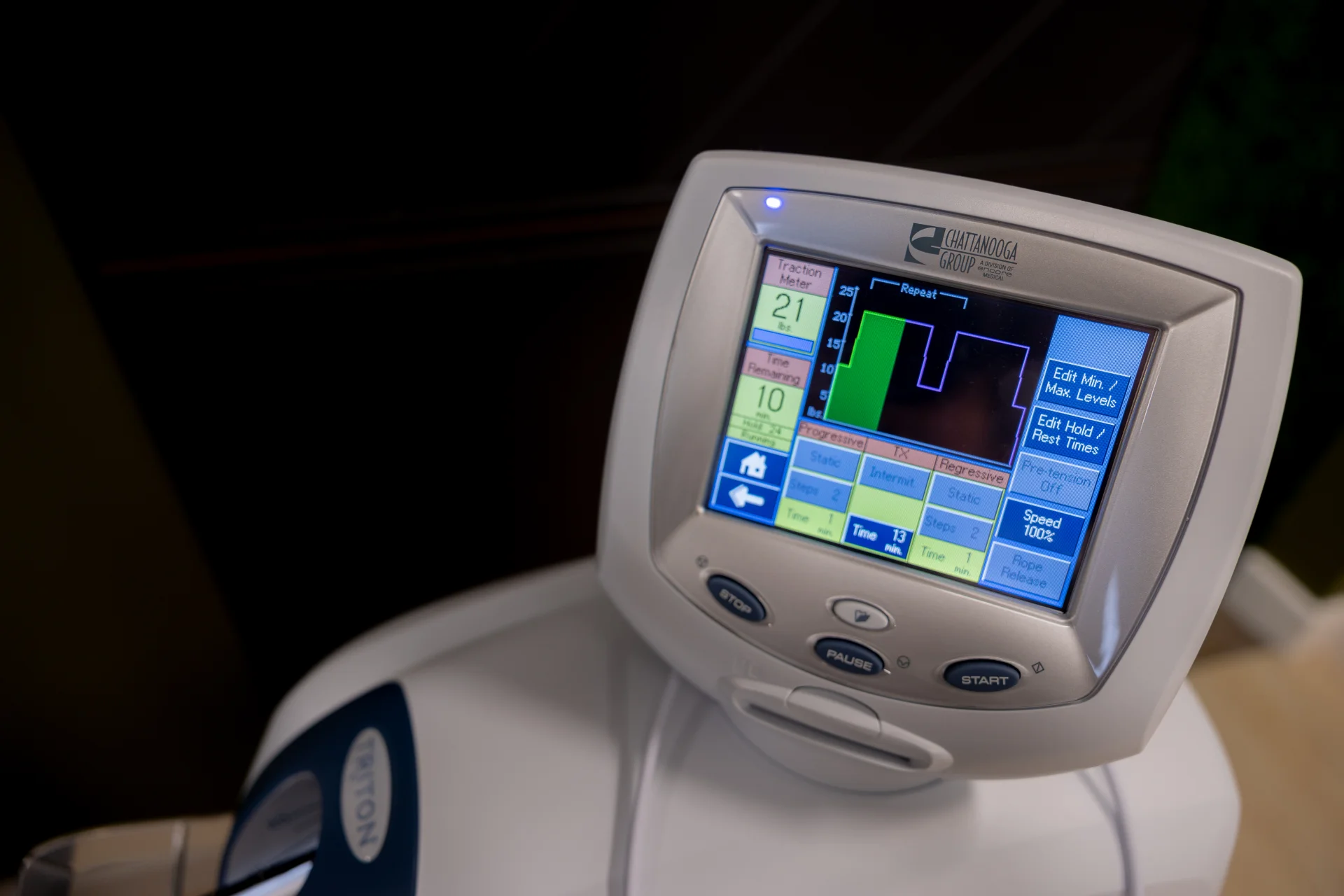
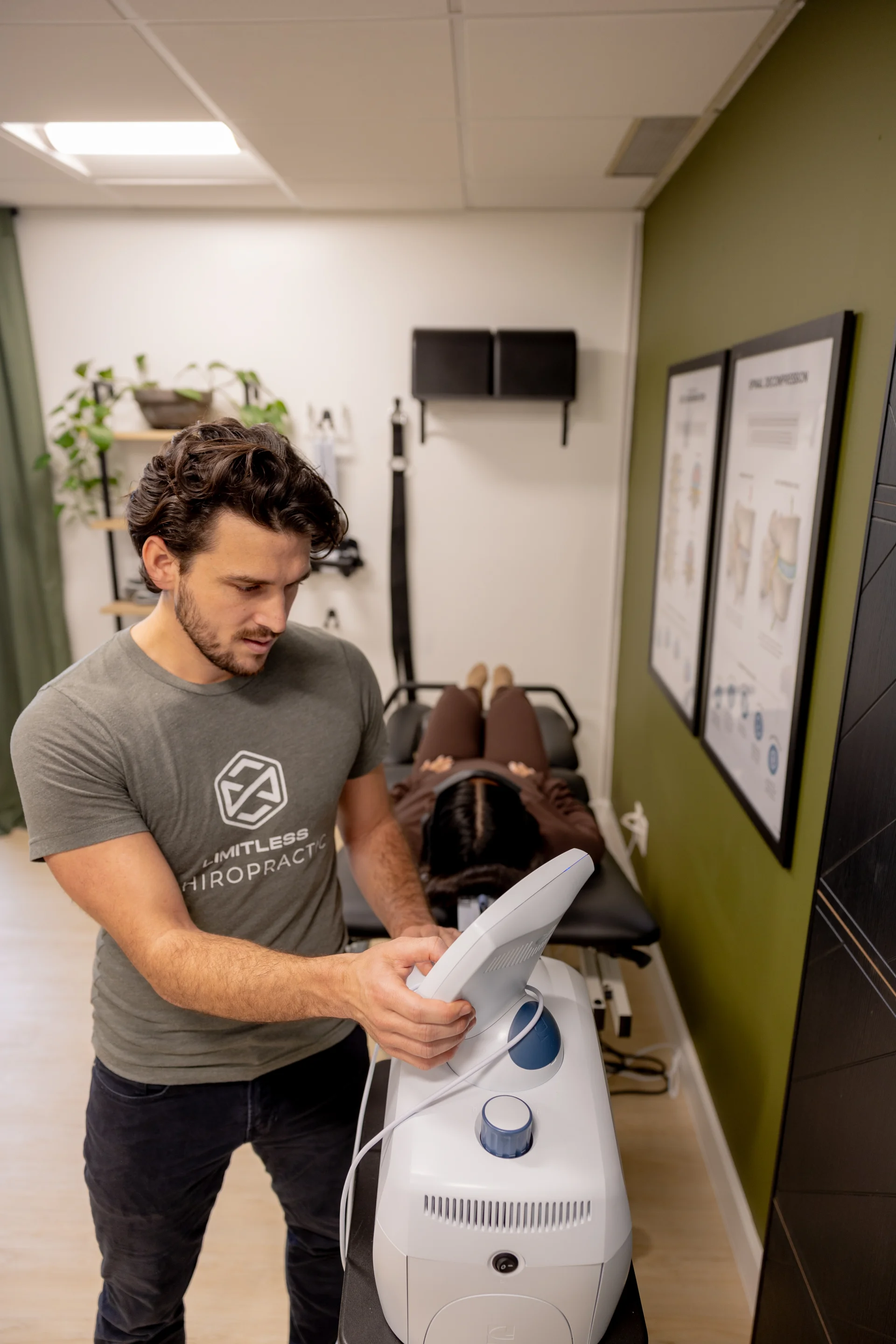
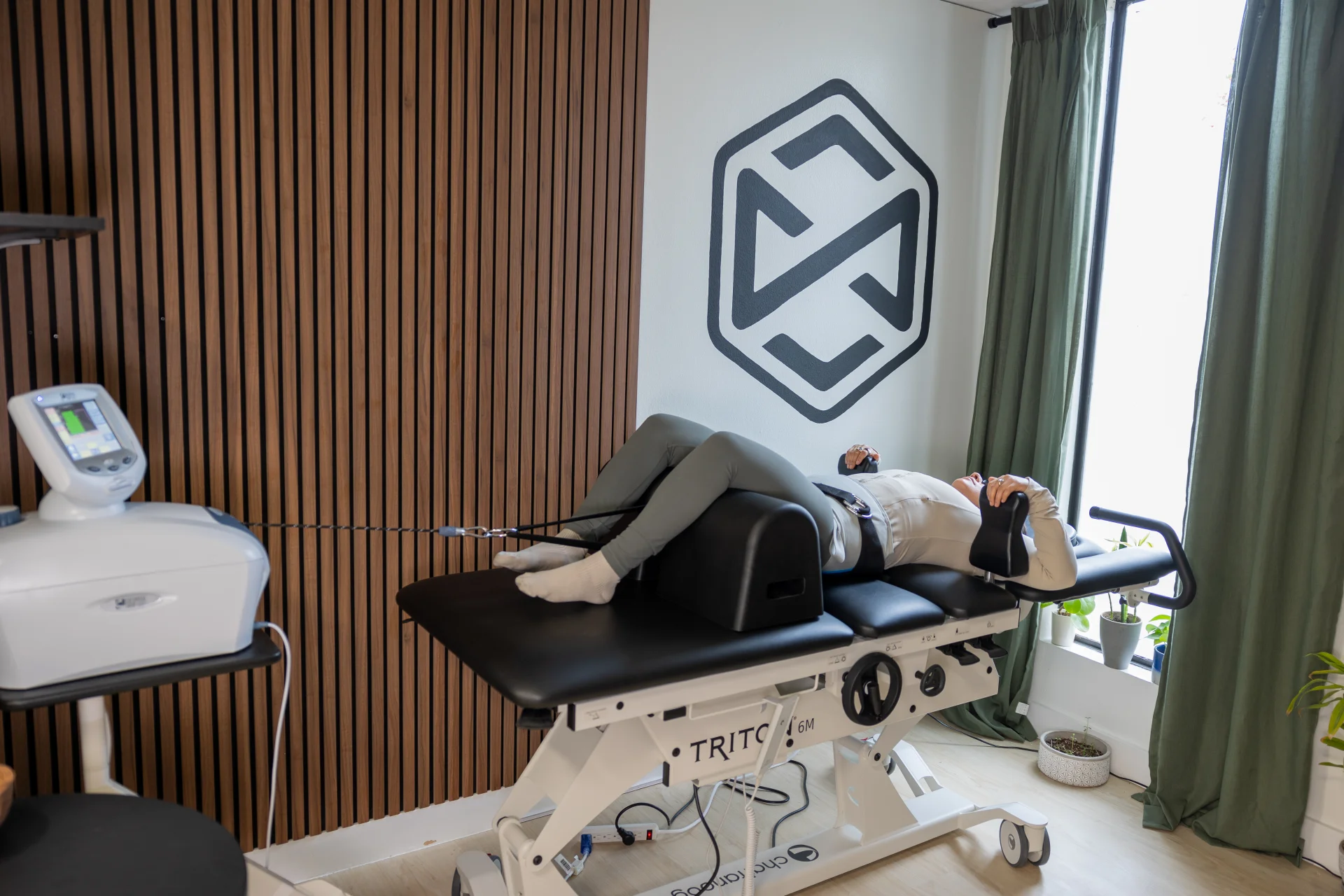
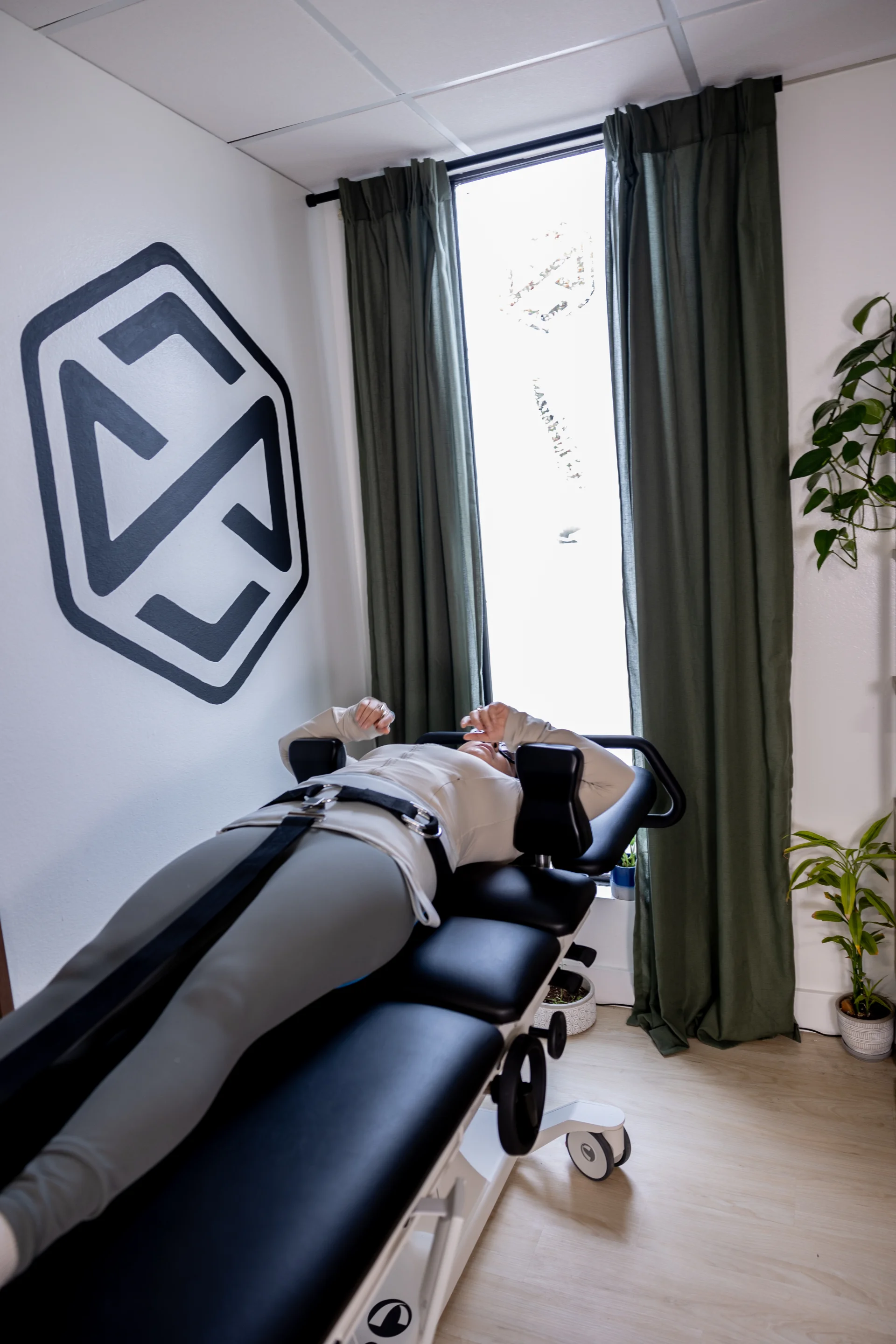
At Limitless Chiropractic, we use the Triton Chattanooga decompression table, which is built specifically for therapeutic spinal decompression rather than general traction. The force precision matters because the difference between a productive traction event and a stretching session lies in whether the force reaches the disc level you're trying to treat.
Not every herniation is a decompression case. The decision starts with imaging.
Decompression is most effective for contained protrusions and moderate extrusions, particularly when the displaced material is still close to the disc space and there's no spinal cord compression. These are the patients whose discs respond well to negative pressure.
Decompression can still be useful for some sequestration cases, but the surgical conversation should happen first. A sequestered fragment that's compressing a nerve root may resolve with decompression, but a fragment compressing the spinal cord or causing progressive neurological deficits is a different clinical situation. Cauda equina symptoms, including bowel or bladder dysfunction, severe saddle-area numbness, or rapidly progressing weakness, are surgical emergencies. Decompression therapy is not the right tool for any of those scenarios.
This is why imaging review comes before treatment. An MRI shows the size, location, and severity of the herniation, plus any spinal cord involvement. A digital X-ray shows the alignment context (loss of curvature, instability, degeneration at the same or adjacent levels). Either or both inform whether decompression is appropriate, what level to target, and how aggressive the protocol should be.
Candidacy Screening: When We Recommend Decompression
A good candidate for decompression has most or all of the following:
Confirmed disc pathology on imaging. MRI or detailed clinical findings consistent with herniation, bulge, or significant degeneration at the painful level.
Symptom pattern matches the disc level. The radicular pain, numbness, or weakness follows the nerve distribution of the affected disc.
Conservative treatment plateau. You've already tried adjustments, exercise, NSAIDs, or PT, and you've improved partially but not fully resolved.
Surgical candidate who wants to exhaust non-surgical options first. You qualify for microdiscectomy or another procedure, but you'd prefer to try the most aggressive non-surgical option before agreeing to an operation.
Chronic pain without red flags. Persistent disc-related pain with no signs of cauda equina, progressive weakness, or fracture.
Decompression is contraindicated for:
Spinal fractures. Vertebrae need stabilization, not traction.
Spinal tumors or metastatic disease. Traction can worsen pathological conditions.
Severe osteoporosis. Bone density too low to safely tolerate the forces involved.
Spinal fusion hardware at the target level. Implants prevent safe decompression of that segment.
Pregnancy. Positioning and forces are not appropriate during pregnancy.
Active spinal infection. Requires medical management before any mechanical treatment.
The screening process at Limitless Chiropractic includes a comprehensive history, orthopedic and neurological exam, posture and movement assessment, and review of imaging you bring or that we coordinate. If you're not a candidate for decompression, we tell you and recommend the appropriate referral. We don't put a patient on the table to bill the protocol.
The Decompression Protocol for Herniated Disc
The average decompression patient at Limitless Chiropractic comes in for 16 to 30 sessions over a 2 to 4 month period, with each session lasting 15 minutes. The exact count depends on herniation severity, how long the symptoms have been present, and how quickly your tissue responds.
Herniated Disc Decompression Protocol at Limitless Chiropractic
Phase
Sessions
What's Happening
Initial relief
1–8
Pain reduction as intradiscal pressure decreases. Many patients notice changes by sessions 3 to 4.
Corrective
9–20
Disc rehydration, herniation retraction, and structural changes set in. Symptoms continue improving between sessions.
Stabilization
21–30
Gains consolidate. Frequency tapers from 3x per week to 2x, then 1x per week.
Most patients start at 3 sessions per week for the first few weeks, taper to 2 per week, then drop to once weekly as symptoms improve. The total duration runs 2 to 4 months depending on how the disc responds. Severe extrusions and patients with multilevel involvement often need the full 30-session course. Earlier-stage protrusions sometimes resolve in fewer.
Decompression is sometimes paired with chiropractic adjustments to correct the spinal misalignments that contributed to the disc failure, and with corrective exercises to build the muscular stability that prevents recurrence. Treating the disc in isolation, without addressing why the disc failed, leaves the same mechanical conditions in place.
Decompression vs. Microdiscectomy vs. Spinal Fusion
If you've been quoted surgery, here's how the surgical options compare to decompression on the variables that actually matter to a patient making the decision.
The honest framing: surgery is the right call when there's a clear neurological emergency, when conservative care has been exhausted without improvement, or when the patient and surgeon agree that the surgical risk is justified by the severity of the situation. Decompression is the right call when imaging shows a contained or moderately extruded disc, when the patient is healthy enough for the protocol, and when avoiding surgery is a meaningful priority.
For the large group of herniation patients in the middle (real symptoms, real disc pathology, no neurological emergency), decompression is often the most direct conservative tool. It's the option that targets the same problem the surgery would target, without the recovery time, the fusion hardware, or the operating room. For patients who already had back surgery and still have pain, our piece on failed back surgery syndrome walks through where chiropractic care fits in that picture.
Weighing surgery against conservative care for a confirmed herniation in Austin? We'll review your imaging, screen candidacy, and tell you straight.
Cash-pay only. Insurance does not cover spinal decompression.
What Realistic Progress Looks Like
Decompression results vary by herniation severity, chronicity, and the patient's overall spinal health. The honest expectation curve looks like this:
Weeks 1 to 2 (sessions 1 to 6): Most patients notice some pain reduction by session 3 or 4. Inflammation around the nerve root drops as the mechanical irritation eases. Sleep quality often improves first because the lying-down pressure that was compressing the disc at night is reduced during treatment.
Weeks 3 to 6 (sessions 7 to 18): Disc rehydration begins. The herniation starts retracting on serial imaging when imaging is repeated. Radicular symptoms (leg pain, arm pain) usually fade before local back pain because the nerve root is decompressed before the disc fully reshapes.
Weeks 7 to 12 (sessions 19 to 30): Structural changes consolidate. The disc holds the rehydrated, reshaped state better than it did at the start. Function returns first, then strength, then full activity tolerance.
Published research supports this trajectory. A clinical study in the European Journal of Medical Research found 86% of patients with herniated or degenerative discs reported significant improvement with decompression therapy, and MRI follow-ups have documented measurable disc height restoration after a completed protocol. Pain scores typically improve 50% to 80% over a full course of treatment.
The patients who do best are the ones who complete the full protocol, do their corrective exercises at home, and address the alignment issues that contributed to the disc failure. The disc is one component of a system. Treating it without correcting the system around it weakens the durability of the result. When the herniation is also driving sciatic radicular pain down a leg, the broader picture is covered in our piece on sciatica beyond back pain.
How Limitless Chiropractic Approaches Disc Cases
Spinal decompression at Limitless Chiropractic is one tool in a treatment plan, not a stand-alone protocol.
Evaluation first. Comprehensive history, orthopedic exam, neurological screen, posture and movement assessment, and review of any imaging you bring. If your pain isn't actually disc-related, we tell you and treat what's actually causing it.
Imaging-guided targeting. We use digital X-rays in-office for alignment and structural context, and we coordinate MRI when soft-tissue detail is needed. The decompression table is programmed to the specific disc level confirmed by imaging. We don't guess.
Combined care. Decompression sessions pair with chiropractic adjustments to correct the spinal misalignments that contributed to disc failure. Corrective exercises build the muscular stability that prevents recurrence. The three components work together.
Equipment. We use the Triton Chattanooga decompression table, which is computerized, programmable, and designed specifically for therapeutic spinal decompression rather than generic traction. The technology matters because the precision of force delivery determines whether the treatment reaches the disc.
Pricing. We offer the most competitive decompression pricing in Austin. The average disc-decompression patient comes in for 16 to 30 sessions over 2 to 4 months. We structure the package so a full clinical course is actually affordable for cash-pay patients. Insurance does not cover spinal decompression. We discuss the exact cost of the full course before any treatment begins, so you know what you're committing to. Our 2026 Austin cash-pay guide walks through how decompression pricing fits into the broader cost picture.
Progress tracking. Re-examinations at regular intervals measure objective changes: range of motion, orthopedic findings, neurological function, and pain levels. If the protocol needs adjustment, we catch it early.
Frequently Asked Questions
Can spinal decompression actually pull a herniated disc back into place?
For contained protrusions and moderate extrusions, yes. The negative intradiscal pressure created by decompression draws displaced material back toward the disc center, and serial MRI imaging has documented this happening across treatment courses. Sequestered fragments that are fully separated from the disc are less likely to reattach, and those cases need a surgical evaluation first.
How do I know if I'm a candidate for decompression instead of surgery?
Imaging is the starting point. A contained or moderately extruded herniation in a patient without neurological emergency or progressive weakness is usually a decompression candidate. A sequestered fragment causing spinal cord compression, cauda equina symptoms, or rapidly progressing deficits is a surgical candidate. We screen for these in the evaluation before recommending a protocol.
How many decompression sessions for a herniated disc?
The average herniation patient at Limitless Chiropractic completes 16 to 30 sessions over 2 to 4 months at 15 minutes per session. Severity, chronicity, and how quickly your tissue responds shape the exact count. Your chiropractor reassesses throughout and adjusts the plan to your progress.
Is decompression safer than microdiscectomy?
Decompression is non-invasive and has no surgical recovery. Microdiscectomy is a surgical procedure with the standard surgical risks (anesthesia, infection, durotomy). For appropriate candidates, decompression is the lower-risk option. For patients whose situation actually requires surgery, microdiscectomy has a strong outcome record and decompression isn't an alternative.
Does insurance cover decompression for a herniated disc?
No. Insurance does not cover spinal decompression. This is a cash-pay treatment everywhere we've seen. We discuss the cost of the full protocol up front so you can decide before committing.
What if I've already had back surgery and still have pain?
Post-surgical patients can sometimes benefit from decompression, depending on the type of surgery and the levels involved. Patients with fusion hardware are not candidates for decompression at the fused segment, but levels above and below the fusion may still be eligible. Failed back surgery syndrome (continued pain after a procedure) is something we evaluate on a case-by-case basis.
How quickly will I feel results?
Most patients notice some pain reduction by sessions 3 to 4. Significant changes usually appear between sessions 6 and 10. Structural change in the disc happens over weeks, not days. The cumulative effect of repeated decompression cycles is what produces the lasting result.
What happens if decompression doesn't work for me?
Roughly 14% of patients in published studies don't reach significant improvement. We re-examine throughout the protocol, and if you're not responding by the corrective phase, we revisit the diagnosis and discuss whether a surgical referral or a different approach makes more sense. We don't keep running a protocol that isn't working.
Your Disc Has a Path Forward That Isn't Surgery
A herniated disc isn't a verdict. For the majority of patients, the displaced material and the dehydrated disc respond to negative pressure, time, and the right combination of supporting care. Spinal decompression is the closest non-surgical tool to addressing what surgery would address, and for the right candidate, it's the option that resolves the problem without the operating room.
Limitless Chiropractic in Austin uses the Triton Chattanooga decompression table at the most competitive prices in the city. We evaluate every patient before recommending a protocol, we use imaging to confirm the diagnosis, and we combine decompression with chiropractic correction and rehab so the result holds.
Bring your imaging if you have it. We'll review the films before recommending anything.
Disc problems have a source. The source has a treatment.
Limitless Chiropractic | 2800 S I-35 Frontage Rd, Ste 175 | Austin, TX 78704 | Serving Downtown Austin, South Austin, Round Rock, Cedar Park, and Pflugerville
Dr. Scott Mitchell
About the author
Dr. Scott Mitchell, a Boston-accented chiropractor with a passion for holistic health,dedicates his life to helping people unlock their LIMITLESS potential through personalized chiropractic care.