Disc herniations are spinal injuries that change the way you sit, sleep, lift, and move. The disc's soft inner core pushes through its tougher outer ring, often pressing against nerves that travel into your arms or legs. The good news: most herniations respond to non-surgical care when the right segment is treated, the right way, at the right time.
A disc herniation — sometimes called a slipped, ruptured, or extruded disc — happens when the gel-like center of an intervertebral disc pushes through its tougher outer ring. Each of the 24 movable vertebrae in your spine sits on top of a disc that absorbs load, allows movement, and protects the nerves running between every segment.
Two structures matter here. The annulus fibrosus is the outer ring of fibrocartilage built like a series of bias-ply tire layers. The nucleus pulposus is the inner gel core that distributes pressure. When the annulus tears, weakens, or wears thin, the nucleus migrates outward — sometimes a millimeter, sometimes far enough to compress an exiting nerve root.
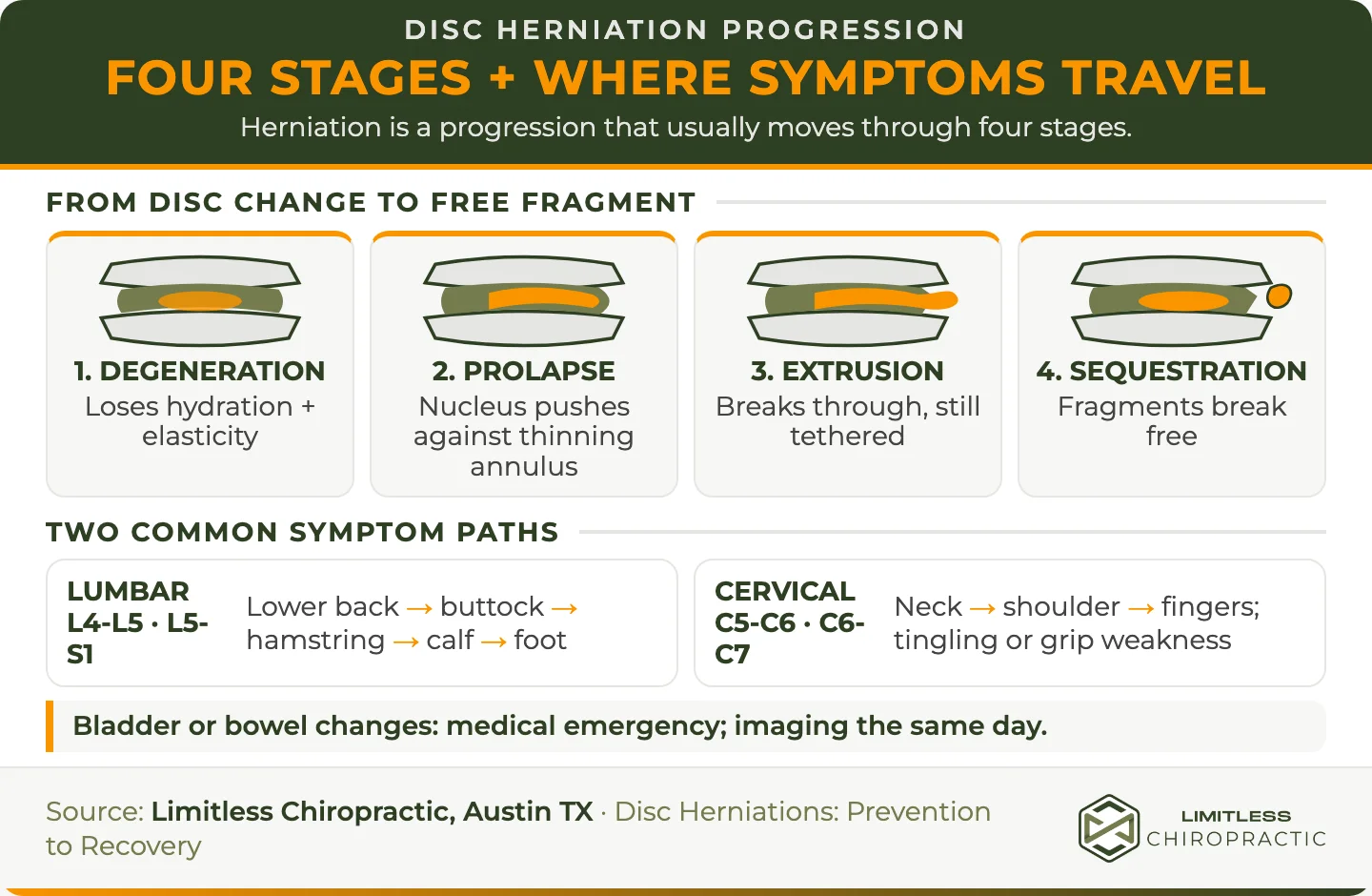
Herniation is not a single event. It's a progression that usually moves through four stages:
1.Degeneration — discs lose hydration and elasticity, often silently, over years.
2.Prolapse — disc shape changes as the nucleus pushes against a thinning annulus.
3.Extrusion — the nucleus breaks through the annulus but is still tethered to the disc.
4.Sequestration — fragments break free and float into the spinal canal.
This staging matters because it shapes what treatment can and cannot accomplish. Stage 1 and 2 herniations frequently reverse with the right segmental movement, hydration, and load management. Stage 3 and 4 herniations require more sustained care — and a small subset progress to a point where surgical decompression becomes the only option.
Where Herniations Happen Most
Disc herniations follow the spine's load map. The segments that move the most and bear the most weight are the most likely to fail.
Lumbar Herniations (Lower Back)
Lumbar herniations are the most common type, typically at the L4-L5 and L5-S1 levels. These segments carry the upper body's weight and absorb the bend, twist, and lift demands of daily life. A lumbar herniation often produces sciatica — a sharp or burning pain that travels down the buttock, hamstring, calf, and into the foot. Some patients also report leg weakness, numbness, or — in severe cases — changes in bladder or bowel function. That last symptom is a medical emergency and warrants imaging the same day.
Cervical Herniations (Neck)
Cervical herniations cluster at C5-C6 and C6-C7. Symptoms travel down the arm rather than the leg: neck pain, shoulder pain, tingling in the fingers, weakness in the grip, or difficulty with fine motor work like buttoning a shirt or typing. Cervical herniations are common in patients with sustained forward head posture, including Austin's large population of remote and hybrid tech workers.
Thoracic Herniations (Mid-Back)
Thoracic herniations are the rarest because the rib cage stabilizes that section of the spine. When they do occur, they're often misread as cardiac, gastrointestinal, or pulmonary problems. Pain wraps around the rib cage and may include sensory changes in the chest or abdomen. Thoracic herniations are harder to diagnose without imaging.
Suspect a herniation? Same-week appointments at our Central Austin office. Digital X-rays, hands-on evaluation, and a clear treatment plan — no upsell, no surgical pressure.
The hallmark of a disc herniation is pain that doesn't stay where it started. A herniation at L5-S1 might begin as a dull ache in the lower back and end as a burning line down the back of the leg. A C6-C7 herniation might begin with neck stiffness and end with tingling in the index and middle fingers. The pattern of where pain travels — the dermatome — tells a trained clinician which level is involved.
Common symptoms include:
Localized pain at or near the affected vertebral level.
Radiating pain along the path of the irritated nerve.
Numbness, tingling, or burning sensations in an arm, hand, leg, or foot.
Muscle weakness in a specific muscle group (foot drop, grip weakness, calf weakness).
Reflex changes detected on physical exam.
Pain that worsens with sitting, coughing, sneezing, or bending forward.
Physical Examination
A thorough exam usually includes pain mapping, manual muscle testing, sensory testing, reflex testing, range of motion assessment, and orthopedic provocation tests like the straight leg raise (lumbar) or Spurling's test (cervical). These tests reproduce the symptom pattern in a controlled way and help localize the involved segment before imaging.
Imaging
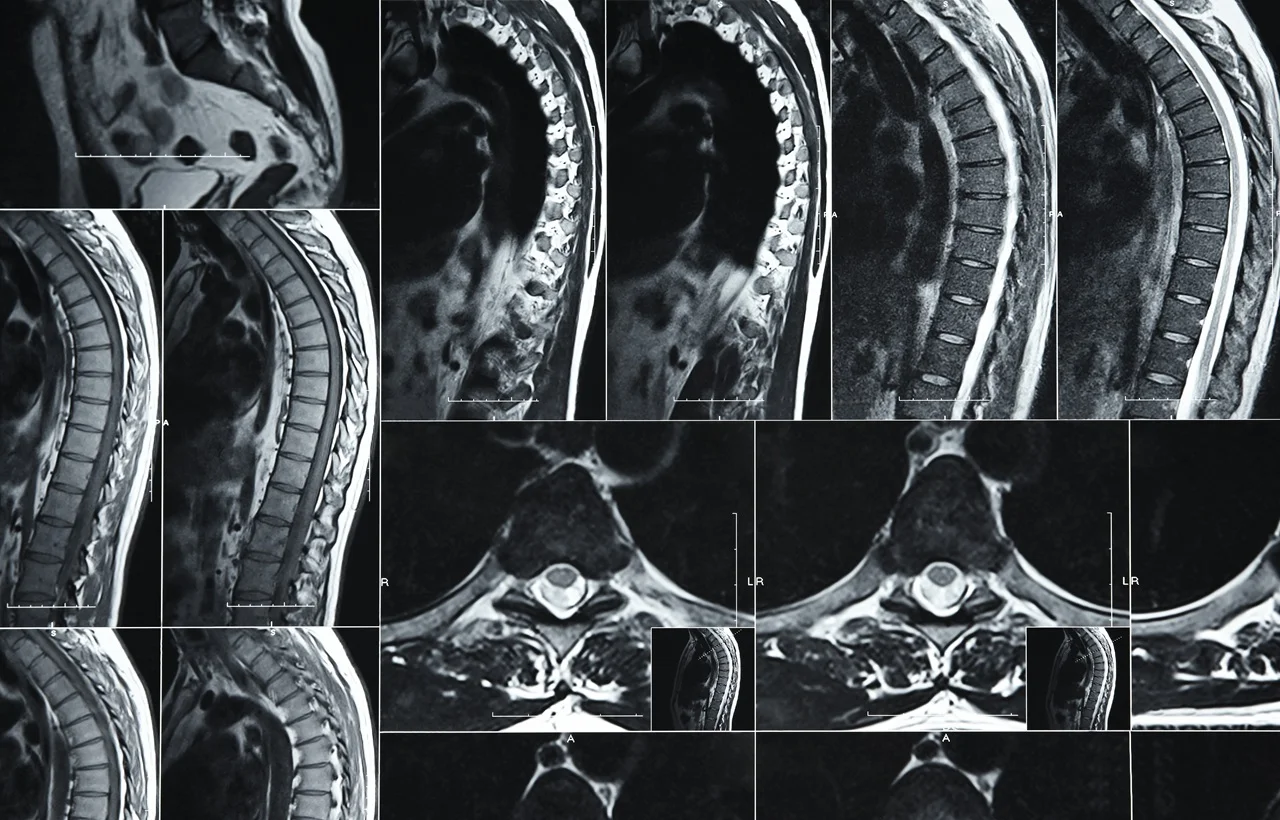
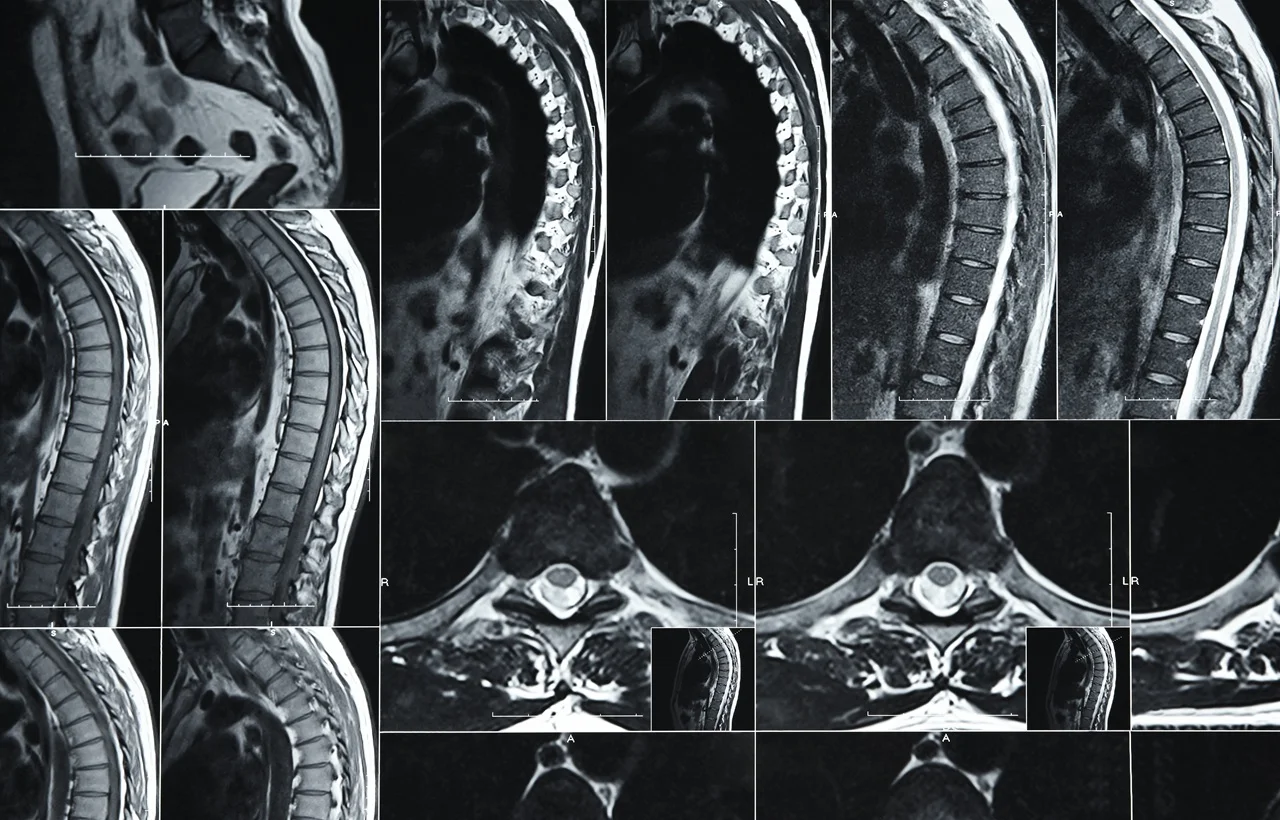
X-rays show bone alignment, disc height, and degenerative changes. They cannot directly visualize a herniation, but they rule out alternative diagnoses and guide care planning. MRI is the gold standard — it shows the disc, the nucleus, the annulus, the spinal cord, and the nerve roots in soft-tissue detail. CT scans and myelograms are reserved for patients who cannot undergo MRI.
At our Austin office we use digital X-ray on the first visit when imaging is warranted, and we coordinate MRI referrals when the clinical picture demands it.
Causes and Risk Factors
Disc herniations rarely have a single cause. They are usually the result of cumulative stress meeting an aging or vulnerable disc.
Age-Related Degeneration
Discs lose water content over time. Less water means less elasticity, less shock absorption, and a thinner annulus that tears more easily. By age 40, most spines show measurable disc dehydration on imaging — though most people remain asymptomatic.
Lifestyle Factors
Sedentary behavior and prolonged sitting (a major Austin tech-worker pattern).
Poor posture during desk work, driving, or screen use.
Smoking, which reduces blood flow to disc tissue.
Excess body weight, which adds compressive load to lumbar discs.
Heavy lifting or repetitive bending without proper mechanics.
Lack of regular exercise, leaving spinal stabilizers weak.
Genetic Predisposition
A family history of disc problems is one of the strongest predictors. Inherited variations in collagen structure, pain sensitivity, and inflammatory response all play a role. Congenital spinal abnormalities — extra vertebrae, transitional segments, scoliosis — also raise risk.
Trauma
Car accidents, sports injuries, and sudden lifting events can produce acute herniations in otherwise healthy discs. A rear-end collision at city speed transmits enough force through the cervical spine to tear an annulus that was structurally fine the day before. Patients recovering from a motor vehicle accident often benefit from coordinated care that addresses both the herniation and the surrounding soft-tissue injury.
Conservative Treatment That Works
The first line of treatment for nearly every disc herniation is conservative — non-invasive, non-surgical, non-pharmaceutical. The goal isn't to mask the pain. It's to restore segmental motion, rehydrate the disc, decompress the nerve, and rebuild the supporting muscles around the injured level.
Chiropractic Adjustments
Discs have notoriously poor blood supply. They depend on segmental motion to pump nutrients in and waste products out. When a disc segment locks up — which it tends to do around the level of a herniation — that nutrient exchange stalls and the surrounding tissue degrades faster.
A precise chiropractic adjustment introduces movement at the exact level of the herniation. That movement increases nutrient flow, rehydrates disc material, restores disc height, and reduces pressure on the irritated nerve root. Patients commonly report a meaningful drop in radiating symptoms within the first two to four visits.
Spinal Decompression Therapy
For patients with persistent symptoms — or larger herniations — adjustments are often paired with mechanical decompression. A computerized table applies controlled, axial traction to the affected segment, creating negative pressure inside the disc that draws herniated material back toward the disc center. The full clinical picture, mechanism, candidate criteria, and what to expect from a session is covered in our pillar guide on spinal decompression in Austin. For herniation-specific protocols and outcomes, see the dedicated walkthrough on decompression for herniated disc.
Physical Therapy and Movement Rehabilitation
Targeted strengthening of the deep spinal stabilizers, hip flexors, glutes, and core muscles supports the injured segment after the acute phase resolves. Stretching, postural retraining, and education on lifting mechanics close out the rehab arc. Many of our patients also ask how chiropractic compares to physical therapy — both have a place, and they often work best together.
Pain Management
Short-term anti-inflammatory medication, hot and cold therapy, and acupuncture can take the edge off while structural care addresses the cause. Prescription opioids and epidural steroid injections should be reserved for severe cases under close medical supervision — they reduce symptoms without resolving the underlying herniation.
Choosing between conservative care and surgery? Get a clear, no-pressure second opinion from our team before scheduling any procedure.
Surgery is appropriate when conservative care has been given an honest trial and symptoms are still progressing — particularly if there's significant motor weakness, escalating neurological deficit, or signs of cauda equina syndrome (loss of bladder or bowel control). It's also appropriate when imaging shows a sequestered fragment causing canal compromise that won't resolve with non-surgical treatment.
The most common procedures are microdiscectomy, laminectomy, artificial disc replacement, and spinal fusion. Each permanently alters the structure of the spine. Adjacent segment degeneration — accelerated wear at the level above or below the surgical site — is a known long-term risk, particularly with fusion.
Before scheduling any procedure, it is worth understanding the trade-offs in detail. Our breakdown of decompression vs surgery vs injections compares costs, recovery timelines, and long-term outcomes for each path. For patients living with persistent symptoms after a prior procedure, our work on failed back surgery syndrome covers the conservative options that remain available.
Prevention and Long-Term Spine Health
Most patients arrive in our office hoping to avoid surgery. The same habits that support recovery also reduce the risk of future herniations.
Lifestyle Modifications
Maintain a body weight that doesn't overload your lumbar discs.
Stop smoking — disc tissue depends on the blood flow nicotine restricts.
Drink enough water to keep disc hydration high.
Adopt an anti-inflammatory eating pattern.
Manage chronic stress, which raises baseline muscle tension and inflammation.
Prioritize seven to nine hours of quality sleep.
Ergonomic Considerations
Lift with your hips and legs, not your lumbar spine.
Set your monitor at eye level and keep elbows at 90 degrees.
Stand and walk for two minutes every 30 minutes of sitting.
Use a supportive mattress that keeps your spine neutral.
Avoid prolonged static postures, especially forward head posture.
Exercise and Strengthening
Walk, swim, or cycle daily for cardiovascular health.
Train deep core stabilizers (transverse abdominis, multifidus, glute medius).
Maintain hip and thoracic mobility — the lumbar spine pays the price when these get stiff.
Schedule regular chiropractic check-ins to catch segmental restrictions before they become herniations.
Two Austin Patient Stories
Case Study: Jeremy
Jeremy is a man in his 50s with a multi-year history of low back pain. By the time he reached our office, he had cycled through painkillers, anti-inflammatories, physical therapy, and multiple rounds of cortisone injections. Each round of shots gave him a few weeks of relief before the pain returned, often worse than before. His pain management physician told him surgery was the only remaining option.
Jeremy was hesitant — he had read enough about adjacent segment degeneration to be cautious about fusion. We explained that disc tissue heals best when the segment around it is moving correctly, and that a precise adjustment delivered at the level of the herniation can restore that motion without permanently altering the spine. After two weeks of care, his pain was meaningfully reduced and his leg strength had returned. He's now on a maintenance schedule and doing the activities he had given up years ago.
Case Study: Sydney
Sydney is a dental assistant in her 40s. Her work requires looking down with arms outstretched for hours at a time — a posture that loads the lower cervical spine repeatedly across thousands of patient encounters. She developed neck pain that progressed to numbness running down both arms. Imaging showed herniations at C5-C6 and C6-C7. Her surgeon recommended a two-level fusion.
Sydney came to our office for a second opinion. Two adjustments later, the arm symptoms were gone. Two more, and the neck pain had resolved. She regained full cervical range of motion within a few weeks and has maintained it on a check-in schedule. She still works as a dental assistant — and she's added regular movement breaks to keep her cervical spine out of the same trap.
Frequently Asked Questions
Can a herniated disc heal without surgery?
Yes — the majority of disc herniations resolve or substantially improve with conservative care. The disc itself often reabsorbs over time when the segment is moving properly and the surrounding tissue is supported. Surgery is reserved for cases with severe neurological deficit or progressive weakness that doesn't respond to non-surgical treatment.
How long does it take to recover from a disc herniation?
Most patients see meaningful symptom reduction within two to six weeks of starting consistent conservative care. Full structural recovery — disc rehydration, restored disc height, complete resolution of nerve irritation — typically takes three to six months. Larger herniations and cases with significant degeneration take longer.
Is chiropractic safe for a herniated disc?
When performed by a properly trained chiropractor with the correct diagnosis, adjustments are one of the safest treatments available for disc herniations. We perform a thorough exam — and image when warranted — before any adjustment, and we tailor the technique to your specific level, severity, and tissue tolerance.
Should I get an MRI before starting treatment?
Not always. A thorough physical exam and digital X-ray are usually enough to begin care safely. MRI is appropriate when there's significant neurological involvement, a history of trauma, when symptoms aren't improving on schedule, or when surgery is being considered.
Will spinal decompression help my herniation?
Spinal decompression therapy can be very effective for many disc herniations, particularly contained herniations and bulges. It's most powerful when paired with adjustments, targeted exercise, and the lifestyle modifications that protect the disc long-term. The pillar guide on spinal decompression in Austin walks through who is and isn't a good candidate.
Do you accept PIP or auto insurance for accident-related herniations?
Yes. Texas PIP coverage applies to disc injuries from motor vehicle accidents, and we work directly with PIP claims and personal injury attorneys when applicable. Cash-pay options are also available for patients who prefer them.
Get answers specific to your spine. Same-week new patient appointments. Digital X-rays on day one. No surgical pressure.
Limitless Chiropractic | 2800 S I-35 Frontage Rd, Ste 175 | Austin, TX 78704 | Serving Downtown Austin, South Austin, Round Rock, Cedar Park, and Pflugerville
Dr. Scott Mitchell
About the author
Dr. Scott Mitchell, a Boston-accented chiropractor with a passion for holistic health,dedicates his life to helping people unlock their LIMITLESS potential through personalized chiropractic care.