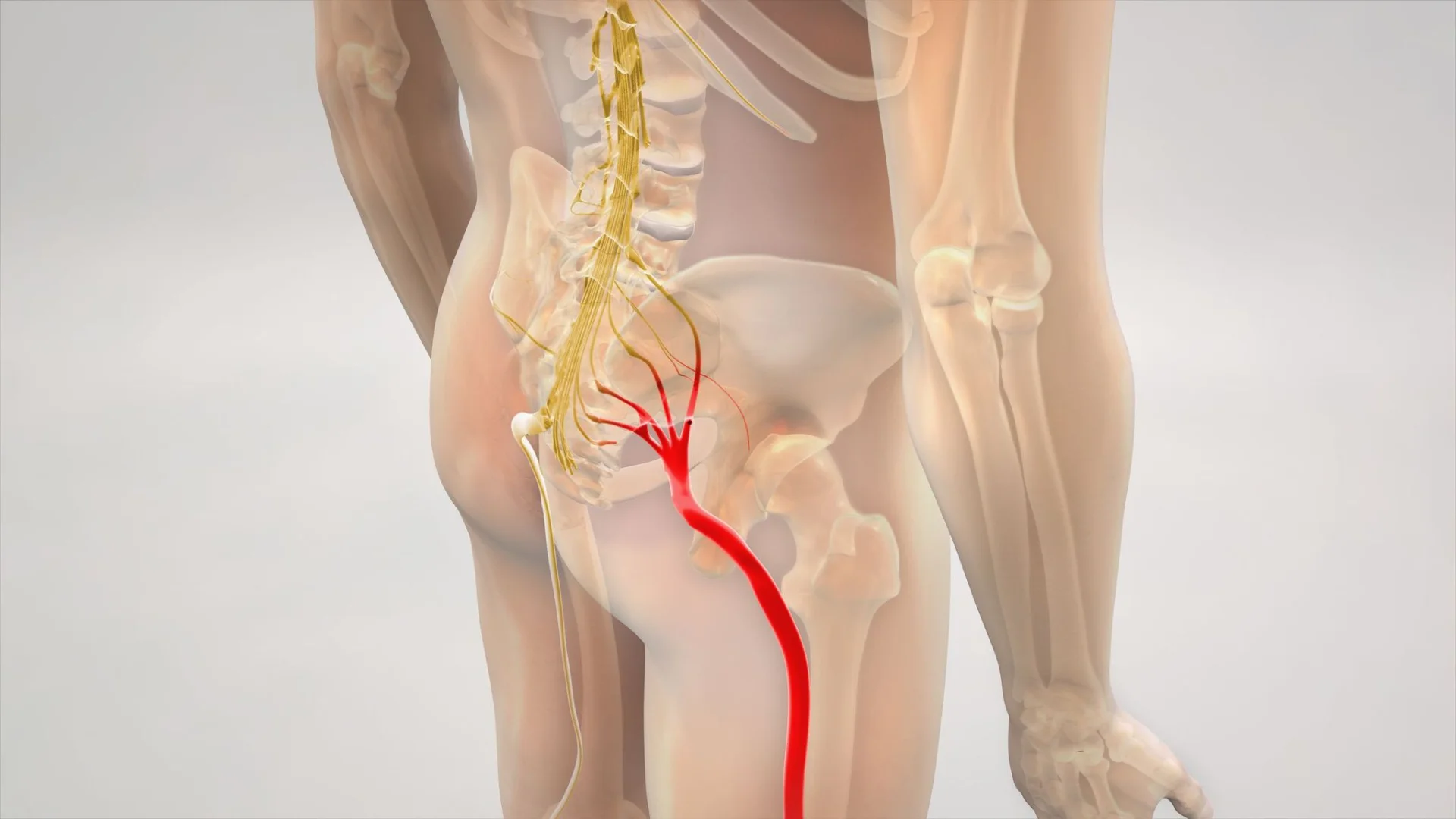
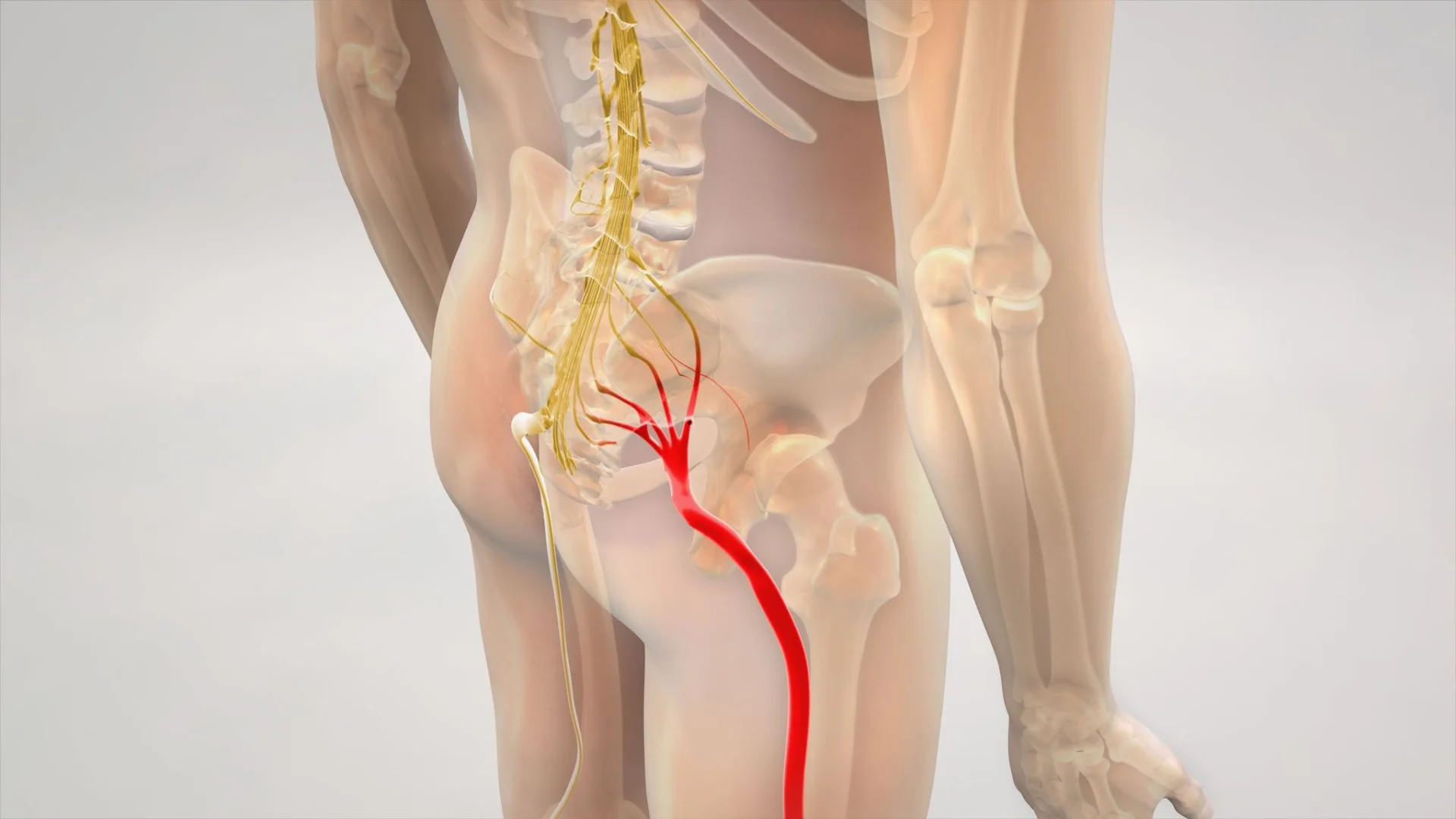
Sciatica involves irritation or compression of the sciatic nerve, leading to pain that radiates from the lower back through the hips and down one or both legs. While it's commonly linked to disc herniations, sciatica can arise from several different causes and significantly impact daily life.
Understanding the Sciatic Nerve
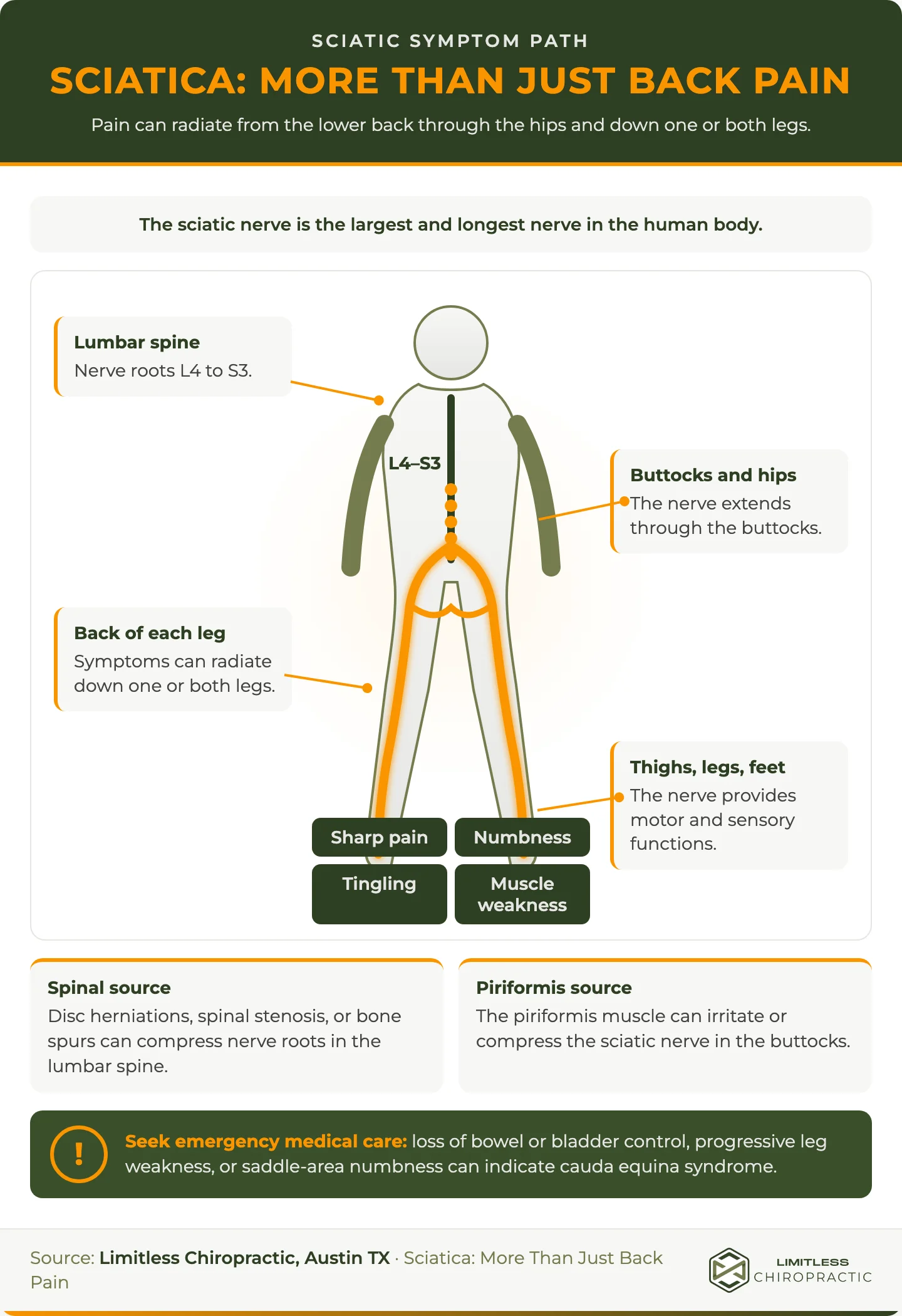
The sciatic nerve is the largest and longest nerve in the human body. It originates from nerve roots in the lumbar spine, specifically from L4 to S3, and extends through the buttocks and down the back of each leg.
This nerve provides motor and sensory functions to the thighs, legs, and feet. Irritation or compression of the sciatic nerve can cause characteristic symptoms, including sharp pain, numbness, tingling, or muscle weakness that radiates from the lower back down the leg.
Understanding the anatomy and pathway of the sciatic nerve is crucial for diagnosing and effectively treating sciatica. Knowing where the nerve runs helps clinicians identify where compression or irritation may occur, and correlating areas of pain, numbness, or weakness with specific nerve roots aids in locating the affected region.
What Causes Sciatica
Sciatica typically develops when one of the nerve roots that comprise the sciatic nerve is compressed or irritated. The underlying cause determines the appropriate treatment approach, making accurate diagnosis essential.
Common Causes of Sciatica
Cause
What's Happening
Disc Herniations
A bulging or herniated disc in the lumbar spine presses on a nerve root
Spinal Stenosis
Narrowing of the spinal canal reduces space for nerves, leading to compression
Piriformis Syndrome
The piriformis muscle in the buttocks irritates or compresses the sciatic nerve
Bone Spurs (Osteophytes)
Bony overgrowths on vertebrae pinch the nerve
Spondylolisthesis
A vertebra slips over the one below it, narrowing nerve passageways
Traumatic Injuries
Accidents or falls cause damage to the lumbar spine or nerve roots
Degenerative Disc Disease
Age-related wear and tear on spinal discs impacts nerve function
When the source of sciatica is disc-related, the mechanical environment inside the disc itself becomes the treatment target. For lumbar herniations specifically, decompression for herniated disc works by drawing displaced disc material back toward center and reducing pressure on the irritated nerve root.
How Sciatica Affects Daily Life
Living with sciatica can make everyday tasks challenging. The pattern of aggravation often follows what increases pressure on the lower spine and the irritated nerve.
Activities Affected by Sciatica
Activity
Why It Aggravates Symptoms
Walking or Standing
Prolonged standing or walking increases pain due to added pressure on the lower spine and sciatic nerve
Sitting
Especially on hard surfaces or without proper lumbar support, sitting exacerbates discomfort because of direct compression of the nerve
Bending or Lifting
Movements involving bending or lifting intensify symptoms by increasing spinal load and nerve irritation
Driving
Operating a vehicle becomes uncomfortable due to prolonged sitting and limited ability to change position, which can aggravate the nerve
Sleeping
Finding a comfortable position is difficult, impacting sleep quality, as certain positions may increase nerve compression
These limitations affect work, household chores, and leisure activities, making effective management crucial for maintaining quality of life.
Sciatica disrupting your sleep, your commute, your day? We evaluate the source before recommending treatment.
Diagnosis first. Treatment plan built around what's actually causing your pain.
The Risks of Leaving Sciatica Untreated
Ignoring sciatica can lead to serious consequences. Early intervention helps prevent these long-term effects and promotes better outcomes.
What Happens When Sciatica Is Left Untreated
Outcome
What It Means
Chronic Pain
Persistent discomfort that becomes more difficult to manage over time
Muscle Weakness
Prolonged nerve compression weakens leg muscles, affecting mobility
Loss of Sensation
Numbness or decreased reflexes in the legs and feet due to nerve damage
Permanent Nerve Damage
Severe compression causes lasting nerve injury, potentially leading to irreversible deficits
Cauda Equina Syndrome
In extreme cases, significant compression leads to loss of control over bowel or bladder functions, a medical emergency requiring immediate attention
Sciatica vs. Piriformis Syndrome
While both conditions involve irritation of the sciatic nerve, they differ in origin.
Sciatica is often caused by spinal issues such as disc herniations, spinal stenosis, or bone spurs compressing the nerve roots in the lumbar spine.
Piriformis Syndrome occurs when the piriformis muscle, located in the buttocks, irritates or compresses the sciatic nerve as it passes beneath or through the muscle, usually due to muscle spasms, tightness, or anatomical variations.
Symptoms of piriformis syndrome can mimic sciatica, including radiating leg pain and numbness, but the source is muscular rather than spinal. Accurate diagnosis is crucial since treatments may differ based on the underlying cause.
Diagnosing Sciatica
Accurate diagnosis is essential to determine the appropriate treatment plan for sciatica or piriformis syndrome. Healthcare providers conduct a thorough medical history and physical examination, focusing on symptom patterns and potential causes.
Imaging studies like MRI or CT scans visualize the spine's anatomy, identifying issues such as disc herniations or spinal stenosis. Electromyography (EMG) tests nerve function and can pinpoint nerve compression locations.
Differentiating between sciatica and piriformis syndrome involves evaluating the site of nerve compression, whether within the spinal canal or beneath the piriformis muscle. That distinction guides the treatment strategy.
Common Treatments: Starting with Non-Invasive Approaches
Effective management of sciatica often begins with non-invasive, holistic treatments focusing on relieving nerve pressure and reducing inflammation.
Chiropractic Care
Gentle spinal adjustments realign vertebrae, alleviate nerve compression, and promote natural healing without surgery or medication.
Spinal Decompression
For sciatica driven by disc herniation, bulge, or degeneration, spinal decompression therapy uses controlled, computerized traction to reduce intradiscal pressure and decompress the specific lumbar level irritating the sciatic nerve. This is a targeted, non-surgical option for cases where the disc is the primary pain generator.
Physical Therapy
Customized exercises and stretches strengthen supportive muscles, improve flexibility, and reduce pressure on the sciatic nerve. Techniques may focus on core stability and proper movement patterns.
Acupuncture
Insertion of thin needles at specific points may alleviate pain by stimulating nerves and promoting blood flow.
Massage Therapy
Massage eases muscle tension, particularly in the lower back and piriformis muscle, potentially relieving nerve compression.
Lifestyle Modifications
Improving posture, ergonomic adjustments at workstations, and practicing proper lifting techniques reduce strain on the spine.
Heat and Cold Therapy
Applying heat relaxes tight muscles, while cold reduces inflammation and numbs deep pain.
Starting with these holistic treatments minimizes risks associated with surgery and medications, addressing the root cause more directly. If symptoms persist or worsen, additional interventions like medications, epidural steroid injections, or surgery may be considered. For patients weighing those paths, the comparison between decompression vs. surgery vs. injections outlines the trade-offs in invasiveness, recovery time, and how directly each option targets the disc itself.
Importance of Early Intervention
Early diagnosis and treatment are crucial to prevent sciatica from worsening. Non-invasive therapies not only alleviate pain but also enhance overall spinal health, reducing the likelihood of recurrence. By addressing symptoms promptly, patients can restore function, improve mobility, and maintain a higher quality of life.
Key Orthopedic Tests for Sciatica
Understanding the orthopedic tests used to diagnose sciatica can help patients engage more effectively with their healthcare providers.
Common Orthopedic Tests
Test
How It's Performed
What It Indicates
Straight Leg Raise
Patient lies on their back; clinician lifts one leg upward, keeping the knee straight
Pain radiating down the leg indicates nerve root irritation, commonly due to disc herniation
Slump Test
Performed in a seated position; the patient progressively moves into spinal flexion and knee extension
Reproduction of symptoms suggests tension along the spinal cord and sciatic nerve
Lasègue's Sign
Similar to the straight leg raise but emphasizes dorsiflexion of the foot during leg elevation
Increased pain with this maneuver supports the presence of sciatica
These tests help healthcare providers pinpoint the source of pain and distinguish sciatica from other conditions with similar symptoms, such as hamstring injuries or hip joint disorders.
The Role of Patients in Management
Understanding sciatica empowers patients to take an active role in their care.
Engaging in rehabilitation. Adhering to prescribed exercises enhances recovery.
Open communication. Discussing symptoms and concerns with healthcare providers ensures that treatments are adjusted as needed.
Preventing Sciatica: Healthy Habits for Daily Living
While sciatica can sometimes be unavoidable, adopting certain lifestyle practices can significantly reduce your risk of developing it or experiencing recurrences. Focus on the following areas.
Ergonomics
Maintain proper posture while sitting and standing.
Use an ergonomic chair with good lumbar support for desk work.
Adjust your workstation to keep your computer screen at eye level.
Take regular breaks from prolonged sitting to stretch and move.
Movement and Exercise
Engage in regular low-impact exercises like walking, swimming, or cycling.
Practice core-strengthening exercises to support your spine.
Incorporate stretching routines, especially for the lower back and hamstrings.
Consider yoga or Pilates to improve flexibility and core strength.
Hydration
Drink adequate water throughout the day to maintain disc hydration.
Aim for at least 8 glasses of water daily, more if you're active or in hot climates.
Nutrition
Consume a balanced diet rich in anti-inflammatory foods.
Include omega-3 fatty acids found in fish, nuts, and seeds.
Incorporate foods high in calcium and vitamin D for bone health.
Maintain a healthy weight to reduce pressure on your spine.
Daily Lifestyle Modifications
Practice proper lifting techniques: bend at the knees, not the waist.
Avoid or limit high-heeled shoes that alter your posture.
Use a supportive mattress and pillow for proper spinal alignment during sleep.
Manage stress through relaxation techniques or mindfulness practices.
Regular Check-ups
Schedule periodic chiropractic or physical therapy assessments.
Address minor aches and pains promptly before they escalate.
Active participation contributes to more effective management and better long-term outcomes.
Patient Cases
Molly: Sciatica in Her 20s
Molly, a woman in her 20s, had been experiencing sciatica for over six months. She initially followed the recommended approach, seeing both a physical therapist and a massage therapist. The physical therapist prescribed exercises and stretches known to help sciatica, while the massage therapist performed myofascial work to reduce inflammation and tightness in her low back and glute muscles.
Although Molly noticed these treatments were effective, the relief was only temporary. Her pain would return, especially at night, preventing proper sleep for months. The lack of sleep began to negatively impact her energy levels and focus during the day.
Deciding to try chiropractic care, Molly discovered it was the missing ingredient. After a thorough examination, we identified that her low back and pelvis were out of alignment and not moving properly, which was irritating the sciatic nerve. After just a couple of adjustments, her sciatica completely disappeared.
Molly continued with her physical therapy recommendations and regular massages, but she recognized that regular chiropractic adjustments made the crucial difference in alleviating her pain and improving her sleep and energy levels.
Craig: Sciatica in His 40s
Craig, a man in his 40s, had been experiencing intermittent sciatica for over 10 years. He had exhausted all recommendations from his medical doctor and pain specialists, including physical therapy, massages, steroid shots, anti-inflammatory medications, dry needling, and even shock therapy. None of these interventions provided lasting relief.
Facing surgery as the next option, Craig was reluctant and decided to try chiropractic care as a last resort. At 6'3" and 230 lbs, he was skeptical that an adjustment could help his sciatica, but his desperation to avoid surgery led him to give it a try.
After just a couple of adjustments, both manual and using the drop-table technique, Craig experienced a 50% reduction in pain. We then provided him with lifestyle recommendations, including changes to sleep and sitting positions, as well as some less common stretches and exercises.
Once Craig committed to these recommendations, his sciatica completely resolved and has not returned. Now a believer in chiropractic care, Craig schedules regular check-up appointments to keep the rest of his body functioning optimally.
Frequently Asked Questions
What's the difference between sciatica and piriformis syndrome?
Both conditions involve irritation of the sciatic nerve, but the source is different. Sciatica is typically caused by spinal issues like disc herniations, spinal stenosis, or bone spurs compressing the nerve roots in the lumbar spine. Piriformis syndrome occurs when the piriformis muscle in the buttocks irritates or compresses the nerve as it passes beneath or through the muscle. Symptoms can look identical from the outside, which is why accurate diagnosis matters.
Can sciatica heal without surgery?
Many cases respond to non-invasive care. Chiropractic adjustments, spinal decompression for disc-related cases, physical therapy, lifestyle changes, and ergonomic corrections often relieve nerve compression and reduce inflammation enough to resolve symptoms. Surgery is typically considered only after conservative care has been exhausted or in cases involving significant neurological deficits.
When does sciatica become an emergency?
Loss of bowel or bladder control, progressive leg weakness, or saddle-area numbness can indicate cauda equina syndrome, a medical emergency requiring immediate attention. If any of these appear alongside sciatic pain, seek emergency medical care rather than waiting for a routine appointment.
How is sciatica diagnosed?
Diagnosis begins with a thorough medical history and physical examination focused on symptom patterns. Orthopedic tests such as the straight leg raise, slump test, and Lasègue's sign help identify nerve root irritation. Imaging studies like MRI or CT scans visualize the spine to identify herniations or stenosis, and EMG can pinpoint nerve compression locations when needed.
Why does my sciatica feel worse when I sit?
Sitting, especially on hard surfaces or without proper lumbar support, places direct compression on the lower spine and the irritated nerve. That's why many sciatica patients describe driving and desk work as the worst aggravators. Adjusting your seating posture, adding lumbar support, and taking regular movement breaks can reduce the load on the affected nerve root.
What can I do at home to manage sciatica?
Maintain good posture while sitting and standing, take regular breaks from prolonged sitting, practice core-strengthening exercises, stretch the lower back and hamstrings, stay hydrated, and use heat to relax tight muscles or cold to reduce inflammation. Proper lifting technique (bending at the knees, not the waist) and a supportive mattress also help. These measures complement, rather than replace, professional evaluation when symptoms persist.
Sciatica Has a Source. The Source Has a Treatment.
Sciatica, while often challenging and painful, is a condition that can be effectively managed and, in many cases, prevented with the right approach. Understanding the anatomy of the sciatic nerve, recognizing the various causes of sciatica, and being aware of its impact on daily activities are crucial first steps.
Early intervention prevents long-term complications and produces better outcomes. A multifaceted approach combining chiropractic care, physical therapy, lifestyle modifications, and preventive measures offers the best chance for lasting relief. Non-invasive treatments should be explored first, with more invasive options considered only when conservative methods prove insufficient.
By adopting healthy habits in daily living, such as maintaining proper ergonomics, engaging in regular exercise, staying hydrated, and following a balanced diet, you can significantly reduce the risk of developing sciatica or experiencing recurrences. Each case is unique, and what works for one person may not work for another. Patience, persistence, and working closely with healthcare professionals are essential for developing an effective, personalized plan.
Limitless Chiropractic in Austin evaluates every sciatica patient before recommending treatment. We identify the source — disc, joint, muscle, or nerve pathway — and build the plan around it.
New patient first visit special: $97 (regularly $200)
Limitless Chiropractic | 2800 S I-35 Frontage Rd, Ste 175 | Austin, TX 78704 | Serving Downtown Austin, South Austin, Round Rock, Cedar Park, and Pflugerville
Dr. Scott Mitchell
About the author
Dr. Scott Mitchell, a Boston-accented chiropractor with a passion for holistic health,dedicates his life to helping people unlock their LIMITLESS potential through personalized chiropractic care.