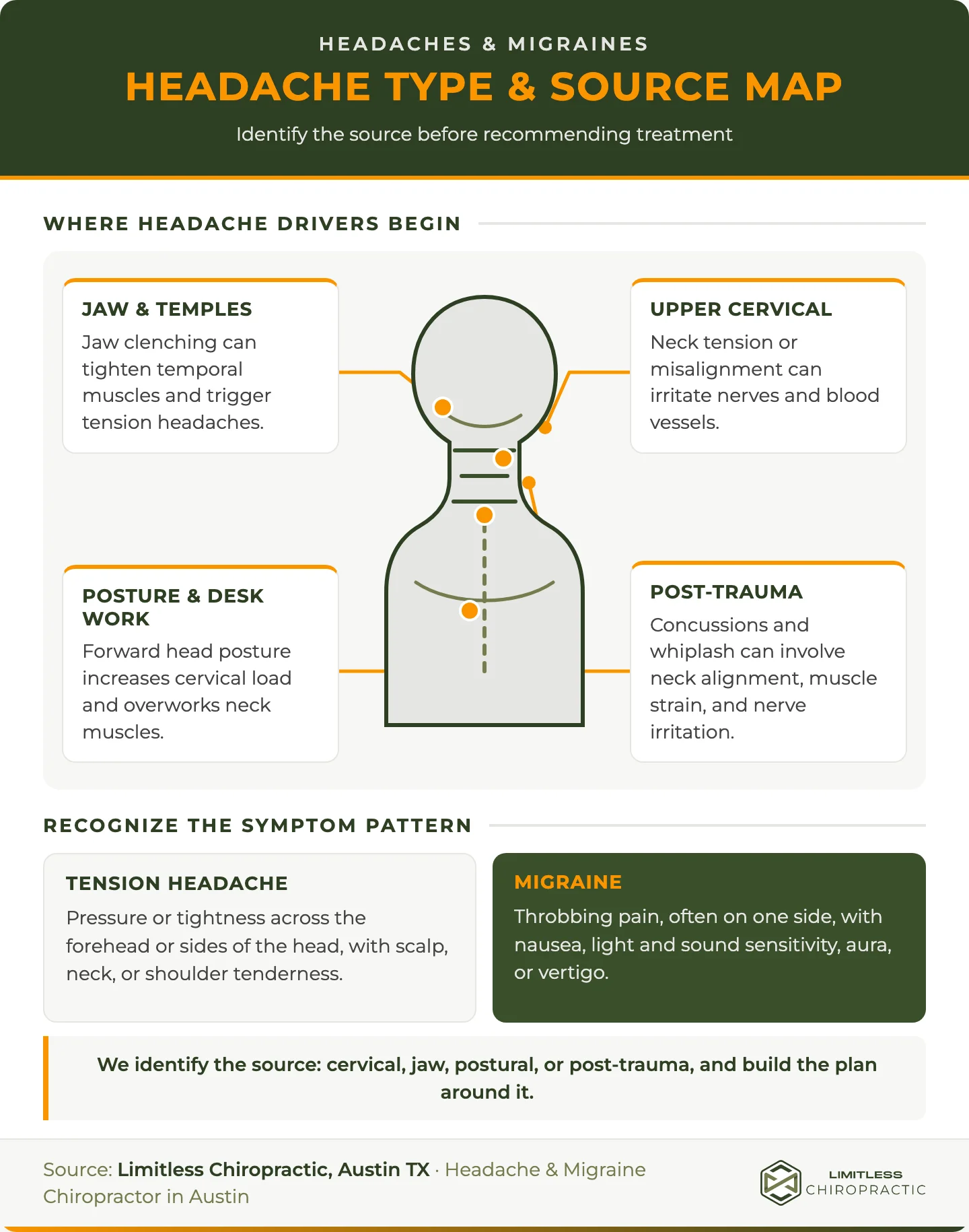
Headaches are pain sensations in any part of the head, ranging from sharp to dull, and can last from a few hours to several days. Migraines, on the other hand, are more severe headaches often accompanied by additional neurological symptoms.
Headaches can be primary (not caused by another condition) or secondary (resulting from an underlying condition). Migraines are a specific type of primary headache disorder characterized by recurrent attacks.
Common Symptoms
Headache symptoms typically include:
Pain in the head or face
Pressure or tightness across the forehead or sides of the head
Tenderness in scalp, neck, or shoulder muscles
Migraine symptoms often include:
Intense, throbbing pain, usually on one side of the head
Nausea and vomiting
Sensitivity to light and sound
Visual disturbances (aura) in some cases
Dizziness or vertigo
Causes of Headaches
Most headaches trace back to a small set of root drivers. Identifying which one applies to a given patient shapes the treatment plan.
Common Headache Drivers
Cause
Mechanism
Stress and Tension
Muscle tension in the neck, shoulders, and scalp triggers tension headaches; chronic stress may also contribute to migraine development
Dehydration
Reduced blood volume lowers oxygen flow to the brain and dilates blood vessels, producing pain
Neck Issues
Misalignments or tension in the cervical spine irritate nerves and blood vessels, especially when forward head posture is present
Stress and Tension
Stress is a leading cause of headaches. It can lead to muscle tension in the neck, shoulders, and scalp, triggering tension headaches. Chronic stress may also contribute to the development of migraines.
Dehydration
Not drinking enough water can lead to headaches. Dehydration affects blood volume, reducing oxygen flow to the brain and causing blood vessels to dilate, resulting in pain.
Neck Issues
Misalignments or tension in the cervical spine (neck) can irritate nerves and blood vessels, leading to headaches. Poor posture, especially forward head posture common with desk work and smartphone use, can exacerbate these issues due to the developed tension in the neck muscles.
Understanding these causes is crucial in developing effective treatment plans. Chiropractic care addresses many of these underlying factors, offering a holistic approach to headache and migraine management.
Traditional Treatments for Headaches
Medication-Based Approaches
Many people turn to over-the-counter pain relievers as their first line of defense against headaches. Common medications include:
Acetaminophen (Tylenol)
Ibuprofen (Advil, Motrin)
Aspirin
For migraines, prescription medications may be used:
Triptans
Ergotamines
CGRP antagonists
While these can provide temporary relief, they often don't address the underlying causes and may have side effects with long-term use. Most people also build tolerance over time, which means higher dosages or more frequent doses for the same level of pain control.
Lifestyle Changes
Doctors often recommend lifestyle modifications to manage headaches:
These changes can be effective but may take time to show results and require significant commitment.
Chiropractic Care for Headaches and Migraines
How Chiropractic Adjustments Help
Chiropractic care offers a drug-free approach to headache management:
Spinal Manipulation: Adjustments to the neck and upper back can relieve tension on the nerves, improve spinal function, and regulate circulation.
Soft Tissue Therapy: Techniques like massage can relax tense muscles contributing to headaches.
Posture Correction: Chiropractors can identify and correct postural issues that may be causing headaches.
Trigger Point Therapy: Addressing specific points of muscle tension can provide relief.
Benefits Over Traditional Treatments
Chiropractic vs. Medication-Only Approach
Benefit
What It Means in Practice
Addresses Root Causes
Care aims to correct underlying issues causing headaches; solely addressing the symptom is temporary and oftentimes leads to more headaches in the future
No Negative Side Effects
Drug-free approach avoids potential side effects of long-term medication use
Holistic Approach
Lifestyle advice alongside treatment lets patients see their chiropractor less frequently over time as they gain knowledge to help themselves outside the office
Long-Term Relief
Correcting spinal misalignments and muscle tension produces longer-lasting relief than temporary pain medication
Preventative Care
Regular visits help prevent headaches from occurring in the first place — easier to stay healthy than to get healthy
Chiropractic care offers a natural, effective alternative to traditional headache treatments, focusing on correcting the underlying causes rather than just masking symptoms.
Headaches every week? Migraines stealing your weekends? We evaluate the source before recommending treatment.
New patient first visit special: $97 (regularly $200)
The Stress-Headache Connection
Jaw Clenching and Temporal Muscle Tension
Stress often leads to unconscious jaw clenching, especially during sleep. This habit can cause significant tension in the temporal muscles, which are located on the sides of the head. When these muscles become tight and overworked, they can trigger tension headaches. The constant strain on these muscles can also lead to temporomandibular joint (TMJ) disorders, further exacerbating headache symptoms.
For patients whose headaches stem from jaw and upper-cervical involvement, the broader picture is covered in our TMJ, headache, and facial pain guide. Chiropractic care addresses jaw-driven headaches by:
Providing adjustments to the jaw and neck area
Teaching relaxation techniques to reduce clenching
Recommending exercises to strengthen and relax jaw muscles
Emotional Stress and Fascia
Emotional stress can be stored within our fascia, the connective tissue that surrounds muscles, bones, and organs. When we experience stress, our bodies can hold onto this tension in the fascia, leading to a variety of symptoms, including headaches. This stored stress can create areas of restriction in the fascia, particularly in the neck and shoulder regions, which are common trigger points for headaches.
Chiropractic's Impact on Headache Factors
Improving Blood Circulation
Chiropractic adjustments to the neck can significantly influence blood circulation in the head and neck area. Proper alignment of the cervical spine allows for optimal blood flow to the brain and surrounding tissues. Improved circulation can:
Reduce the likelihood of experiencing headaches
Enhance oxygen and nutrient delivery to brain tissues
Help flush out toxins that may contribute to headache pain
Specific techniques like cervical manipulation and mobilization can help restore normal motion to the joints of the neck, promoting better overall circulation.
Releasing Fascia Stress
Chiropractic care includes techniques that specifically target fascial restrictions. By releasing the stress stored in the fascia, chiropractors can help alleviate a major contributing factor to headaches. These techniques may include:
Myofascial release: A hands-on technique that involves applying gentle sustained pressure to the fascia to eliminate pain and restore motion.
Instrument-assisted soft tissue mobilization: Using specially designed tools to detect and treat areas of fascial restriction.
Active Release Technique (ART): A patented soft tissue system that relieves tissue tension and restores normal function to muscles and fascia.
By addressing fascial restrictions, chiropractic care can help release stored emotional and physical stress, reducing the frequency and intensity of headaches. This approach not only provides relief from current symptoms but also helps prevent future headaches by maintaining the health and flexibility of the fascia.
Through these methods, chiropractic care offers a comprehensive approach to managing headaches by addressing both the physical and emotional factors that contribute to their occurrence.
Migraines: A Closer Look
Unique Symptoms of Migraines
Migraines are more than just severe headaches. They come with a unique set of symptoms that can be debilitating:
Migraine Symptom Patterns
Symptom
What It Looks Like
Aura
Visual disturbances like flashing lights or blind spots before or during a migraine
Nausea and Vomiting
Often accompany the intense head pain
Light and Sound Sensitivity
Many migraine sufferers seek dark, quiet rooms for relief
Pulsating Pain
Unlike tension headaches, migraine pain often throbs or pulsates
Unilateral Pain
Migraines frequently affect only one side of the head or behind only one eye
These symptoms can last anywhere from hours to days, significantly impacting daily life.
Vertigo and Balance Issues
Vertigo, a sensation of spinning or dizziness, is common with certain types of migraines:
Vestibular Migraines: These specifically cause balance problems and dizziness.
Basilar Migraines: Can lead to severe vertigo along with other neurological symptoms.
The connection between vertigo and migraines often relates to the upper cervical region and the cerebellum, areas that chiropractic care can influence. By addressing misalignments in the upper neck, chiropractors may help reduce the frequency and severity of vertigo associated with migraines.
Trauma-Induced Headaches
Sports Concussions
Concussions from sports activities can lead to persistent headaches:
Post-Concussion Syndrome: Can cause ongoing headaches weeks or months after the initial injury.
Chiropractic care for concussion-related headaches focuses on:
Gentle cervical adjustments to restore proper alignment
Soft tissue work to address muscle tension
Vestibular rehabilitation exercises to improve balance and reduce dizziness
Whiplash from Car Accidents
Whiplash, common in car accidents, frequently leads to chronic headaches:
Cervical Misalignment: The sudden back-and-forth motion can misalign vertebrae in the neck.
Muscle Strain: Soft tissues in the neck can be damaged, leading to ongoing tension and pain.
Nerve Irritation: Misalignments can irritate nerves, causing referred pain to the head.
Chiropractic treatment for whiplash-induced headaches includes:
Specific adjustments to realign the cervical spine
Soft tissue therapies to address muscle damage
Rehabilitative exercises to strengthen and stabilize the neck
Headaches that begin after a collision often follow the patterns covered in our personal injury chiropractor in Austin guide, which walks through evaluation timelines and Texas insurance considerations for post-accident care.
In both sports concussions and whiplash cases, the neck often heals incorrectly without proper treatment, leaving individuals more prone to experiencing headaches. Chiropractic care aims to correct these misalignments and address soft tissue injuries, potentially reducing the frequency and intensity of trauma-induced headaches.
By addressing the underlying structural issues caused by these traumas, chiropractic care offers a path to long-term relief and prevention of chronic headaches.
Posture and Headaches
Forward Head Posture
Forward Head Posture (FHP) is a common postural problem that significantly contributes to headaches:
Biomechanical Stress: FHP shifts the head's weight forward, increasing the load on the cervical spine.
Muscle Imbalance: This posture overworks some neck muscles while weakening others.
Nerve Compression: Prolonged FHP can compress nerves exiting the cervical spine and create tension on the spinal cord.
Effects of FHP on headaches:
Increased tension in upper trapezius and suboccipital muscles
Reduced range of motion in the neck
Altered blood flow to the brain
Chiropractic approach to FHP:
Spinal adjustments to restore proper cervical alignment
Exercises and stretches to strengthen weak neck flexors and calm tight neck extension muscles
Postural education and ergonomic advice for work, everyday life, and sleep
Technology's Impact on Neck Alignment
Technology's impact on neck alignment has become a significant concern in our digital age. The rise of "Text Neck" syndrome, caused by constantly looking down at devices, puts unprecedented strain on the cervical spine. This, coupled with increased screen time and sedentary lifestyles, has created a perfect storm for poor posture and related health issues.
The consequences extend beyond mere discomfort. Chronic muscle tension in the neck and upper back, cervical spine misalignments, and increased stress on the spinal cord and nerves are common outcomes. These factors not only contribute to headaches but can also make it challenging for the brain to adapt to stress, potentially triggering both tension headaches and migraines. For desk-based and screen-heavy occupations, our Austin tech worker chiropractic guide details the postural and ergonomic patterns that drive these headaches and the specific corrections that resolve them.
Chiropractic care offers a multifaceted approach to combat these technology-related neck issues. Regular spinal adjustments help maintain proper alignment, while soft tissue therapy addresses muscle tension. Importantly, chiropractors also provide guidance on ergonomics and proper device use, empowering patients to make healthier choices in their daily tech interactions.
By correcting spinal misalignments, offering posture-improving exercises, and advising on ergonomic setups, chiropractic care goes beyond symptom relief. It aims to create lasting change in how we interact with technology, fostering habits that promote long-term spinal health and headache prevention. This comprehensive approach not only addresses current discomfort but also builds a foundation for sustained well-being in our increasingly digital world.
Patient Cases
Tech Professional Overcomes Work-Induced Headaches
Lisa, a 25-year-old tech professional, found herself grappling with frequent headaches that were taking a toll on her life. Fresh out of college and thrust into a demanding job, she spent long hours staring at computer screens, all while juggling the pressure to meet performance targets. This perfect storm of stress and poor ergonomics led to debilitating headaches occurring about three times a week.
The constant pain began to seep into every aspect of Lisa's life. Her energy levels plummeted, concentration waned, and even her relationships started to suffer. Desperate to reclaim her quality of life, Lisa decided to explore chiropractic care, despite never having visited a chiropractor before.
To her amazement, after just two adjustments at Limitless Chiropractic, Lisa experienced a dramatic turnaround. Her persistent headaches vanished, offering her the relief she'd been seeking. Now, Lisa maintains her newfound well-being with occasional chiropractic visits, effectively keeping those troublesome headaches at bay and allowing her to thrive both personally and professionally.
"After just a few adjustments, Shelby's migraines disappeared completely. Now, she only experiences mild headaches during periods of extreme stress — a dramatic shift from her previous daily struggle."
— Limitless Chiropractic patient case summary
Mother of Four Finds Relief from Chronic Migraines
Shelby, a 50-year-old mother of four, had been battling a relentless headache that seemed to have no end. Stress, worry, and fatigue often exacerbated her condition, with migraines striking weekly, bringing nausea, vertigo, and light sensitivity.
Despite her efforts to find relief through regular ibuprofen use and monthly massages, Shelby saw no improvement. She had exhausted traditional medical avenues, consulting doctors, pain specialists, and neurologists, all to no avail. Remembering a positive experience with chiropractic care following a car accident in her youth, Shelby turned to it as her last resort.
At Limitless Chiropractic, our doctors identified a neck misalignment that was hampering Shelby's ability to cope with life's stressors. Remarkably, after just a few adjustments, Shelby's migraines disappeared completely. Now, she only experiences mild headaches during periods of extreme stress — a dramatic shift from her previous daily struggle. This transformation from constant pain to occasional discomfort has significantly improved Shelby's quality of life.
Ex-Athlete Tackles Post-Concussion Headaches and TMJ Issues
Nick, a former college football player in his 30s, had a history of head injuries and concussions that left him with frequent headaches. Initially dismissing them as normal, Nick soon found himself battling multiple headaches weekly. These episodes worsened with stress and exercise, leading to weight gain and persistent fatigue.
Adding to his discomfort, Nick noticed he was grinding his teeth and clenching his jaw at night, resulting in achy temples every morning. It wasn't until Nick's dentist, a patient at Limitless Chiropractic, suggested he try chiropractic care that he discovered a potential solution.
At Limitless Chiropractic, Nick learned about the effectiveness of chiropractic adjustments for headaches stemming from head injuries. After just a few sessions focusing on his neck and jaw, Nick experienced a remarkable transformation. He regained the ability to exercise, socialize, and excel at work without the burden of headaches.
Surprisingly, Nick also noticed a reduction in teeth grinding and morning temple tension. Impressed by his recovery, Nick now enthusiastically recommends chiropractic care to friends and colleagues struggling with similar headache issues, sharing his success story as a testament to the treatment's effectiveness.
Frequently Asked Questions
Can chiropractic care actually reduce migraine frequency?
For many patients, yes — particularly when migraines are linked to upper-cervical alignment, jaw clenching, posture, or post-trauma neck dysfunction. Chiropractic targets the structural drivers rather than masking the pain. Patients often report fewer episodes and milder symptoms once the underlying mechanical issue is addressed.
How is a tension headache different from a migraine?
Tension headaches typically present as steady pressure or tightness across the forehead or sides of the head, with tenderness in the scalp, neck, and shoulders. Migraines involve more intense, often throbbing pain — frequently on one side — accompanied by nausea, light and sound sensitivity, and sometimes visual aura or vertigo. The two can overlap, which is why an accurate evaluation matters.
My headaches started after a car accident. Is that normal?
Post-accident headaches are common and often relate to whiplash, cervical misalignment, or post-concussion syndrome. The neck takes the force even when the head doesn't appear to hit anything, and untreated soft-tissue and joint injuries can produce headaches that linger for weeks or months. Early evaluation reduces the chance of these symptoms becoming chronic.
Why do my headaches get worse at my desk?
Forward head posture and "Text Neck" from sustained screen work increase load on the cervical spine and overwork the upper trapezius and suboccipital muscles. That mechanical strain plus reduced cervical mobility and altered blood flow combines to trigger tension headaches. Adjustments, postural correction, and ergonomic changes address the cause rather than the symptom.
Will I have to keep coming forever?
No. Most headache patients move through an initial corrective phase, then transition to maintenance visits as needed. Patients gain knowledge to help themselves outside the office through ergonomic education, exercises, and lifestyle adjustments. The goal is sustained relief, not indefinite dependence.
Are chiropractic adjustments safe for migraine sufferers?
When performed by a licensed chiropractor after a thorough exam, yes. The exam identifies whether adjustments are appropriate or whether a different approach (soft tissue work, vestibular rehabilitation, postural correction) should lead. For migraine patients with vertigo or post-concussion involvement, gentler techniques are typically used.
Headaches Have a Source. The Source Has a Treatment.
Headaches and migraines are complex conditions with various causes — stress, dehydration, posture, jaw clenching, fascial tension, trauma, and cervical misalignment among them. Traditional treatments often focus on symptom relief through medication, while chiropractic care addresses the underlying causes.
Chiropractic adjustments can improve blood circulation, release fascial stress, and correct spinal misalignments contributing to headaches. Forward head posture and technology-driven neck strain significantly impact alignment and headache frequency. Trauma from sports concussions and whiplash can lead to chronic headaches that respond to specific chiropractic techniques. Migraines, with their unique symptoms like aura and vertigo, are influenced by upper cervical alignment.
Regular chiropractic maintenance helps prevent headaches by maintaining proper spinal alignment and addressing postural issues. Unlike medication, chiropractic treatment aims to correct root causes — potentially offering longer-lasting relief without side effects.
Limitless Chiropractic in Austin evaluates every headache and migraine patient before recommending treatment. We identify the source — cervical, jaw, postural, or post-trauma — and build the plan around it.
New patient first visit special: $97 (regularly $200)
Limitless Chiropractic | 2800 S I-35 Frontage Rd, Ste 175 | Austin, TX 78704 | Serving Downtown Austin, South Austin, Round Rock, Cedar Park, and Pflugerville
Dr. Scott Mitchell
About the author
Dr. Scott Mitchell, a Boston-accented chiropractor with a passion for holistic health,dedicates his life to helping people unlock their LIMITLESS potential through personalized chiropractic care.