DDD breaks down spinal discs, DJD breaks down joint cartilage
The two conditions overlap but have distinct mechanisms and treatment paths
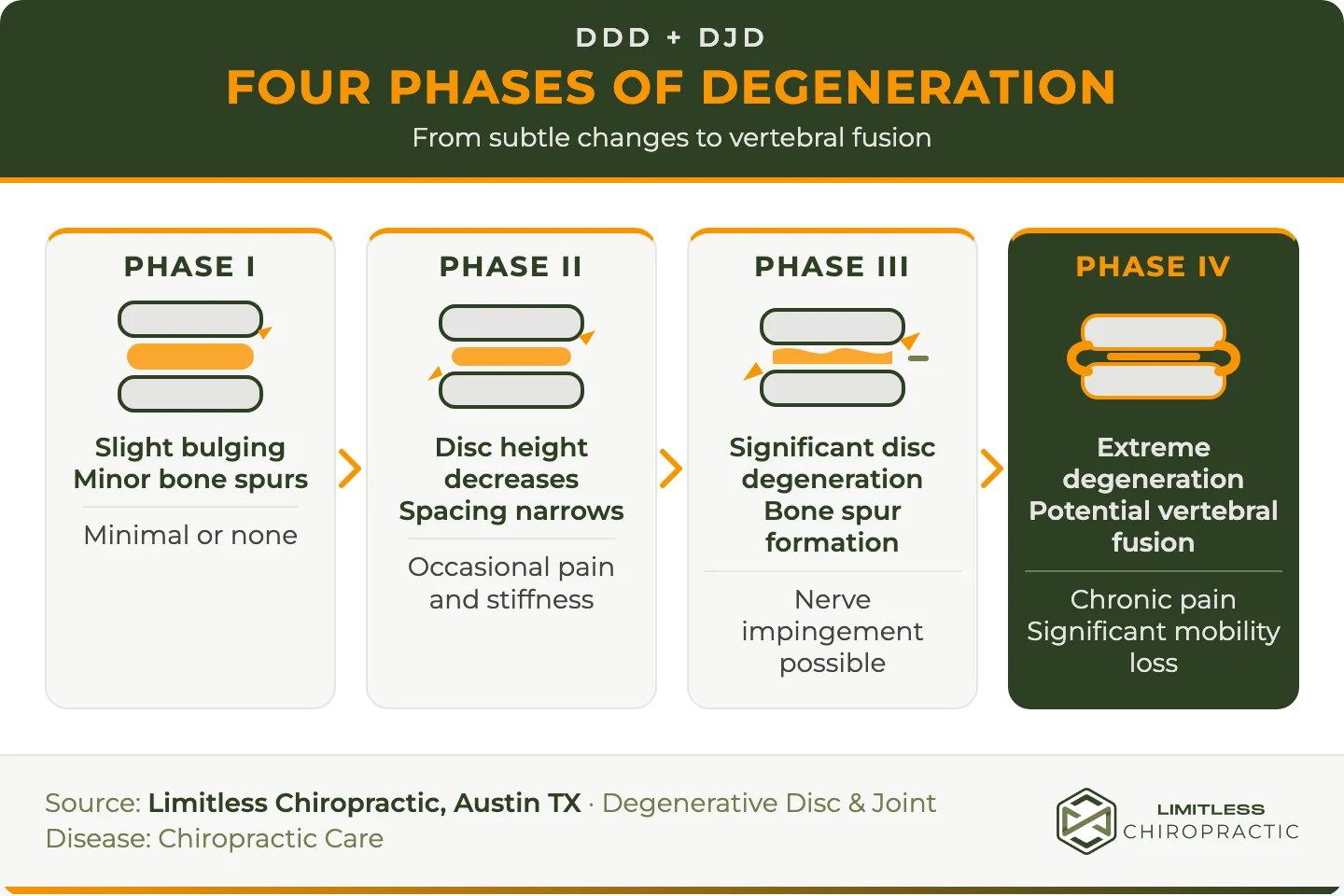
Degeneration progresses through four phases, from subtle changes to vertebral fusion
Early-stage care can slow or stabilize progression before symptoms become severe
Discs depend on movement, hydration, and segmental motion to stay healthy
Sedentary work and chronic dehydration accelerate disc decline
Chiropractic adjustments improve joint mobility and reduce nerve pressure non-surgically
You can manage symptoms without medication side effects or surgical risk
Posture, ergonomics, and lifestyle drive long-term outcomes more than any single treatment
What you do between visits matters as much as what happens during them
Even Phase IV degeneration responds to chiropractic care for pain and function
Advanced cases are not lost causes — symptoms can improve at any stage
Understanding DDD and DJD
Degenerative Disc Disease (DDD) and Degenerative Joint Disease (DJD) are common conditions that affect the spine and other joints throughout the body as we age. These conditions can cause pain, stiffness, and reduced mobility, impacting quality of life. Understanding what's happening inside the spine and joints is the first step toward effective management and treatment.
Degenerative Disc Disease occurs when the intervertebral discs in the spine begin to break down, losing their ability to cushion and support the vertebrae. This can lead to pain, nerve compression, and reduced spinal flexibility. For a closer look at how disc-level injury develops and resolves, see our guide on disc herniations from prevention to recovery.
Degenerative Joint Disease, also known as osteoarthritis, is characterized by the breakdown of cartilage in joints. This can cause pain, inflammation, and stiffness in affected areas, commonly including the knees, hips, and spine.
Both conditions are part of the natural aging process, but factors such as injury, genetics, and lifestyle can accelerate their progression. Healthy routines and lifestyle practices can slow down the degeneration process dramatically, leaving you feeling younger than your peers.
Types of Arthritis in DJD
While osteoarthritis is the most common form of arthritis associated with DJD, other types can also affect the joints:
Osteoarthritis: This "wear and tear" arthritis is the primary form of DJD. It occurs when the protective cartilage that cushions the ends of bones wears down over time.
Rheumatoid Arthritis: Although less common in DJD, this autoimmune disorder can also lead to joint degeneration if left untreated.
Post-traumatic Arthritis: This can develop after an injury to the joint, accelerating the degenerative process.
For a deeper breakdown of arthritic joint pain and how chiropractic addresses it, see our guide on the arthritis chiropractor in Austin resource.
Symptoms and Risk Factors
Symptoms of Arthritis in DJD
Common symptoms of arthritis in DJD include:
Joint pain and stiffness
Reduced range of motion
Swelling in the affected joints
Grinding or popping sensation (crepitus) in the joints
Bone spurs
Risk Factors for Arthritis in DJD
Several factors can increase the risk of developing arthritis as part of DJD:
Age: The risk increases with age
Genetics: Family history can play a role
Obesity: Excess weight puts additional stress on weight-bearing joints
Previous joint injuries
Repetitive stress on the joints
Misaligned joints and compressed joints
Lack of movement or improper movement
Chronic dehydration
Worried about how DDD or DJD is progressing in your spine? We start with a thorough evaluation before recommending any care plan.
In this early stage, minor changes begin to occur in the discs and joints. There may be slight bulging of discs and minor bone spurs, but symptoms are usually minimal or non-existent. Symptoms can range from dysfunctions of regular bodily systems to pain and decrease in range of motion.
Phase II
As degeneration progresses, disc height begins to decrease, and the space between vertebrae narrows. Joint dysfunction becomes more noticeable, and mild to moderate symptoms may appear, including occasional pain and stiffness.
Phase III
In this advanced stage, significant disc degeneration and bone spur formation occur. Joint dysfunction becomes more severe, leading to frequent pain, reduced mobility, and possible nerve impingement. Nerve impingement can cause a variety of different dysfunctions depending on where along the spine the impingement is. The most common nerve impingement experienced is sciatica from the low back down the leg, as well as thoracic outlet syndrome (TOS) which starts in the neck and goes down the arm.
Phase IV
This is the most severe stage, characterized by extreme disc degeneration, large bone spurs, and potential fusion of vertebrae. Chronic pain, significant loss of mobility, and neurological symptoms are common at this stage. Phase IV is most commonly found within the elder population; however, there has been a spike in Phase IV degeneration over recent years among younger generations due to sedentary lifestyles, obesity, and forward head carriage, also known as tech neck.
Understanding these phases helps healthcare providers, including chiropractors, to assess the severity of the condition and develop appropriate treatment strategies. For mid- to advanced-phase disc cases, spinal decompression therapy in Austin can also play a role alongside adjustments.
Chiropractic Care for DDD and DJD
Chiropractic care offers a non-invasive, drug-free approach to managing and treating Degenerative Disc Disease and Degenerative Joint Disease. This holistic method focuses on improving joint function, reducing pain, and enhancing overall spinal health.
What Are Chiropractic Adjustments?
Chiropractic adjustments, also known as spinal manipulations, are precise, controlled forces applied to specific joints in the spine or other parts of the body. These adjustments aim to improve joint mobility, restore proper alignment, and alleviate pressure on nerves. For DDD and DJD patients, these adjustments can help reduce pain, improve flexibility, and slow the progression of degeneration.
Benefits of a Non-Invasive Approach
Treatment Approaches Compared
Approach
What It Does
Limitations
Spinal Surgery
Stabilizes or fuses vertebrae, removes bone spurs or disc fragments
Long recovery, surgical risk, possible failed back syndrome, irreversible
Pain Medication
Reduces pain and inflammation symptomatically
Treats symptoms not cause; side effects with chronic use
Cortisone Injections
Short-term anti-inflammatory relief at the source
Repeated use can weaken connective tissue; relief is temporary
Negative pressure rehydrates discs and reduces nerve irritation
Best for disc-driven pain; not suited for purely joint-based DJD
Comparison with Surgical Interventions
Spinal surgeries for DDD and DJD can be complex, risky, and often have long recovery periods. Moreover, they're not always successful and may lead to additional complications. The medical diagnosis for such an outcome is called failed back surgery syndrome and is unfortunately common among spinal surgery recipients. Chiropractic care provides a less invasive alternative that can often achieve significant improvements without the risks associated with surgery.
Limitations of Medication-Based Treatments
While medications can provide temporary relief from pain and inflammation, they often don't address the underlying causes of DDD and DJD. Medication for DDD and DJD, more often than not, focuses on treating the symptom rather than correcting the cause. Chiropractic care, on the other hand, aims to improve joint function and spinal health, potentially slowing the progression of these conditions and providing long-term benefits.
"Healthy routines and lifestyle practices can slow down the degeneration process dramatically, leaving you feeling younger than your peers."
Preventing and Managing DDD and DJD
Chiropractic care plays a crucial role in both preventing and managing Degenerative Disc Disease and Degenerative Joint Disease. By focusing on maintaining proper spinal alignment and joint function, chiropractic treatments can help slow the progression of these conditions and alleviate symptoms in those already affected.
The Role of Chiropractic Care
Regular chiropractic adjustments can help maintain proper spinal alignment, reduce stress on joints and discs, and improve overall spinal health. This proactive approach can potentially delay the onset of DDD and DJD or slow their progression in the early stages. For those already experiencing symptoms, chiropractic care can help manage pain, improve mobility, and enhance quality of life without relying on medications or invasive procedures.
Three Essential Factors for Disc Health
Chiropractors emphasize three key factors for maintaining healthy discs, which are particularly important given the poor blood supply to these structures.
Movement
Regular physical activity and exercise help nourish the discs by promoting fluid exchange and nutrient delivery. Even taking frequent breaks from a sedentary work environment allows joints to become less fixated and more mobile. Chiropractors can recommend appropriate exercises tailored to each patient's condition and fitness level.
Hydration
Proper hydration is crucial for maintaining the water content in the discs, which is essential for their shock-absorbing function. Chiropractors often advise on proper hydration habits as part of a comprehensive treatment plan. In fact, one of the last areas in your body to get hydrated is your spine. This is why it is crucial for individuals with back issues to stay hydrated and avoid dehydration at all cost.
Segmental Movement
This refers to the specific movement at each individual joint or disc level. Chiropractic adjustments target these segmental movements, ensuring that each part of the spine maintains its proper range of motion. This is particularly important for disc health, as it helps distribute stress evenly and promotes nutrient exchange.
By addressing these three factors, chiropractic care offers a comprehensive approach to maintaining spinal health and managing DDD and DJD.
Posture and Ergonomics
Posture and ergonomics play a significant role in the development and progression of DDD and DJD. Poor posture, especially during prolonged periods of sitting or standing, can place undue stress on the spine and joints, accelerating degeneration. Chiropractors can provide guidance on proper posture and ergonomic setups for work and daily activities. This may include recommendations for:
Proper sitting and standing postures
Ergonomic office equipment
Sleeping positions and mattress selection
Techniques for lifting and carrying objects safely
By implementing these recommendations, patients can reduce stress on their spine and joints, potentially slowing the progression of DDD and DJD.
Lifestyle Modifications for DDD and DJD
Preventive Measures
Adopting a healthy lifestyle can significantly impact the development and progression of DDD and DJD. Chiropractors often recommend:
Regular exercise to strengthen supporting muscles
Maintaining a healthy weight to reduce stress on joints
A balanced diet rich in anti-inflammatory foods
Proper hydration to support disc health
Stress reduction techniques to minimize muscle tension
Management Strategies for Existing Conditions
For those already diagnosed with DDD or DJD, chiropractors may suggest additional lifestyle modifications:
Get chiropractic adjustments on a regular basis
Low-impact exercises like swimming or resistance band training
Specific stretching routines to improve flexibility
Use of hot and cold therapy for pain management
Ergonomic adjustments at home and work
Mindfulness practices to manage chronic pain
These strategies, combined with regular chiropractic care, can help manage symptoms and improve quality of life for those with DDD and DJD.
Cash-pay friendly chiropractic care for spinal degeneration in Austin. Read our cash-pay cost guide or book directly below.
Adrian, a man in his 40s, faced a challenging battle with right knee degeneration. Determined to avoid surgery due to potential complications and lengthy recovery, he embarked on a quest for alternative treatments. His journey led him to explore various holistic approaches, including infrared sauna sessions, cold plunge therapy, adopting a carnivore diet, and regular Pilates practice.
While these methods provided some relief, Adrian felt something was missing. That's when he discovered chiropractic care. Chiropractic adjustments became the key ingredient in Adrian's treatment plan, focusing on restoring proper movement, improving alignment, and decompressing the degenerative knee joint.
Adrian quickly realized that while chiropractic couldn't reverse his knee degeneration, it significantly improved his symptoms. The adjustments created enough movement in the joint to reduce pain, enhance functionality, and allow him to return to his favorite activities.
This success story highlights how chiropractic care, combined with other holistic approaches, can be a game-changer for those managing degenerative joint conditions. Adrian's experience demonstrates that a comprehensive approach to treatment, with chiropractic at its core, can offer significant relief and improved quality of life for individuals struggling with knee degeneration.
David's Triumph Over Severe Neck Degeneration and Dysphagia
David, a man in his 60s, faced a challenging battle with Phase IV neck degeneration, resulting in persistent neck pain and a severe case of dysphagia (difficulty swallowing). His condition had reached a critical point where swallowing food caused extreme pain, and half-chewed food would remain in his mouth for extended periods. This dysfunction significantly impacted his daily life and overall well-being.
Despite consulting multiple doctors and trying various treatments, David found no relief. In a last-ditch effort, he turned to chiropractic care. At Limitless Chiropractic, we recognize the profound impact chiropractic adjustments can have on spinal degeneration. David's experience validated this understanding when he noticed a difference after just one adjustment, and by the third adjustment, his dysphagia had completely resolved.
The key outcomes of David's chiropractic treatment were remarkable. The therapy eliminated his dysphagia symptoms, restored normal swallowing function, and significantly improved his overall quality of life. Understanding that his underlying degeneration remains, David now maintains regular chiropractic visits. These sessions prevent the return of dysphagia symptoms, allow him to eat and swallow normally, and effectively manage his neck pain.
David's story showcases how chiropractic care can provide significant relief and functional improvement, even in cases of advanced spinal degeneration with severe symptoms like dysphagia. His journey demonstrates the potential of chiropractic interventions in addressing complex spinal issues and improving patients' daily lives.
Kyle's Recovery from Football-Induced Spinal Degeneration
Kyle, a former D1 college football player in his 30s, faced the long-term consequences of his athletic career. Years of football-related injuries and trauma, coupled with a decade of sedentary work, led to widespread spinal degeneration causing chronic stiffness and pain. Kyle experienced severe discomfort while lying in bed, despite trying various mattresses and pillows. His nights were restless, spent tossing and turning, and he often woke up with tension headaches that lingered throughout the morning.
At our clinic, we explained that while chiropractic care couldn't reverse his spinal degeneration, it could significantly reduce pain and improve range of motion. After just a few chiropractic sessions, Kyle noticed substantial progress. His pain reduced significantly, his flexibility increased, and most importantly, his sleep quality improved dramatically.
These improvements led to increased energy levels and a better overall mood throughout the day. Kyle's ongoing care plan now includes regular, but less frequent, chiropractic adjustments and adherence to our lifestyle recommendations. This combined approach allows Kyle to maintain symptomatic relief and enjoy a higher quality of life despite his history of spinal degeneration.
Kyle's story illustrates how chiropractic care can provide significant benefits for those dealing with chronic spinal issues resulting from past athletic injuries and sedentary work habits. His journey demonstrates the potential of chiropractic interventions in addressing complex spinal issues and improving patients' daily lives, even in cases of long-standing degeneration.
Frequently Asked Questions
Can chiropractic care reverse Degenerative Disc Disease or Degenerative Joint Disease?
No. Chiropractic care cannot reverse structural degeneration that has already occurred. What it can do is improve joint mobility, reduce pain, decompress nerves, and slow progression. Patients with even Phase IV degeneration regularly experience meaningful symptom relief.
How is DDD different from DJD?
DDD is the breakdown of intervertebral discs, the gel-filled cushions between spinal vertebrae. DJD, also called osteoarthritis, is the breakdown of cartilage in joints throughout the body, including spinal facet joints, knees, hips, and shoulders. The two often coexist because spinal disc degeneration places extra load on adjacent facet joints.
Is chiropractic care safe for advanced Phase III or Phase IV degeneration?
Yes, when performed by a chiropractor who reviews imaging first and adjusts technique to match each patient's structural reality. Adjustments for advanced degeneration are typically gentler and more segmental than what younger, healthier spines receive. Imaging review is part of the new-patient evaluation at Limitless Chiropractic.
Will I need treatment forever?
Most patients with DDD or DJD benefit from a corrective phase followed by reduced-frequency maintenance care. The maintenance interval depends on phase, lifestyle factors, and how the spine responds. Some patients come in monthly; others stretch to once a quarter once symptoms stabilize.
When should I consider spinal decompression on top of adjustments?
When imaging or symptoms point to disc-driven pain — herniation, bulging, sciatica, or DDD with nerve compression. Decompression specifically targets the disc environment. Joint-based DJD without disc involvement is typically managed with adjustments and lifestyle work alone.
Does insurance cover chiropractic care for DDD or DJD?
Coverage varies dramatically by carrier and plan. Limitless Chiropractic operates as a cash-pay clinic — including HSA and FSA — and accepts Texas PIP for personal-injury cases. See our cash-pay cost guide for full pricing.
Limitless Chiropractic | 2800 S I-35 Frontage Rd, Ste 175 | Austin, TX 78704 | Serving Downtown Austin, South Austin, Round Rock, Cedar Park, and Pflugerville
Dr. Scott Mitchell
About the author
Dr. Scott Mitchell, a Boston-accented chiropractor with a passion for holistic health,dedicates his life to helping people unlock their LIMITLESS potential through personalized chiropractic care.