Arthritis is joint inflammation, not a single disease — over 100 forms exist
The right treatment depends on which type and which joints are affected
Chiropractic care addresses joint mechanics, not just pain signals
Better mechanics distribute load away from the inflamed joint, easing day-to-day function
Adjustments reach beyond the spine — knees, hands, feet, shoulders, hips all respond
Arthritis rarely stays in one place; extremity care matches the pattern
A drug-free approach reduces reliance on long-term medication
Fewer side effects and no dependency cycle to manage
Treatment plans are customized around the specific joints and severity
One protocol does not fit every patient or every form of arthritis
Limitless Chiropractic combines spinal alignment, extremity work, and soft-tissue therapy
You get a multi-angle plan instead of a single technique applied to everything
What Arthritis Is and How It Affects Daily Life
Arthritis is a common condition that affects millions of people worldwide, causing joint inflammation that leads to pain and stiffness. This chronic ailment can significantly hinder daily activities and diminish overall quality of life. Fortunately, chiropractic care offers a non-invasive, drug-free approach to managing arthritis symptoms and improving joint function.
At its core, arthritis refers to inflammation of one or more joints, resulting in pain and stiffness that can worsen with age. It is not a single disease but a way of referring to joint pain or joint disease. There are over 100 different types of arthritis, and the symptom picture varies widely depending on which form is present and which joints are involved.
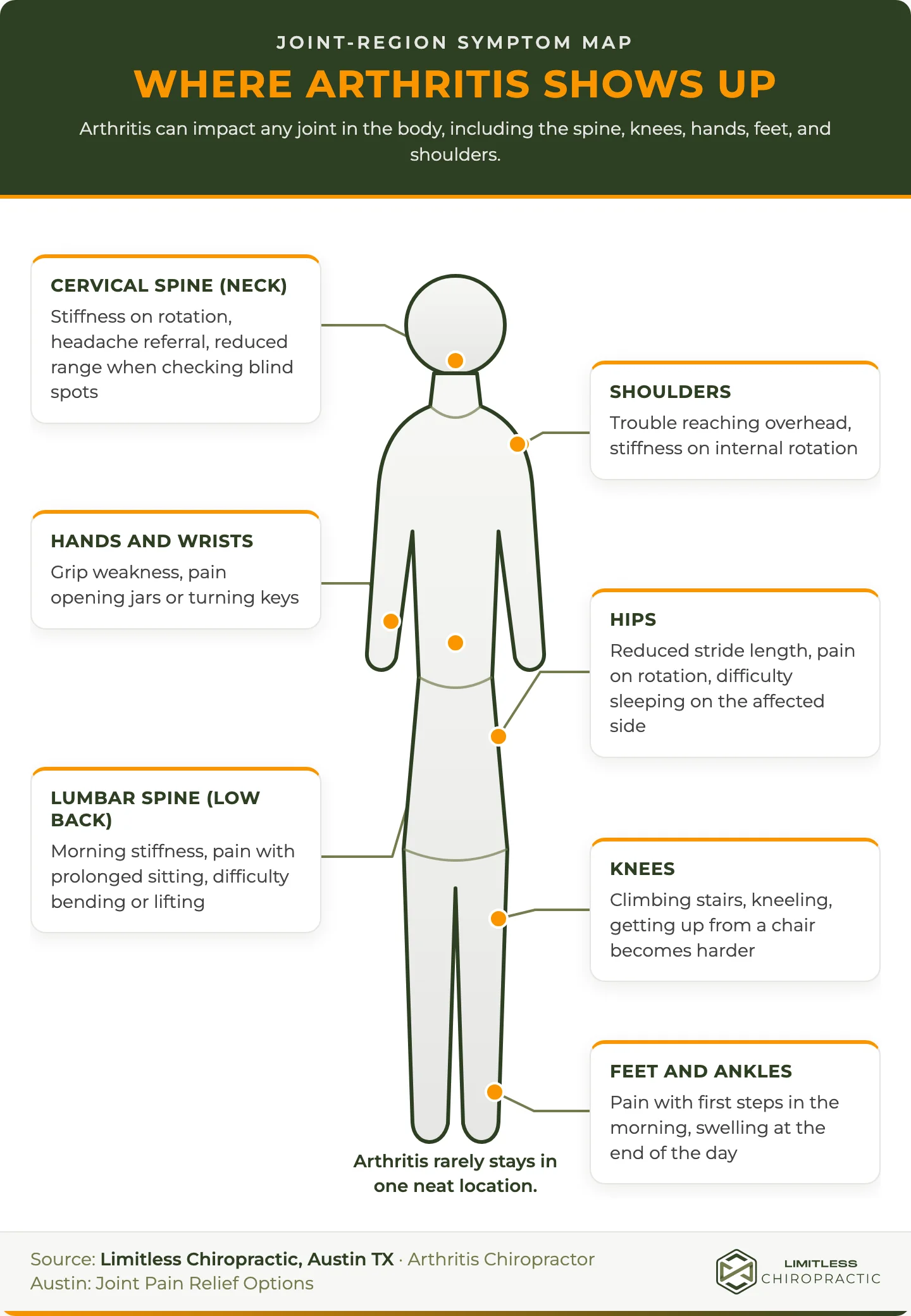
Arthritis can impact any joint in the body, including those in the spine, knees, hands, feet, and shoulders. Common symptoms include joint pain, swelling, stiffness, and a reduced range of motion. These symptoms can profoundly affect daily life, making simple tasks like walking, opening jars, climbing stairs, or holding a steering wheel during a long drive harder than they used to be. The constant discomfort and limitations can also take an emotional toll, leading to feelings of frustration, helplessness, and depression.
The Three Most Common Forms
Osteoarthritis
The most prevalent type, often called "wear and tear" arthritis. It occurs when the protective cartilage that cushions the ends of bones wears down over time, leading to pain and decreased mobility. Weight-bearing joints — knees, hips, and the lower spine — tend to feel it first, though hands and shoulders are common sites as well.
Rheumatoid Arthritis
An autoimmune disorder in which the body's immune system attacks its own tissues, particularly the joints, causing painful swelling and potential joint deformity. Rheumatoid arthritis often presents symmetrically — both hands, both knees, both wrists — and may flare unpredictably.
Psoriatic Arthritis
Affects some people who have psoriasis, a condition characterized by red patches of skin topped with silvery scales. Joint pain, stiffness, and swelling are the primary symptoms. Psoriatic arthritis can affect any joint and may also involve the points where tendons and ligaments attach to bone.
How Chiropractic Care Approaches Arthritic Joints
Chiropractic care is a form of healthcare focused on diagnosing and treating mechanical disorders of the musculoskeletal system, particularly the spine. Chiropractors work from the principle that proper alignment of the body's musculoskeletal structure supports the body's ability to function and heal. By restoring mobility to joints restricted by tissue injury or chronic inflammation, chiropractic treatment helps alleviate pain and improve overall function.
Central to chiropractic practice is the concept of spinal alignment. Misalignments in the spine, known as subluxations, can disrupt neurological signaling and contribute to inflammation in surrounding tissue. Through spinal adjustments and joint manipulation, chiropractors aim to correct these misalignments, supporting better nerve function and reducing the mechanical irritation that drives inflammation.
The principles of chiropractic treatment emphasize a holistic approach, considering the patient's entire physical and emotional well-being. Techniques used in chiropractic care not only address the spine but also other joints and soft tissues, supporting overall function throughout the body — which matters when arthritis touches more than one area at a time.
For individuals with arthritis, chiropractic care can offer significant benefits. Treatment focuses on reducing joint pain, decreasing inflammation, and improving joint function — all key concerns for arthritis patients. By employing specific adjustments and complementary therapies, chiropractors can help alleviate the symptoms of arthritis in various joints, not just the spine.
One of the primary ways chiropractic care aids arthritis sufferers is by reducing pressure on affected joints. Proper spinal alignment improves overall body mechanics, which lessens the strain on joints already compromised by arthritis. When the spine is aligned correctly, the body's weight is distributed evenly, preventing excessive stress on certain joints and allowing for smoother movement.
Living with arthritic joint pain in Austin? We'll evaluate the joints involved and design a plan around your specific pattern.
Arthritis rarely stays in one neat location. A patient with osteoarthritis in the knees often has compensating tightness in the lower back, hips, or even the opposite shoulder. Treatment that ignores those compensation patterns leaves work undone. This is where extremity chiropractic adjustments in addition to spinal work become useful — joints in the wrists, knees, hips, and ankles can be addressed directly rather than waiting for spinal alignment alone to relieve them.
Joints Where Arthritis Commonly Presents
Joint Region
Typical Pattern
Cervical spine (neck)
Stiffness on rotation, headache referral, reduced range when checking blind spots
Lumbar spine (low back)
Morning stiffness, pain with prolonged sitting, difficulty bending or lifting
Knees
Climbing stairs, kneeling, getting up from a chair becomes harder
Hands and wrists
Grip weakness, pain opening jars or turning keys
Hips
Reduced stride length, pain on rotation, difficulty sleeping on the affected side
Shoulders
Trouble reaching overhead, stiffness on internal rotation
Feet and ankles
Pain with first steps in the morning, swelling at the end of the day
Chiropractors are skilled in performing adjustments on joints such as the knees, hands, feet, and shoulders. These adjustments can help restore proper joint motion, reduce pain, and enhance mobility in areas commonly affected by arthritis. For patients whose arthritis includes spinal joints with disc involvement, spinal decompression for joint pain may also enter the conversation as a non-surgical option targeting the disc-and-joint complex.
Specific Benefits of Chiropractic Care for Arthritis
Pain Management Without Medication
One of the most appealing aspects of chiropractic care is its non-invasive, drug-free pain relief approach. Many arthritis patients rely on medications to manage pain, which can lead to unwanted side effects or dependency. Chiropractic treatment offers an alternative by addressing the mechanical contributors to pain through adjustments and therapeutic techniques.
Reducing Inflammation and Swelling
Chiropractic techniques, including spinal and extremity adjustments, support reduced inflammation around the joints. By realigning the joints and improving nerve function, the body's natural recovery processes are supported, leading to decreased swelling and discomfort. Soft tissue therapy, such as massage or myofascial release, can ease muscle tightness that contributes to joint stress.
Slowing Progression and Protecting Joint Function
Regular chiropractic care can play a protective role by maintaining joint motion and function. Addressing minor misalignments and joint restrictions early can keep them from cascading into more severe stiffness. For those already managing arthritis, ongoing chiropractic treatment can help keep symptoms in check and preserve range of motion that, once lost, is hard to recover.
Improved Posture and Spinal Health
Poor posture can exacerbate arthritis symptoms by placing additional strain on the joints. Chiropractic care emphasizes the importance of improving posture, which not only reduces joint stress but also supports overall spinal health. A well-aligned spine supports better balance and coordination, which is particularly beneficial for arthritis patients whose footing and confidence may already be affected.
Customized Treatment Plans
Every individual's experience with arthritis is unique, varying in severity and affected joints. Chiropractors develop customized treatment plans tailored to each patient's specific needs. This personalized approach ensures that the therapies and adjustments provided address the particular challenges the patient is dealing with — not a generic protocol applied to everyone.
Common Chiropractic Techniques Used for Arthritis Treatment
Spinal and Extremity Adjustments
Spinal adjustments involve the application of controlled force to the joints of the spine to support alignment and motion. This can ease joint stress, reduce pain, and improve mobility. Extremity adjustments target joints outside the spine, such as those in the knees, wrists, and ankles. By adjusting these joints, chiropractors directly address arthritis-related restrictions in specific areas of the body.
Therapeutic Exercises and Stretches
Chiropractors often incorporate therapeutic exercises and stretches into treatment plans. These guided movements are tailored to the patient's abilities and focus on improving flexibility, strength, and range of motion. Regular practice between visits is often what separates short-term relief from durable improvement.
Soft Tissue Therapy
Soft tissue therapy encompasses techniques aimed at relieving muscle tension and supporting joint mobility. Methods like massage and myofascial release help reduce muscle tightness around the joints, ease inflammation, and promote relaxation. This therapy is especially useful when combined with adjustments and exercises rather than used in isolation.
When to Consider Seeing a Chiropractor for Arthritis
If you're experiencing persistent joint pain, increasing stiffness, or difficulty performing daily tasks due to arthritis, it may be time to consider seeing a chiropractor. Chiropractic care is particularly suitable for individuals who:
Are not responding well to conventional treatments like medication or physical therapy alone.
Prefer a non-invasive and holistic approach to managing their symptoms.
Want to reduce reliance on pain medications and anti-inflammatory drugs.
Are looking to improve overall mobility and quality of life rather than chase one symptom at a time.
Scheduling an arthritis chiropractic consultation can provide insight into how chiropractic treatment might benefit your specific condition. A chiropractor will assess your symptoms, review your medical history, and develop a personalized treatment plan aimed at relieving pain and improving joint function.
Integrating Chiropractic Care With Other Treatments for Arthritis
A holistic arthritis care approach often yields the best results. Chiropractic care can be effectively combined with other treatments, such as:
Physical therapy — Builds strength and flexibility through targeted exercises.
Massage therapy — Reduces muscle tension and supports relaxation.
Medication — Manages pain and inflammation when needed.
Beyond professional treatments, lifestyle changes can significantly affect arthritis management. Diet plays a role in inflammation, so incorporating anti-inflammatory foods like leafy greens, fatty fish, and nuts can help. Regular, low-impact exercise such as walking, swimming, or yoga supports joint mobility and overall health without overloading the joints already under strain.
Cost is part of the conversation too. For patients comparing options, our breakdown of chiropractic care cost in Austin lays out what cash-pay treatment looks like and which payment methods we accept.
Finding the Right Chiropractor for Arthritis Treatment in Austin
Choosing the right chiropractor matters for effective arthritis treatment. When searching for a chiropractor near you, consider:
Credentials and experience — Confirm the chiropractor is licensed and has experience treating arthritis patients across multiple joints, not only the spine.
Approach to treatment — Look for a practitioner who offers customized treatment plans and uses a variety of techniques rather than a single signature method applied to every patient.
Patient reviews and testimonials — Feedback from other patients can provide insight into effectiveness and bedside manner.
To schedule a consultation, contact Limitless Chiropractic to book an appointment. During your first visit, be prepared to discuss your symptoms, medical history, and any previous treatments. Useful questions to bring include:
What techniques do you use for arthritis treatment, and how do they vary by joint?
How do you customize the treatment plan after the first evaluation?
What can I expect during and after an adjustment?
Ready to see if chiropractic care fits your arthritis pattern? Call or book online — new patients are welcome.
Final Thoughts from Dr. Scott of Limitless Chiropractic
Arthritis doesn't have to dictate the quality of your life. By exploring chiropractic care as a treatment option, you can take proactive steps toward managing your joint pain and improving your overall well-being.
— Dr. Scott Mitchell, Limitless Chiropractic
Chiropractic treatment offers a drug-free, non-invasive option that addresses the mechanical contributors to arthritis symptoms, helping to reduce inflammation, support mobility, and protect joint function over time.
Managing arthritis is a journey that often requires a multifaceted approach. Combining chiropractic care with other treatments and making positive lifestyle changes can lead to meaningful improvements in your symptoms and quality of life. If you're considering chiropractic treatment for arthritis, reach out to a qualified chiropractor near you to begin your path toward relief.
Empower yourself by taking the first step — schedule an arthritis chiropractic consultation today with Limitless Chiropractic and discover how personalized chiropractic care can make a meaningful difference in your life.
Frequently Asked Questions
Can chiropractic care cure arthritis?
No. Chiropractic care does not cure arthritis. The goal is to reduce pain, improve joint function, and slow the loss of mobility so daily life is easier to manage.
Is it safe to get adjusted if I have rheumatoid arthritis?
Many patients with rheumatoid arthritis benefit from chiropractic care, but the technique selection has to match the disease state. The chiropractor will assess inflammation, joint stability, and current flares before recommending which adjustments are appropriate and which to avoid.
Which joints can a chiropractor work on besides the spine?
Knees, hips, shoulders, elbows, wrists, hands, ankles, and feet can all be addressed with extremity chiropractic adjustments. Arthritis rarely stays in one place, so extremity work usually pairs with spinal care.
How soon will I feel a difference?
Some patients feel improvement after the first few visits. Durable change in arthritis-related stiffness and function usually takes a series of sessions combined with the home exercises your chiropractor prescribes.
Will I need to keep coming back forever?
Treatment plans are individualized. Many patients begin with a more frequent acute phase, then transition to a maintenance schedule that supports the gains they have made. The frequency is reviewed at each re-evaluation, not assumed.
Do I need a referral or imaging before my first visit?
A referral is not required. If imaging is clinically appropriate based on the evaluation, the chiropractor will recommend it. Bring any prior X-rays, MRI reports, or specialist notes to your first appointment so the picture is complete from day one.
Limitless Chiropractic | 2800 S I-35 Frontage Rd, Ste 175 | Austin, TX 78704 | Serving Downtown Austin, South Austin, Round Rock, Cedar Park, and Pflugerville
Dr. Scott Mitchell
About the author
Dr. Scott Mitchell, a Boston-accented chiropractor with a passion for holistic health,dedicates his life to helping people unlock their LIMITLESS potential through personalized chiropractic care.